

Starting a food blog is a great way to share your passion for cooking and baking. From professional chefs to home cooks, a well-designed WordPress website helps you reach a larger audience and showcase your recipes beautifully.
WordPress food blog themes come in both free and premium versions. Free themes provide essential features while premium themes add advanced customization and dedicated support.
The right theme helps readers enjoy your content through clean layouts, fast loading speeds, and mobile-friendly design. Easy navigation and recipe organization make it simpler for visitors to find and try your dishes.
We’ve curated 12 themes with both free and premium options to help you find your perfect match. Each theme includes features that enhance your content, boost engagement, and give your recipes the attention they deserve.
Quick theme finder
Not sure which theme to start with? Use this quick guide to jump straight to the best match for your food blog:
- Best free overall: Kale → Clean, recipe-focused design that’s easy to customize.
- Best for beginners: Neve → Fast, flexible setup with simple design controls.
- Fastest performance: Kadence → Lightweight theme built for speed and optimization.
- Best for eCommerce: OceanWP → Full WooCommerce integration for selling products or cookbooks.
- Best for food photography: Foodica Lite → Visual-first layouts that highlight your food images beautifully.
All of these themes work with WP Recipe Maker, so your recipes will always look great and display properly across devices.
What to look for when choosing a theme?
Free WordPress themes usually include basic customization options and mobile responsiveness. Choose a design that looks great but stays lightweight – bulky themes often add features you’ll never use, which slows your site down. A fast, streamlined theme helps lower bounce rates, improves mobile performance, and supports better search rankings. It’s fine to have a few built-in layout options, but recipe display should always come from a plugin like WP Recipe Maker to ensure your recipes look perfect across any theme.
WP Recipe Maker works with all major WordPress food blog themes. Recipe plugins add schema markup for search engine optimization. Plugin-based recipes remain portable when switching themes, so you can change your design without losing content.
When choosing your theme, aim for one that lets you build your blog quickly and with style. Look for pre-designed templates for core pages like your About page and recipe index. This saves time and helps you launch faster while keeping your layout consistent. Themes with clean typography, easy navigation, and mobile responsiveness make your posts easier to read and more enjoyable for visitors.
Good performance also depends on how efficiently a theme handles code and images. Optimized assets and responsive image loading are especially important for photo-rich food blogs. Many premium themes include performance settings or work smoothly with caching plugins, which can further improve load times. Checking demos or reviews before installing a theme can give you a realistic idea of speed and responsiveness.
If you plan to monetize your blog, choose a theme that supports it from the start. Clear ad space, affiliate link areas, or WooCommerce compatibility make it easier to earn through multiple channels. You can sell cookbooks, branded merchandise, or even offer cooking classes directly from your site.
Ultimately, the right WordPress food blog theme should feel simple to use, fast to load, and flexible enough to grow with you. Pick one that balances design, performance, and plugin compatibility!
Quick comparison of all 12 themes
Here’s a quick side-by-side look at the top WordPress food blog themes. Use this table to compare features, pricing, and plugin compatibility before choosing your favorite.
| Theme | Best for | Free version | Premium price | Overall rating | WP Recipe Maker compatible |
| Kale | Fee overall | ✅ | $39 + $7.99/mo | ★★★★☆ | ★★★★★ |
| Foodica Lite | F photography | ✅ | $79/year | ★★★★☆ | ★★★★★ |
| Cookely | Recipe organization and SEO | ❌ | $79/year or $199 one-time | ★★★★☆ | ★★★★★ |
| Bakes and Cakes | Baking and dessert content | ✅ | $59/year | ★★★★☆ | ★★★★★ |
| Kadence | Fastest performance | ✅ | Child themes $69–$75 (one-time) | ★★★★★ | ★★★★★ |
| GuCherry Blog | Visual storytelling | ✅ | $57/year | ★★★★☆ | ★★★★★ |
| Elara | Sidebar flexibility and video content | ✅ | $39 + $7.99/mo | ★★★★☆ | ★★★★★ |
| Foodie WP | Genesis Framework design | ✅ | $75 one-time | ★★★★☆ | ★★★★★ |
| OceanWP | eCommerce | ✅ | From $31/year (extensions) | ★★★★★ | ★★★★★ |
| Foodielicious Blog | Affiliate and ad monetization | ✅ | $29–$129 packages | ★★★★☆ | ★★★★★ |
| Bakery Cafe | Small food businesses and cafés | ✅ | $39 one-time | ★★★★☆ | ★★★★★ |
| Neve | Beginners | ✅ | €69/year | ★★★★★ | ★★★★★ |
All listed themes fully support WP Recipe Maker for schema markup and customizable recipe cards. Premium prices shown are annual unless otherwise stated.
Best themes for recipe-focused content
1. Kale
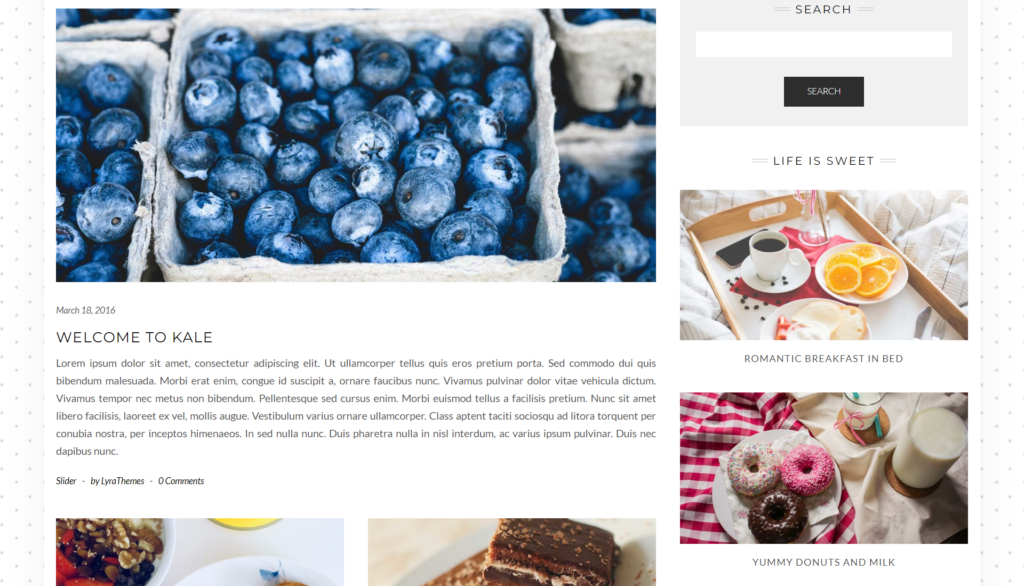
The best themes for recipe-focused content should display your creations beautifully while also providing the necessary tools for recipe organization, SEO, and a great user experience. Here are some of our favourites for this!
Kale is a minimalist theme designed for food bloggers. The theme emphasizes clean layouts and mobile responsiveness.
Best for: Beginner food bloggers seeking clean, recipe-focused design and straightforward setup.
Features include:
- Minimalist design: Clean, beautifully designed layouts with two blog archive templates (grid and mixed format).
- User-friendliness: Kale’s easy setup allows bloggers to create professional sites without touching code.
- Responsive design: Looks great on both desktop and mobile devices.
- WooCommerce integration: Supports selling products like cookbooks, ingredients, or kitchen tools.
- MailPoet integration: Helps you send newsletters and recipe updates to subscribers.
- Social media icons: Add sharing links to every page quickly.
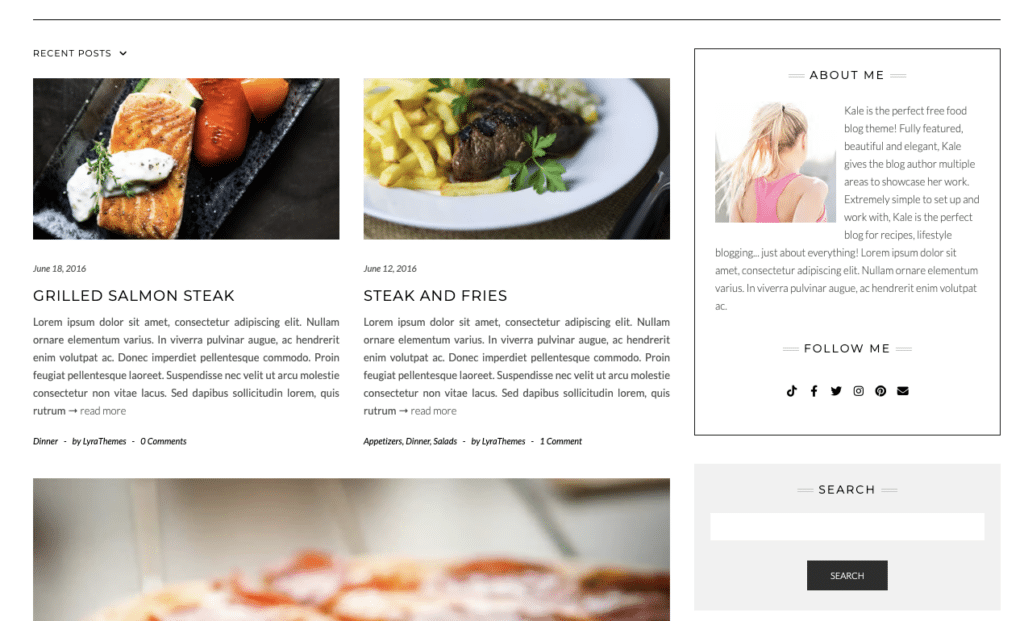
WP Recipe Maker integrates perfectly with Kale’s minimalist design philosophy. The plugin adds schema-compliant recipe cards without disrupting Kale’s clean aesthetic!
Users appreciate Kale’s clean structure and friendly support. One reviewer shared: “This theme looks exactly how I wanted, and the support team helped me customize it easily.”
Kale also has a paid version, which can be unlocked for a one-time payment of $39 and an additional $7.99 monthly. This premium version unlocks additional customization options, more layout choices, extra widgets, and premium support from the developer team.
2. Foodica Lite
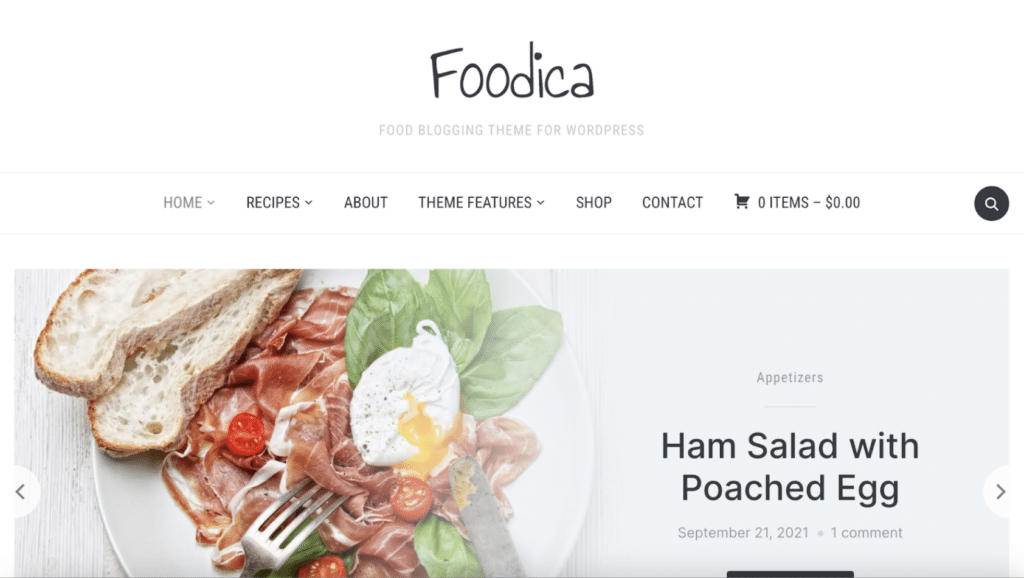
Foodica Lite features minimalist design for food photography and recipe content. WPZOOM develops themes specifically for food blog websites. Foodica comes in free Lite and premium Pro versions. The versions differ in feature sets and customization depth. Foodica Lite emphasizes high-quality image presentation and recipe organization.
Best for: Food photographers and recipe creators prioritizing elegant visual presentation and image-first layouts.
Features include:
- Post slider: Showcase your favorite recipes or seasonal features at the top of your homepage.
- Customization options: Choose from multiple color schemes, fonts, and layout settings to match your style.
- Responsive and retina-ready: Automatically adapts to all screen sizes for a polished, consistent experience.
WP Recipe Maker works with both Foodica Lite and Pro versions. Schema markup from the plugin improves search visibility for Foodica-based food blogs.
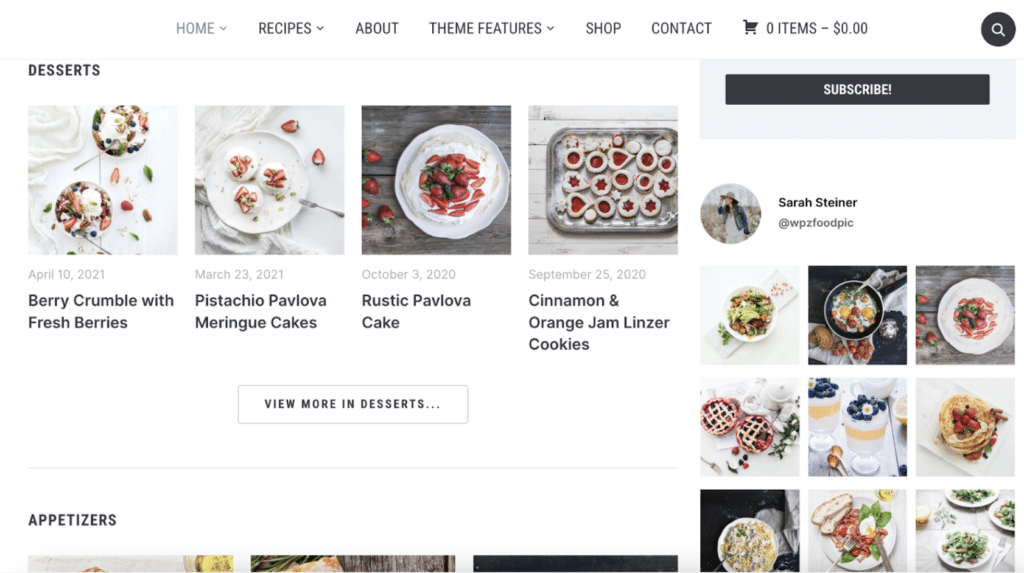
Reviewers highlight Foodica’s clear layout and responsive support. A user wrote: “It only took a couple of days to get everything set up, and whenever I got stuck, their team was quick and friendly. Definitely recommend!”
The Foodica Pro version is available for $79/year for a single-site license, adding advanced customization options and dedicated support. Both Foodica versions integrate fully with WP Recipe Maker for recipe functionality.
3. Cookely
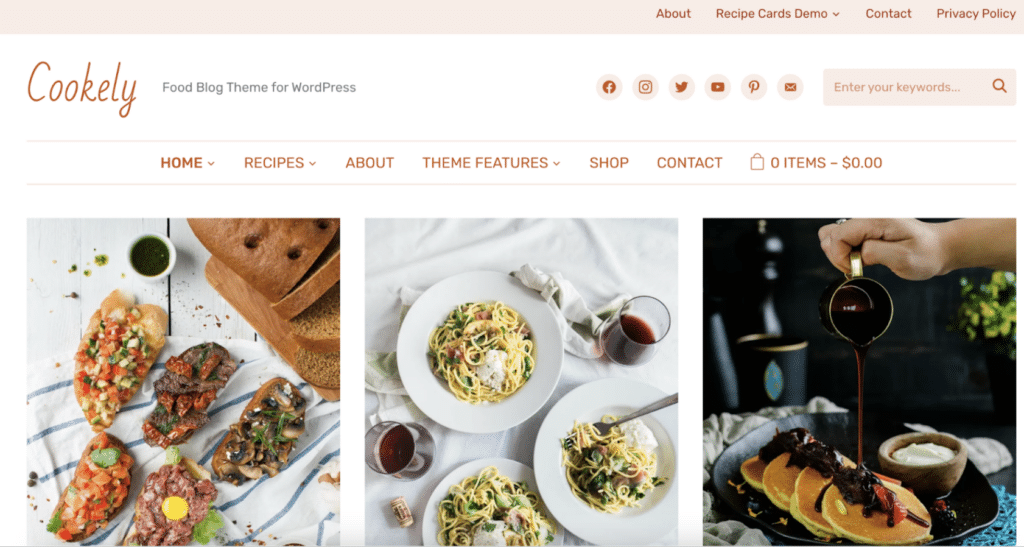
Cookely is designed to reflect a dynamic and bustling kitchen environment. It embraces versatility, making it an excellent choice for culinary bloggers who cover a variety of food-related topics. Cookely is another WPZOOM theme alongside Foodica. The theme emphasizes recipe-specific design and organization features.
Best for: Recipe organization, mobile-friendly layouts, and SEO-optimized cooking content.
Features include:
- Flexible layout and color customization: Choose between classic blog or modern grid styles, and adjust colors to match your brand.
- SEO-friendly: Optimized theme code helps improve search visibility.
- Speed optimization: Designed for fast loading times across all devices.
- Recipe plugin compatibility: Supports WP Recipe Maker for advanced recipe card features and schema markup.
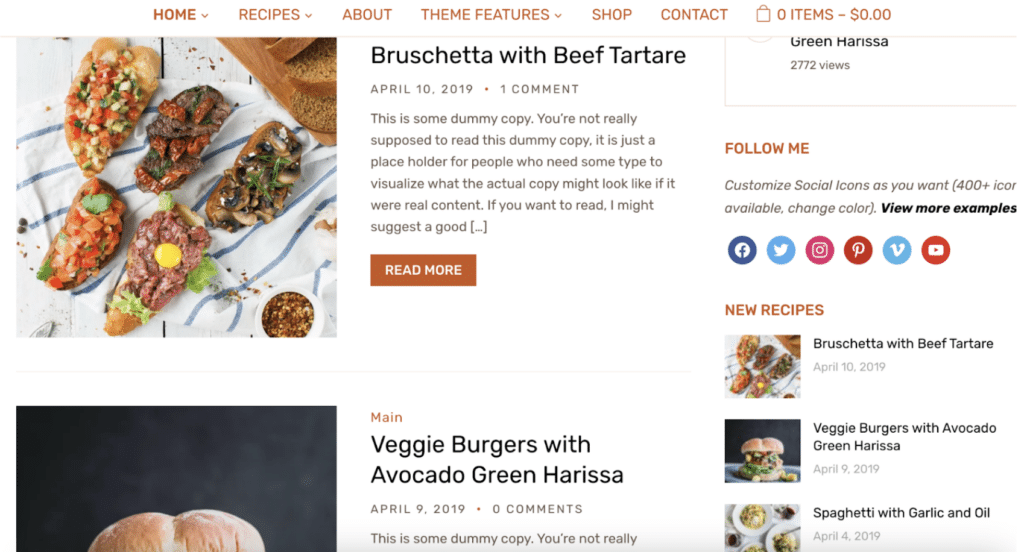
Cookely users often mention its responsiveness and clean design. One reviewer said: “Fully responsive and minimalistic themes are hard to find. Because of the clean layout, our content gets all the attention and looks great on any device.”
The premium version of Cookely costs $79 annually or a $199 one-time purchase. The pro version gives access to detailed documentation and support, enhanced customization options, and regular updates.
4. Bakes and Cakes
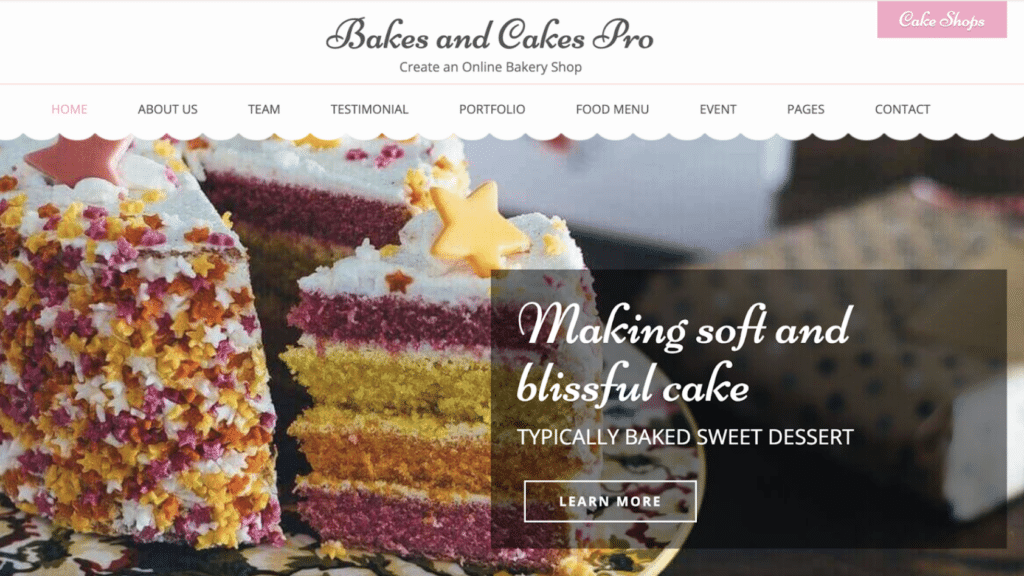
Bakes and Cakes stands out as a free food blog theme that caters specifically to the sweet segment of the food blogging world. Offering a blend of aesthetic appeal and functionality, this theme is perfect for professional pastry chefs, baking enthusiasts, and cake decorators looking to share their creations online.
Best for: Pastry specialists, baking blogs, and dessert-focused food content.
Features include:
- Theme-specific design: A beautiful, cake-like design ideal for baking and pastry-related content.
- SEO-friendly: Fully optimized for search engines, helping you rank higher in search results.
- Responsive design: Fully responsive to mobile devices and translation-ready.
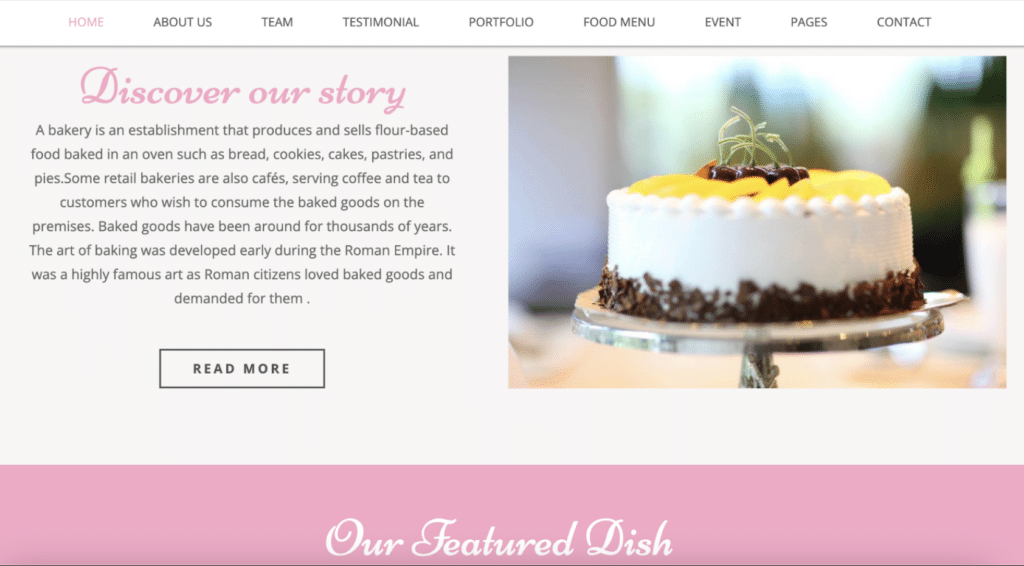
Users praise its ease of use and excellent support. A beginner-friendly review states: “It perfectly suits my needs and is very easy to use. The support team replies quickly and helps with any issues.”
The premium version of the Bakes and Cakes theme is available for $59 per year. Other options include more features, which can increase the price to hundreds of dollars. The paid version enriches your blogging experience with additional features and customization options, giving you more control and flexibility over your site’s design and functionality.
Download Bakes and Cakes Bakes and Cakes Demo
5. Kadence

Kadence is a multipurpose theme favored for flexibility and performance optimization. The theme provides the fastest loading speeds among recipe-focused WordPress themes.
Best for: Speed optimization, flexible starter templates, and WP Recipe Maker integration without performance compromise.
Features:
- Free starter templates: Food blog-specific designs available with one-click import.
- Performance-first code: Lightweight architecture ensures fast loading on all devices.
- Child theme support: Premium options like Limoncella and Dolce Vita add food-blog features.
- No-code customization: Extensive visual controls allow full design flexibility without needing CSS knowledge.
- Recipe plugin optimized: Full WP Recipe Maker compatibility with template editor support.
- Page builder ready: Works with Elementor, Gutenberg, and other major builders.

Kadence maintains fast loading speeds even with WP Recipe Maker active. The theme’s Template Editor allows customizing recipe card designs within Kadence’s framework.
Kadence’s core theme is free with extensive customization features and starter templates. Premium child themes designed specifically for food bloggers (Limoncella at $69 and Dolce Vita at **$75) provide curated designs as one-time purchases. The base Kadence theme remains free with lifetime updates and active support.
Best themes for visual storytelling
GuCherry Blog and Elara emphasize visual content with minimalist layouts and generous whitespace. Visual storytelling themes prioritize photography display over dense text layouts. Typography in these themes complements rather than competes with food photography. All visual storytelling themes maintain full WP Recipe Maker compatibility.
1. GuCherry Blog

GuCherry Blog is a responsive theme with a visual-focused design and clean layouts.
Best for: Visual storytellers using imagery and narrative to share food experiences and culinary journeys.
Features:
- Engaging visual layouts: Strong emphasis on visual engagement, perfect for showcasing your food photography.
- Easy customization: Real-time customizations with options for banners, layouts, and color palettes.
- Responsive and retina-ready: Looks great on desktops, tablets, and smartphones.
- Built-in social media icons: Direct readers to your social media profiles and encourage sharing.
- SEO optimized: Designed with search engines in mind, improving visibility.

GuCherry reviewers often mention its customization options and responsive support. One user shared: “This theme is great to work on, and the support is second to none. Would highly recommend it to anyone starting a blog.”
GuCherry Blog’s paid version, GuCherry Blog Pro, costs $57 annually. The theme’s pro version offers additional font, color, layout, header, and footer options and access to live chat technical support.
Download GuCherry GuCherry Demo
2. Elara

Elara is technically a multi-purpose blogging theme, but its free version also has great layouts for food bloggers. Its best feature is a unique Home page with multiple sidebar placement options.
Best for: Multi-purpose food blogs needing sidebar flexibility, video integration, and versatile layouts.
Features:
- Elegant featured slider: Highlight key recipes or blog posts on your homepage.
- Video posts: Fully responsive, perfect for sharing video content.
- Social media icons: Easy integration for social media sharing and following.
- Plugin support: Works with recipe plugins, Contact Form 7, and WP Forms Lite.

Users love Elara’s clean look and simplicity. A new blogger wrote: “We love the simple, clean feel of this theme. It’s easy to navigate and offers plenty of customization options.”
The paid version of Elara Blog, known as Elara Pro, costs $39 one-time and $7.99 monthly for ongoing support and features. This premium version unlocks additional features and customization options to give your food blog an even more polished and unique look and priority access to support.
3. Foodie WP

Foodie WP offers minimalist design emphasizing food photography and recipe display with minimal distractions.
Best for: Bloggers seeking Genesis Framework security and performance benefits with minimalist food blog aesthetics.
Features:
- Customization flexibility: High level of customization for layouts, typography, and colors without compromising speed or performance.
- Mobile-responsive and HTML5 markup: Fully responsive design, ensuring excellent performance across all devices with the latest web standards.
- Security: Built on the Genesis Framework, offering enhanced security and stability for your site.

Reviewers praise Foodie WP’s elegant layout and customization flexibility. One detailed review summed it up: “It helps you build a clean, bright, and elegant site with so many options – you can really make your blog your own.”
The premium version of Foodie starts at a one-time $75 payment, which grants you access to more enhanced widgets and tools while benefiting from the perks of the Genesis Framework, such as robust performance, security, and SEO capabilities.
Best themes for eCommerce & monetization
OceanWP, Foodielicious Blog, and Bakery Cafe provide full WooCommerce integration for product sales. Monetization-ready themes include strategic advertising areas and affiliate link support. WooCommerce compatibility enables selling cookbooks, kitchen merchandise, and digital products directly from food blogs.
1. OceanWP

OceanWP is a lightweight, highly customizable, multi-purpose theme with powerful features and compatibility with the most popular WordPress plugins.
Best for: Food bloggers planning product sales, extensive eCommerce functionality, or multi-revenue monetization strategies.
Features:
- Rich template library: 12+ ready-to-use templates specifically designed for food and restaurant niches.
- High customization: Extensive customization options for templates, headings, footers, fonts, and colors.
- WooCommerce support: Sell merchandise, digital products, and cookbooks directly from your blog.
- Responsive and retina-ready: Optimized for mobile devices and high-resolution screens.
- Performance-oriented: Speed-optimized to provide fast-loading experiences, reducing bounce rates.
- Plugin compatibility: Fully compatible with major page builders like Elementor, Brizy, Beaver Builder, and others.
WP Recipe Maker ensures professional recipe displays across all OceanWP template variations. Adjustable serving features and recipe printing work with OceanWP’s customization options.

Users consistently praise OceanWP’s flexibility and customization options. A reviewer shared: “Its customization capabilities are incredible, and the learning curve is so friendly.”
OceanWP offers a core theme that’s free to use, with the option to extend its functionality through premium extensions. The premium packages start at $31 for a single site license, with the option of paying monthly or annually. The premium options grant access to premium extensions and demos, advanced portfolio and gallery options, and priority support.
Download OceanWP OceanWP Demos
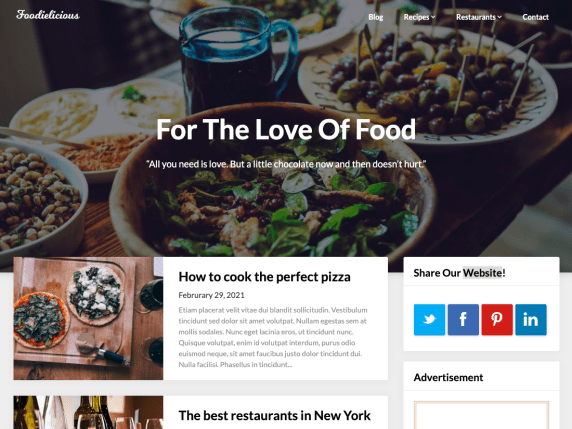
2. Foodielicious Blog

Foodielicious Blog is designed by SuperbThemes to help food bloggers easily monetize their websites with a lot of advertising space for running affiliate programs. For example, you could set up an affiliate marketing program with your local grocery stores, which have an online presence, and display their products on your recipe pages. The theme’s strategic ad placement options and affiliate-friendly design make it particularly effective for bloggers focused on generating revenue through partnerships and sponsored content.
Best for: Affiliate marketers focused on optimizing advertising space and monetizing sponsored content.
Some of the other critical features of the free version of the Foodielicious Blog theme are:
- Visual design: Offering a visually appealing layout for displaying high-quality food photography.
- Translation-ready: The free version of the theme has built-in features to support more than one language.
- High customization: Customization is easy to apply and allows you to set up custom logos and favicons.
- Mobile optimized: Ensures smooth operation in mobile devices.
- WooCommerce integration: Offers full-scale integration, even for the free version of the theme.

The Foodielicious theme doesn’t have any reviews on the WordPress theme store. The premium version of Foodielicious Blog starts with a payment of $29. Other packages include more features, which can go up to $129. The premium version of the theme offers a richer array of features and customization options designed to enhance the blogging experience and provide more ways to engage with your audience.
It is important to note that Foodielicious Blog is a child theme of the Customizable Blogily theme, so it may not be as frequently updated as the main theme.
Download Foodielicious Blog Foodielicious Demo
3. Bakery Cafe
While Bakery Cafe is technically designed for bakery shops, it displays recipe posts beautifully and can be an excellent fit for any food blogger. Its built-in business features and WooCommerce integration make it ideal for food entrepreneurs looking to add online ordering capabilities or sell baked goods directly through their website.
Best for: Bakery owners and food entrepreneurs needing online ordering capabilities and business features.
Here are some reasons why Bakery Cafe can be a good free food blog theme option:
- Warm design: Bakery Cafe exudes a cozy, inviting atmosphere that mirrors the comfort of a favorite local bakery.
- Translation-ready: The theme offers templates to support more than one language easily.
- Customization flexibility: Live customizer allows you to change colors, logos, headers, blog layouts, and more. It also offers standard and custom shortcodes that you can use to create dedicated sections showcasing your food expertise and business value.
- WooCommerce integration: Even the free version of the theme offers full WooCommerce support for food bloggers looking to monetize their sites.
- Responsive and fast: The theme is fully responsive with mobile-friendly layouts and is optimized for speed and performance.

The paid version of the theme costs $39 and offers a richer recipe of features, more advanced customization options, and priority access to technical support.
Download Bakery Cafe Bakery Cafe Demo
Best multipurpose theme for food blogs
Neve offers versatility beyond dedicated recipe themes for diverse food blog content. Multipurpose themes provide flexibility for lifestyle content, restaurant reviews, and product sales alongside recipes. Neve’s lightweight performance suits diverse niches, including international cuisine, dietary-specific content, and culinary travel.
Neve
Neve is designed for fast loading speeds and mobile-first design. The theme provides multipurpose flexibility for food blogs expanding beyond recipe content.
Best for: Beginner-friendly multipurpose flexibility, speed optimization, and diverse food blog niche adaptability.
Here are some of the highlights of the free version of the theme:
- Speed and performance: Neve is built with speed at its core, ensuring that your food blog loads quickly and efficiently. This is crucial for keeping visitors engaged and improving your site’s SEO ranking, as search engines favor fast-loading sites.
- Customization Flexibility: Even in its free version, Neve offers a high level of customization. Users can easily adjust the layout, header, and footer settings to match their personal or brand style.
- Basic WooCommerce: The free version also includes a basic WooCommerce integration for food bloggers looking to expand into selling merchandise, cookbooks, or cooking classes.
Users love Neve’s speed and flexibility. One reviewer shared: “After trying many themes, I always come back to Neve. Its flexibility and ease of customization make it a clear winner.”

The paid version of Neve starts from €69 per year and unlocks advanced features, extensions, and dedicated support to enhance your food blogging experience.
Recipe Schema Markup and SEO
Recipe schema markup formats recipes for search engine display and indexing. Schema.org JSON-LD metadata helps recipes appear as rich snippets in search results. Rich snippets show cooking time, star ratings, and ingredients directly in Google search.
WP Recipe Maker automatically generates recipe schema markup for all published recipes. The plugin follows Google’s latest structured data guidelines and requirements. Proper schema implementation increases recipe visibility and click-through rates in search engines.
Most WordPress themes lack built-in schema markup functionality for recipes. WP Recipe Maker adds compliant schema to any theme featured in this guide.
Choosing Between Free, Premium, and Multipurpose Themes
Dedicated vs Multipurpose
Dedicated food themes provide immediate recipe-focused layouts and culinary features. Multipurpose themes offer long-term flexibility for diverse content types beyond recipes. Both theme categories benefit equally from WP Recipe Maker integration for recipe functionality.
Free vs Premium
Free WordPress themes provide essential customization and mobile responsiveness without upfront cost. Premium versions typically add advanced customization options, priority support, and specialized widgets. Premium food blog themes range from $39 to $79 annually for single-site licenses. Budget-conscious bloggers can start with free themes and upgrade as traffic grows. Premium features become valuable for established blogs publishing recipes multiple times weekly. Premium customization and dedicated support often pay for themselves through improved efficiency and monetization opportunities.
Free themes are a great starting point for hobbyists and small food blogs. They offer the basics to get your content live quickly. Premium themes, however, provide additional features like specialized widgets, enhanced layouts, and ongoing support. These features become crucial as your blog grows, especially when you’re scaling up content production and monetizing through ads or product sales.
Decision Framework
If you’re focused on recipes and want a theme that highlights your content right away, dedicated food themes are definitely the way to go. They offer specialized layouts and designs that make your recipes truly stand out. On the other hand, multipurpose themes provide flexibility for a broader range of content, making them a great choice if you plan to expand your site beyond recipes in the future. No matter which theme you choose, all the options in this guide are fully compatible with WP Recipe Maker, so you get the best recipe functionality across the board!
Common mistakes to avoid
Mistake #1: Missing recipe schema markup
Missing schema markup prevents proper recipe indexing in search engines. Without structured data, recipes don’t appear in Google’s recipe features or rich snippets, which can significantly reduce organic traffic from recipe-focused searches.
WP Recipe Maker automatically generates schema.org JSON-LD metadata for all recipes, ensuring proper schema markup is added to every published recipe without manual effort. This enables rich snippets that display star ratings, cooking times, and other important details directly in search results, driving more traffic to your blog.
Mistake #2: Installing too many plugins
Excessive plugins can slow down your website and create conflicts between them. This leads to longer load times and a poorer user experience, which can increase your bounce rate and reduce engagement.
Focus on essential plugins that directly benefit your site’s functionality, like WP Recipe Maker and a reliable SEO plugin. Limiting the number of plugins reduces complexity and ensures better performance, allowing your content to load faster and perform optimally.
Mistake #3: Large image files
Large image files can drastically slow down your site, negatively affecting load times and user experience. Slow websites frustrate users and can lead to higher bounce rates, especially for food blogs relying on visual appeal.
Optimize your images before uploading them to ensure they’re as small as possible without sacrificing visual quality. Aim to keep each image file under 200KB, which will help your site load faster while maintaining the high-quality look that food blogs depend on.
Mistake #4: Neglecting mobile users
With many visitors accessing food blogs from mobile devices, it’s crucial that your site is mobile-friendly. If your site isn’t optimized for mobile, users may struggle to navigate or read your content, reducing engagement.
Ensure your theme is fully responsive and tested across multiple devices. Regularly check how your site performs on both desktop and mobile, and make adjustments as needed to guarantee a great experience for all visitors.
Where to find these themes
Free WordPress themes are available through the WordPress.org theme directory with one-click installation from your dashboard. Premium theme versions are purchased directly from developer websites, providing direct support access. The ThemeForest marketplace offers alternative premium options with varied pricing and third-party themes.
⚠️ Remember: Always verify compatibility with the plugins you are using, like WP Recipe Maker, before purchasing premium themes from any source. Most premium themes offer live demos to test layouts and features before making a financial commitment. Developer websites typically provide better ongoing support than third-party marketplace purchases.
Take the next step to perfect your food blog’s flavor
WordPress themes provide the design foundation and visual framework for food blogs. Free themes offer essential features without upfront costs or financial commitment. Advanced recipe features come from dedicated plugins rather than theme upgrades.
WP Recipe Maker is the core recipe plugin for WordPress food blogs. The plugin creates schema-compliant recipe cards with adjustable servings and nutrition facts. Schema markup improves search visibility and click-through rates from recipe searches.
The Template Editor lets you tailor your recipe card designs to match any theme you choose. WP Recipe Maker is compatible with all the themes we’ve looked at, giving you plenty of options. Plus, your recipe data stays intact and easy to access, even if you decide to switch themes down the line!
Choose themes that fit your current needs and budget. Start with free options and upgrade as your blog grows and traffic increases. Focus on creating high-quality recipes while WP Recipe Maker handles technical optimization automatically.
Try WP Recipe Maker today to enhance your food blog with professional recipe cards. The free version provides core functionality, while premium unlocks advanced features for scaling.