
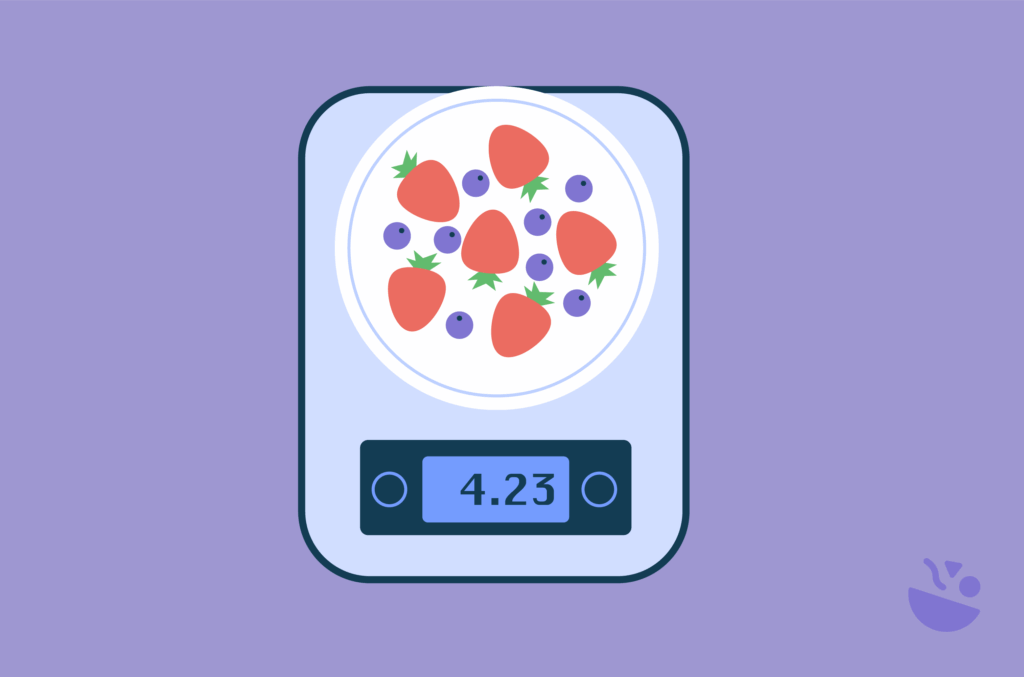
If you’ve ever baked the same recipe twice and ended up with two very different results, measuring is often the culprit. That’s why so many bakers recommend weighing ingredients instead of using cups. A kitchen scale is the most accurate tool because it measures mass (the actual amount of an ingredient). Cups measure volume, or space, and that space changes depending on how you scoop, pack, or level.
Take flour as a simple example. One cup can weigh anywhere from 120g to 150g, depending on technique. That difference is enough to turn a soft cake dense or a loaf dry. The ingredient didn’t change, but the measurement did.
Once you understand this, a lot of baking frustrations suddenly make sense. We’ll look at why accuracy matters, where cups aren’t quite good enough, and how to switch to weighing in a way that feels straightforward and practical, not fussy.
Cups measure space, scales measure mass
We’ve seen how one cup of flour can vary wildly. The same thing happens across almost every ingredient in your kitchen. Once you look at real numbers, it’s pretty obvious. One cup of water weighs about 240g. A cup of granulated sugar is roughly 200g. Powdered sugar drops to around 120g. All-purpose flour typically weighs 120-130g, but it can increase if packed.
A cup only tells you ‘this much space.’ A scale tells you exactly how much ingredient you’re using, automatically accounting for density differences between flour, sugar, liquids, and everything else. Clever, right?
When baking precision is non-negotiable
In baking, you don’t get to tweak things once the pan is in the oven. The heat sets the structure, so any imbalance in the mix shows up in the final texture. Small errors across several dry ingredients add up fast. A little too much flour and you’ll get dry, tight crumbs and heavy loaves. A little too little and cakes spread, sink in the middle, or taste oddly greasy.
Grams matter most in recipes that rely on exact ratios, like cakes, breads, pastries, and anything using chemical leaveners like baking powder or baking soda. They’re even more sensitive when you’re working with delicate flours such as almond or coconut. In those bakes, weighing is less about being fussy and more about giving the recipe the structure it needs to work every single time.
The benefits of using a scale rather than cups
Using a scale solves more than one problem at once. First, it keeps things consistent. Grams are the same everywhere, while cups aren’t (a US cup is 240ml, a metric cup is 250ml) so following international recipes instantly becomes easier.
Day-to-day, it makes things simpler, too. With the tare button, you can place one bowl on the scale, zero it, add an ingredient, zero again, and continue. No nesting cups, no guessing whether you packed something too tightly, and far less cleanup. Because mass doesn’t change with packing or air, you also get a built-in safety net. If a bake fails, you can be confident the amounts were right and look instead at mixing, oven temperature, or timing.
Scales also make the math kinder. It’s much easier to multiply 125g by three than to work out one and a half times one-third of a cup. For batters and doughs, you can weigh the empty bowl, weigh it again when it’s full, subtract, then divide by the number of portions so every muffin, cookie, or roll bakes evenly!
How to measure effectively with a scale
The easiest way to get good results with a scale is to stick with the measurement system the recipe was tested in. If a recipe gives both cups and grams, choose grams and don’t try to convert between the two yourself.
Most of the time, you’ll want to use the tare method. Place your mixing bowl on the scale and press tare to zero it out. Add your first ingredient until you reach the target weight, then press tare again. Add the next ingredient, tare, and repeat. You can work straight into one bowl, or place ingredients in different spots if the mixing order matters later.
A tidy setup helps a lot. Wipe the scale between ingredients, especially if you’re working with flour, sugar, or spices. For sticky or oily ingredients, laying a piece of plastic wrap or baking paper over the scale keeps it clean. Keeping a damp cloth nearby makes quick cleanups easy and stops mess from spreading.
Scales aren’t perfect for everything. Most home scales struggle with very small amounts, so anything between 3-5g is better measured with measuring spoons. That includes baking soda, baking powder, yeast, and sometimes salt, depending on the scale’s sensitivity.
There are also times when separate bowls still make sense. If a recipe relies on a specific technique (like creaming butter and sugar, folding dry ingredients gently, or adding components in stages), pre-measuring can help you stay organized and avoid mistakes.
Once you get used to this workflow, weighing feels natural and quick!
| ⭐ If you’d like a deeper refresher on measuring ingredients accurately and converting between units without breaking recipes, take a look at our guide to measuring and unit conversions. And for more core kitchen skills, you can also explore our fundamentals of cooking techniques guide! |
When cups and measuring spoons are fine
You might be pleased to know that not every recipe requires scales. Many everyday dishes are forgiving and easy to adjust as you go. Soups, stews, salads, and roasted vegetables work perfectly well with cups and spoons because the ratios aren’t fixed by chemistry. You can taste, add more liquid, or tweak the seasoning mid-cook without ruining the final result.
Measuring spoons are also important. Most home kitchen scales aren’t sensitive enough to register very small amounts accurately. Anything under about 5g is usually better measured by volume, especially ingredients like baking soda, baking powder, yeast, or spices. It’s also worth remembering that 1ml equals 1g only for water. Denser liquids like honey, oil, or syrups don’t follow that rule, so spoons or a liquid measuring jug can still be the better choice.
There’s room for tradition, too. Plenty of bakers have made great food with the same measuring cups for years, and there’s nothing wrong with that. Scales aren’t about correcting ‘bad’ habits. They’re simply an affordable upgrade (often costing $10-$30) that makes certain recipes more reliable when accuracy really matters!
For recipe publishers: serving international audiences
If you publish recipes, units are suddenly a reader experience problem, not just a baking one. US readers are used to cups and tablespoons. Most international readers expect grams and milliliters. Keeping separate US and metric versions of every recipe quickly turns into extra editing, more places for typos, and a maintenance headache when you update anything.
Converting everything with a generic chart isn’t a perfect fix, either. If you originally tested a recipe by volume, those weight numbers are only estimates. And if you tested by weight, turning grams back into cups can leave you with awkward, hard-to-follow fractions.
This is where building on weight really helps you. Weight-based recipes scale cleanly – doubling 125g is simple – while scaling cups by 1.5x or 0.5x often produces confusing measurements for readers. Once your base quantities are in grams, recipe plugins can take over the hard work: presenting both cups and metric, and recalculating amounts automatically when someone changes the serving size. You get fewer moving parts to manage, and your readers get units that make sense wherever they are.
How WP Recipe Maker helps with accurate measurements
WP Recipe Maker is a WordPress plugin designed to help recipe publishers present clear, reliable recipes without maintaining multiple versions. It focuses on structured recipe data, consistent formatting, and tools that reduce manual work for both you and your readers.
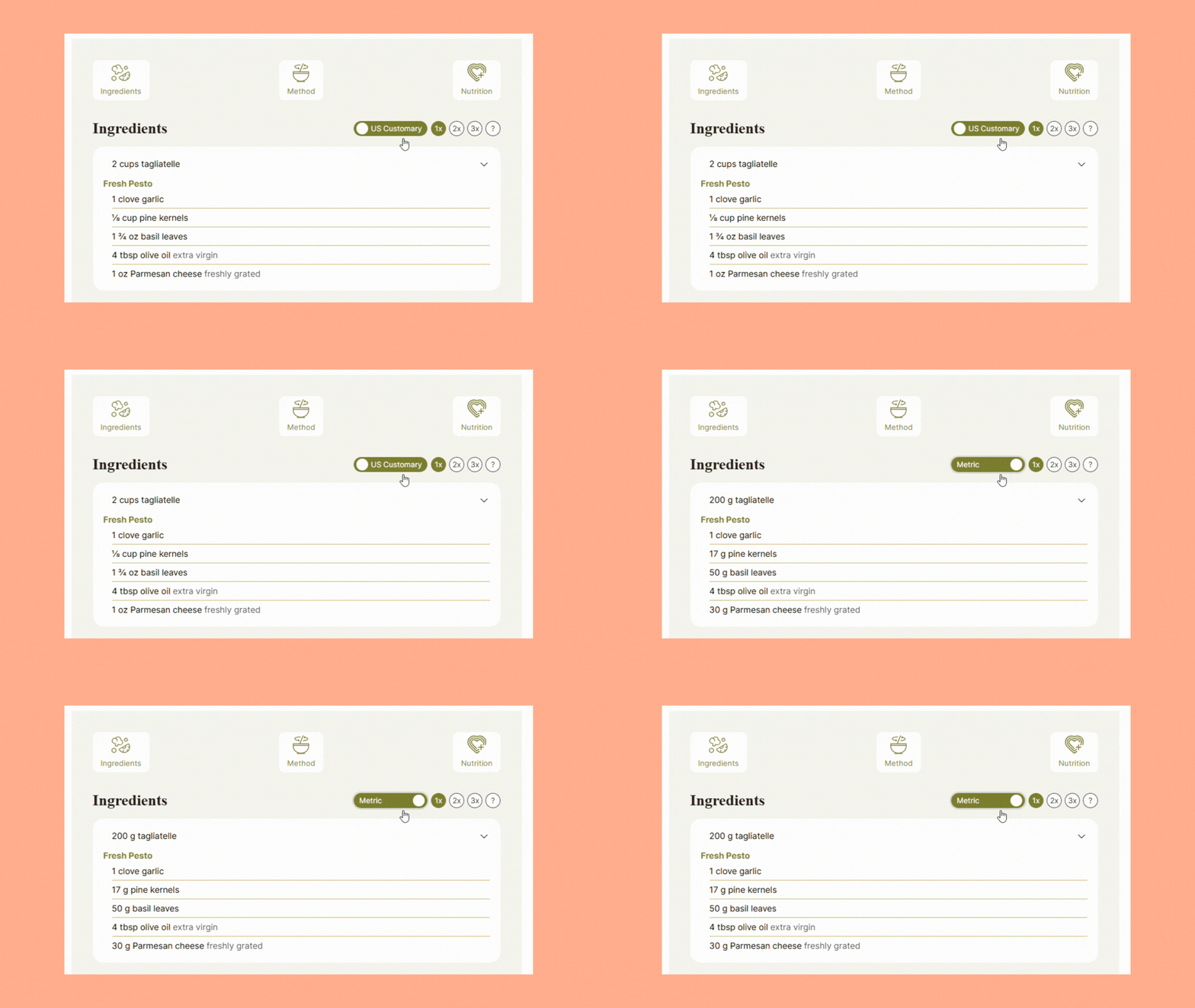
For international audiences, Unit Conversion lets readers switch between US customary and metric measurements with a click. Available in the Pro (and Elite) bundle, it uses API-backed conversions behind the scenes, so one recipe works for both cup-based and gram-based readers.
Temperature Conversion is also included with Pro (and Elite) and flips °F and °C when the unit system changes, keeping your instructions consistent.
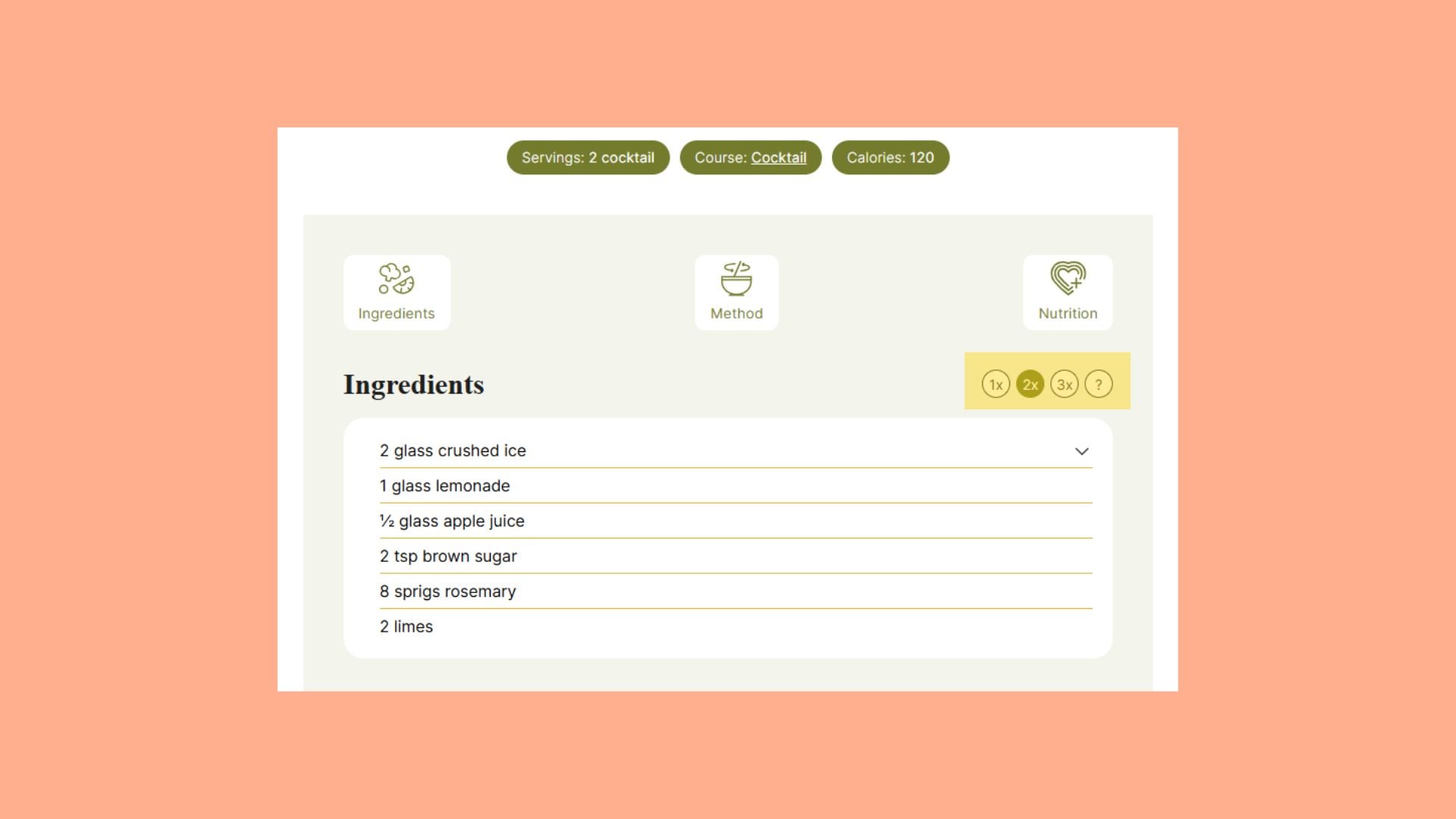
Scaling is handled through Adjustable Servings, which is also included from the Premium bundle onwards. When a reader changes the serving size, ingredient amounts are recalculated automatically, avoiding the awkward fractions that come from scaling volume measurements manually.
For publishers who include nutrition information, the Pro bundle adds Automatic Nutrition Calculation powered by an ingredient database, with the option to override values or enter custom data when needed.
The Elite bundle builds on all of this with advanced features like Recipe Collections and user submissions, but the core measurement and conversion tools live in Premium and Pro. The result is fewer versions to manage, fewer manual calculations, and recipes that stay accurate no matter how readers measure or scale them!
Start weighing your ingredients with accuracy today
Remember that mass is fixed, volume isn’t.
Cups measure space, and that space changes with packing, air, and technique. Scales measure the ingredient itself, which is why weighing gives you control and repeatable results instead of guessing.
That doesn’t mean cups are ‘wrong.’ They’re still perfectly fine for plenty of everyday cooking and forgiving recipes. But when texture, rise, or structure really matter (especially in baking!) weighing is the tool that keeps things consistent.
Once you get used to it, weighing feels natural. It’s quicker, cleaner, and far less stressful than wondering whether you scooped a little too much flour this time.
If you publish recipes, tools like WP Recipe Maker make this even easier by letting you offer accurate weights alongside cups, handle unit and temperature conversions, and scale servings automatically. One recipe, clear measurements, and confident results for every reader!
I remember MANY years ago when we had the conversation about all the different cups in the world and the (in)famous 20ml Australian tablespoon…