
Cook mode is a feature that prevents device screens from going dark while cooking.
It eliminates screen timeout interruptions, helping recipe followers stay focused without touching their devices.
Here’s what cook mode does for you:
- Keeps your screen on – no unlocking with messy hands.
- Let’s you follow recipes step by step without interruption.
- Helps you manage prep and multiple tasks without losing your place.
- Reduces how often you need to touch your device while cooking.
Imagine you’re elbow-deep in dough, halfway through an online recipe, when suddenly – darkness. Your screen’s gone to sleep, your hands are covered in flour, and now you’ve lost your place. Sound familiar?
If you’re tired of sticky fingers smudging your screen as you struggle to wake up your device mid-recipe, it’s time you met “cook mode.” This simple tool keeps your screen lit up, no matter how messy things get in the kitchen.
Here, you’ll learn how cook mode works, where it’s supported, and how to add it to your own food blog using WP Recipe Maker. Whether you’re a casual home cook or a full-time food blogger, this is one small change that makes a big difference to your readers’ cooking experience.
How cook mode works on different platforms
Cook mode prevents screen timeout through browser APIs.
Most implementations rely on the Wake Lock API, which allows websites to keep a device’s screen awake while a recipe is being followed. The Wake Lock API must be triggered by user interaction, such as clicking a toggle.
This means cook mode only activates when someone is actively using the site.
Different websites use this feature in slightly different ways depending on their platform and design:
- On WordPress sites, cook mode is typically integrated through recipe plugins, such as WP Recipe Maker. Users click a toggle labeled “Cook Mode” or “Keep Screen Awake,” which then activates the Wake Lock API. This approach is tailored to food bloggers and their readers, offering a smooth, recipe-specific experience.
- Custom-coded websites may include cook mode as part of their internal template or JavaScript setup. Developers often build their own toggle using the Wake Lock API directly; however, this requires more time and technical expertise.
- Mobile web apps often offer similar screen-wake features within their app shell. These apps may use additional device-level permissions or prompts to keep the screen awake during extended use.
So, why does ‘cook mode’ show up on some recipe sites but not others?
Browser compatibility requirements
Cook mode depends on the Wake Lock API, which isn’t supported by all browsers – and that’s totally okay.
This API needs a secure HTTPS connection to work properly, and support can vary depending on the user’s device or operating system. On browsers that don’t support it, the cook mode toggle simply won’t appear. That’s intentional – it avoids confusing your readers by hiding a feature that wouldn’t work for them anyway.
As of 2026, the Wake Lock API is supported on:
- Chrome v85 and above.
- Edge v90 and above.
- Opera v73 and above.
- Safari 16.4 and above (full support).
- Firefox v126 and above.
WP Recipe Maker takes care of all this automatically. You don’t need to worry about browser quirks or compatibility checks. Most of your visitors are likely using modern mobile devices or browsers that support the Wake Lock API, so cook mode will just work, and that’s a big upgrade for your readers’ experience.
WordPress cook mode solutions
WordPress cook mode requires compatible recipe plugins. Several plugins offer this functionality, including WP Tasty (Tasty Recipes), WP Delicious, and Recipe Card Blocks. Each one provides a way to keep the screen awake while users follow a recipe. Among these options, WP Recipe Maker offers the most comprehensive implementation.
Unlike many plugins that treat cook mode as a minor feature, WP Recipe Maker integrates it deeply into the recipe experience.
The toggle – called the Prevent Sleep block – can be added exactly where you want it in your recipe card using the Template Editor.
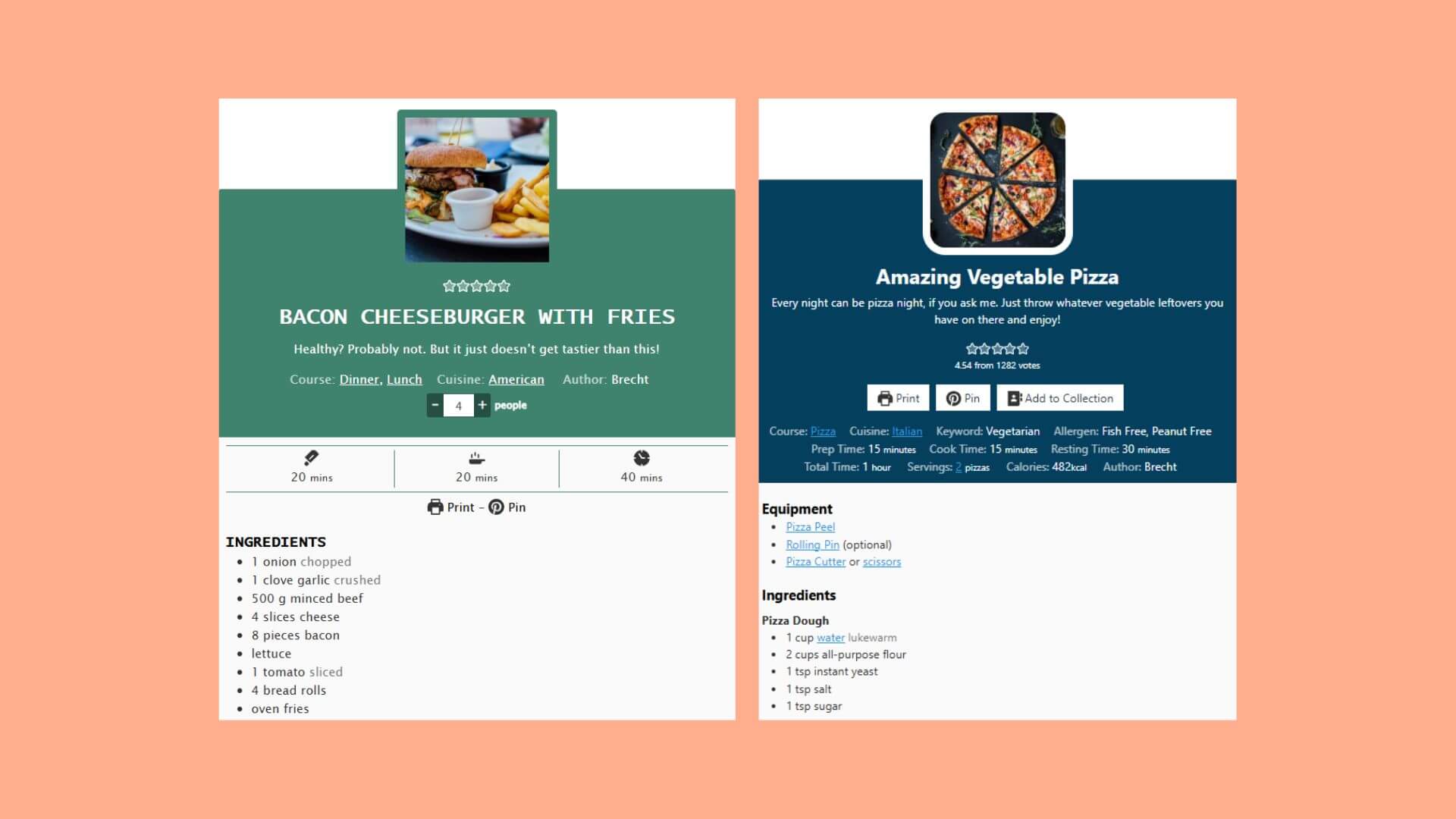
This lets you control the user journey, keeping key interactions front and center.
You can customize the look and feel of the toggle, choose how it’s labeled, and decide where it appears, whether it’s above the ingredients or right before the instructions.
This flexibility is ideal for food bloggers who care about usability and clean design.
Cook mode is just one part of what WP Recipe Maker offers.
It’s backed by active development, excellent support, and thoughtful UX touches like timers, print views, and checklists – features that work hand-in-hand with cook mode.
If a browser doesn’t support the Wake Lock API, WP Recipe Maker simply hides the toggle to avoid confusion. It’s smart, practical, and always prioritizes your readers’ experience!
Ready to enable cook mode on your food blog? Download WP Recipe Maker and get started today.
Activate cook mode with WP Recipe Maker
To use cook mode, you’ll need both the free and premium versions of WP Recipe Maker.
1. Start by installing the free plugin through your WordPress dashboard.
2. Go to Plugins → Add New, then search for WP Recipe Maker.

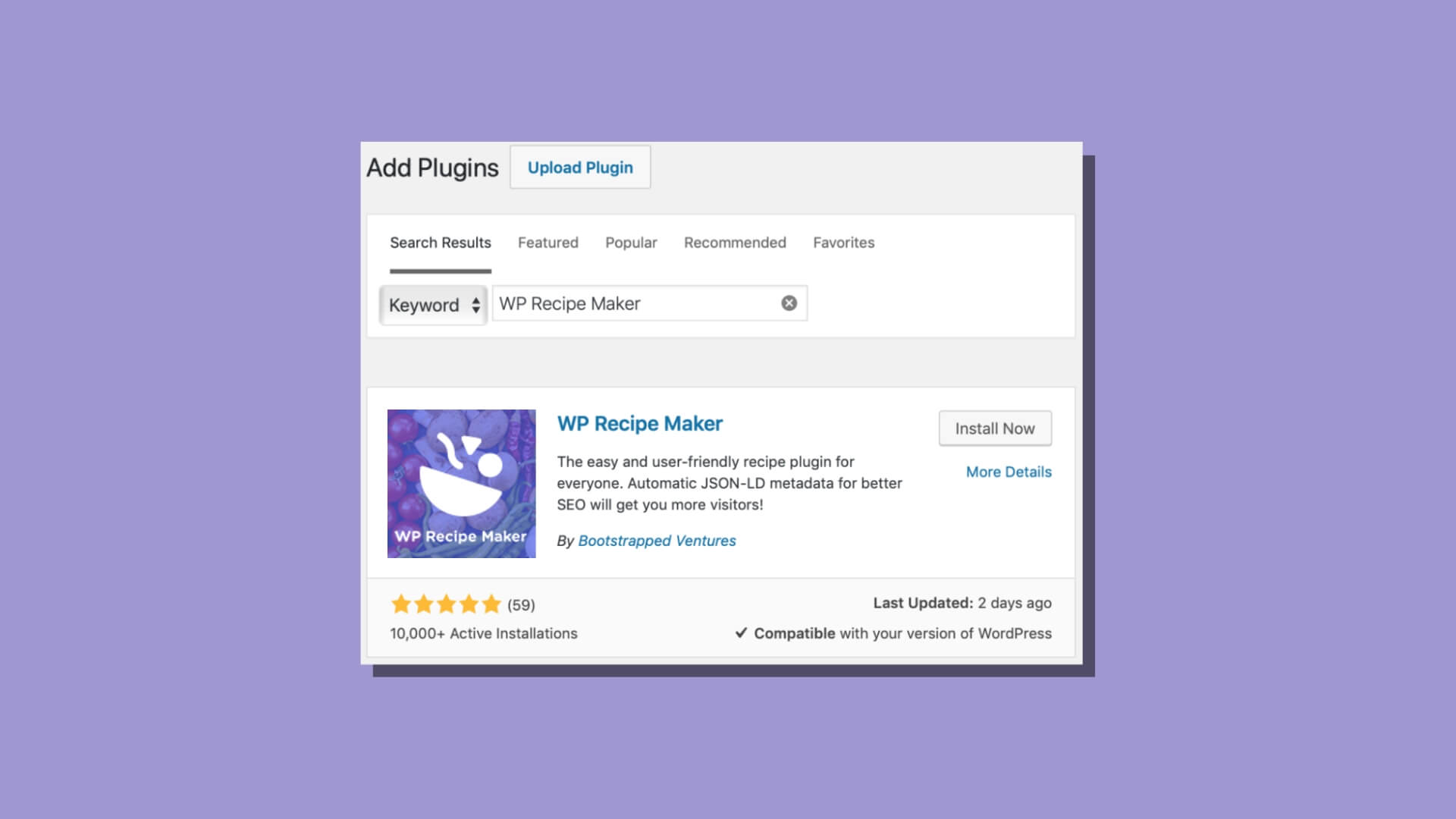
3. Click Install and then Activate to enable the plugin.
4. Next, choose a paid license (Premium, Pro, or Elite) to unlock the cook mode feature.
5. After purchase, download the plugin file from your account or the email confirmation.
6. Make sure the file is in .zip format.
If it isn’t, follow these instructions to fix it.
7. To install the premium version, return to Plugins → Add New.
8.Click Upload Plugin, select the .zip file, and hit Install Now.
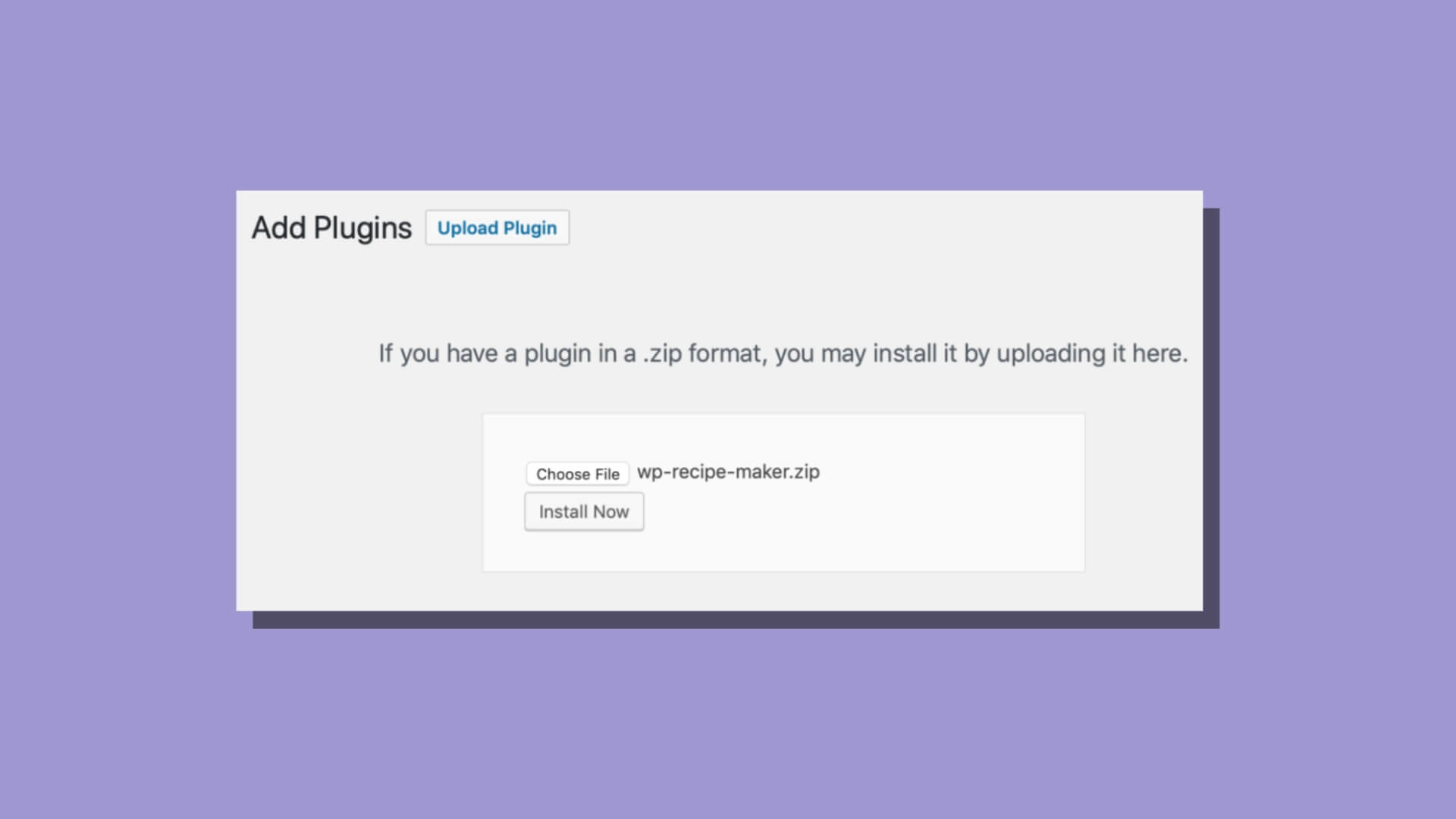
9. Once installed, click Activate to complete setup.
That’s it – you’re now ready to add cook mode to your recipes using WP Recipe Maker!
Activating cook mode
To enable cook mode in your recipe cards:
1. Go to WP Recipe Maker → Template Editor → Add Blocks.
2. From there, add the Prevent Sleep block to your recipe template.
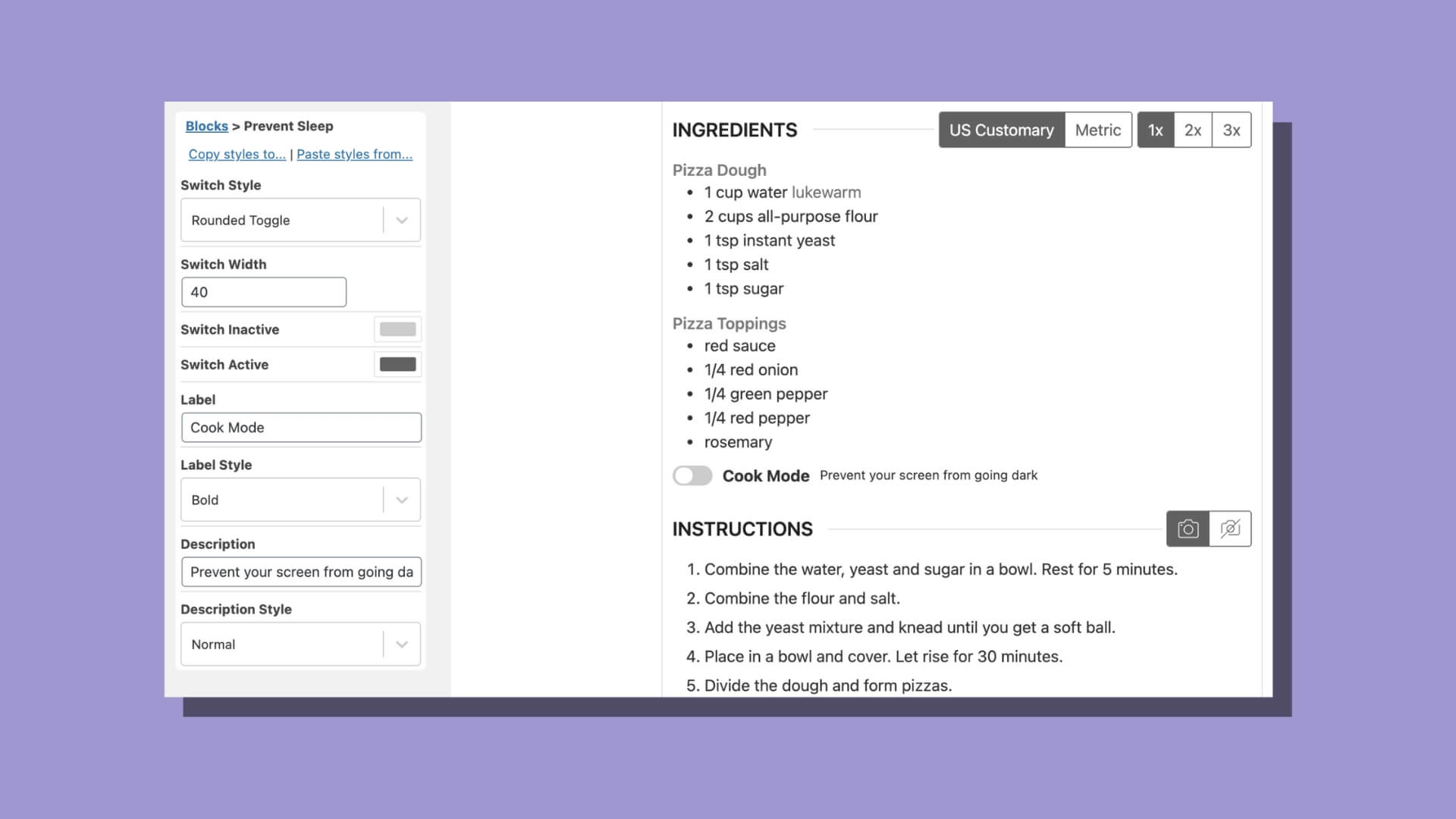
You can choose exactly where the toggle appears – above the ingredients, below the instructions, or wherever it makes the most sense for your layout.
The Template Editor also lets you customize the toggle’s appearance.
You can adjust the switch style, switch width, and label text, and even add a short description if you’d like.
If this is your first time using the Template Editor, don’t worry – it’s easier than it looks.
The Cook Mode Popup takes the hands-free experience a step further. Click “Start Cooking” and a full-screen view opens, guiding your readers through each instruction one step at a time with the relevant ingredients highlighted as they go, so nothing gets missed mid-cook.
Check out the official documentation and video tutorial to walk through the process step by step!
Popular recipe websites with cook mode
Holy Cow Vegan (created using WP Recipe Maker) displays the cook mode toggle above the ingredient list on its mint paratha recipe. The feature blends seamlessly into the card layout and keeps the screen awake while readers cook.

EatingWell includes a similar toggle just above the ingredients section, making it easy for users to activate cook mode as soon as they start gathering what they need.
Food & Wine features a “Cook Mode” button located above the ingredients, clearly labeled to prompt users to turn it on before diving into the recipe.
Simply Recipes uses a switch labeled “Cook Mode” placed directly under the recipe title, offering a quick and convenient way to keep the screen active during prep and cooking.
Device settings and alternatives
Some devices offer native ways to keep the screen awake while cooking.
On Android, apps or built-in settings like Screen Timeout Toggle let users prevent the screen from going dark.
On iOS, users can go to Settings → Display & Brightness → Auto-Lock and set it to “Never” to achieve a similar effect.

While these options work, they are device-level and not recipe-specific.
They also require users to dig into settings or install third-party apps.
WP Recipe Maker combines cook mode with comprehensive recipe management.
It keeps the screen awake only when needed and integrates directly with the recipe card.
This makes it a better solution for food bloggers who want to deliver a polished, hands-free cooking experience.
WordPress users get a built-in, customizable feature without needing extra apps or manual workarounds.
Tips to get the most out of cook mode
Cook Mode may increase battery consumption, especially during longer cooking sessions.
While cook mode is great for following online recipes, it’s worth keeping a few things in mind to make the most of it, without your device running out of juice halfway through a meal.
- Adjust your screen brightness: Cook mode keeps your screen on, but you can still save power by lowering the brightness to the lowest readable level.
- Use power-saving mode: Many phones and tablets have a low-power setting. Turning this on while using cook mode can help you stretch your battery life without losing functionality.
- Keep your device plugged in: If your kitchen has an accessible outlet, plug your device in while cooking. It’s the easiest way to enjoy uninterrupted cook mode without battery anxiety.
These small adjustments help ensure a stress-free cooking experience – bright screen, easy instructions, and zero smudging your screen with floury fingers!
Give your readers a better cooking experience with WP Recipe Maker
Enhancing the usability of your food blog can make a big difference in how readers engage with your content. One of the simplest ways to do that is by enabling cook mode – a feature that keeps the screen active while someone follows your recipe. No more tapping the screen with sticky fingers or losing your place mid-stir. Cook Mode is yours to shape in WP Recipe Maker: set its label and its placement, then style it in the Template Editor alongside the rest of your card.
WP Recipe Maker makes this easy to implement, but it’s far from a one-feature plugin. It also includes:
- Step-by-step video integration for visual learners.
- Jump to Recipe buttons so readers can skip straight to what they need.
- Custom share, print, and save buttons to boost engagement and retention.
All of this adds up to a smoother experience for your readers:
Stress-free cooking, fewer missed steps, better multitasking (yes, you can keep your podcast on), and more reasons for visitors to come back.
If you’re ready to create a recipe site that’s as functional as it is beautiful, WP Recipe Maker is the tool to get you there.
Download WP Recipe Maker today and give your readers a better way to cook!
