
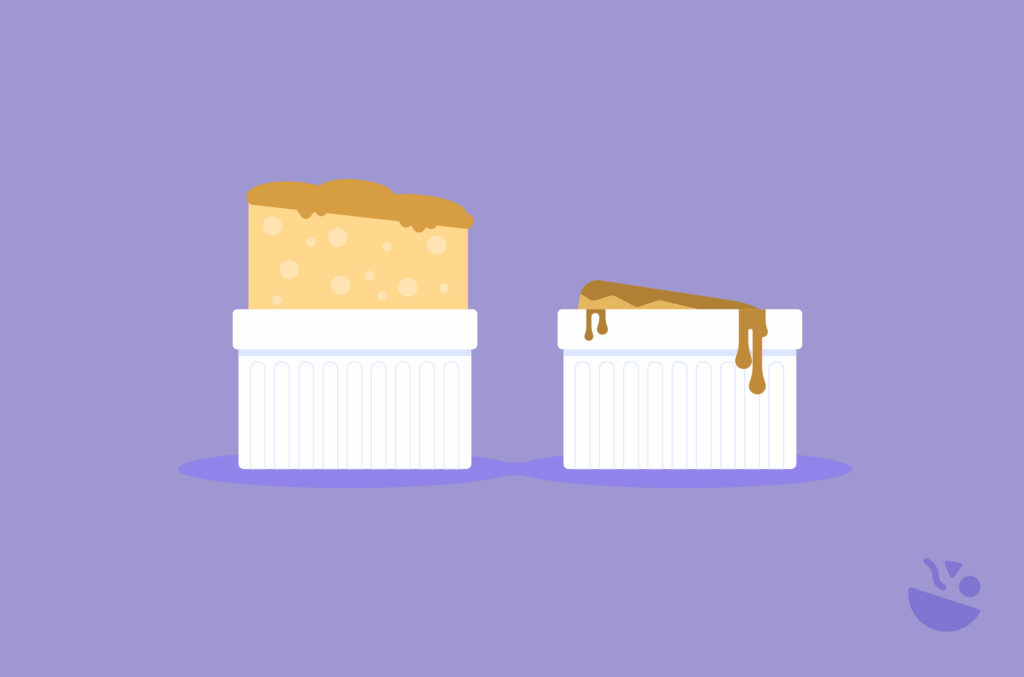
Most recipes fail because small mistakes happen at the same time.
You scooped the flour instead of weighing it – that’s already up to 25% more than the recipe intended. Your oven runs hotter than the dial says, so the edges set before the center has a chance to rise. Your butter was still cold from the fridge, so it never creamed properly.
None of those would have killed the recipe on their own. Together, they did.
That’s how recipe failure actually works. Errors compound. And once you know the four categories where they tend to cluster, you can usually trace any failure back to a specific cause:
- Measurement and ingredients
- Equipment and environment
- Technique and process
- Recipe quality
If you’re a food blogger whose readers keep saying “it didn’t work,” or you’re just trying to figure out what went wrong in your own kitchen, this is for you.
What are the main reasons recipes fail?
Most failures trace back to factors that include what you use, where and how you work, the methods you apply, and the overall standard of the final result.
Get familiar with them, and you’ll stop guessing every time something goes wrong.
Measurement and ingredient errors
Measurement variance, expired leaveners, wrong substitutions, ingredients at the wrong temperature – any one of these can derail a recipe before you’ve even turned on the oven:
- Scooped flour packs into the cup, giving you around 150g. Spooned flour gives you closer to 120g, a 25% difference before anything else goes wrong. Weigh your key ingredients instead of measuring by volume. 💡 We go deeper on this in our recipe scaling guide!
- Baking powder loses potency after about 6 months once opened. Baking soda is more stable but can still weaken over time – test both before using in anything you care about.
- Ingredient substitutions catch people off guard more than almost anything else. Ingredient variations in properties like pH, fat content, and protein structure affect their overall chemistry, so substitutions can fundamentally alter the outcome. 💡 Check out our ingredient substitutions chart for safer alternatives.
- Room temperature in baking means 68–72°F, cool to the touch. Cold butter won’t cream properly, and cold eggs slow down emulsions, so set your dairy and eggs out 30–60 minutes before you start.
Equipment and environmental problems
Your oven temperature, your pans, your altitude, even the humidity in your kitchen – none of these appear in the recipe, but all of them affect the outcome:
- Inaccurate oven temperature means a recipe calibrated for 350°F baking in a 375°F oven bakes 7–15% faster. Pick up a $10 oven thermometer, check your actual temperature, and adjust your dial accordingly.
- Opening the oven door drops the internal temperature by around 50°F in seconds. For anything with a rising structure, that sudden drop can collapse it mid–bake, so use your oven light and resist opening the door until at least 75% of the bake time has passed.
- Pan material and size change how heat transfers to your food. Dark pans absorb more heat than light ones, glass retains heat longer than metal, and switching from a 9–inch to an 8–inch pan changes batter depth by about 25%, adding 5–10 minutes to your bake time.
- Preheating is more than just hitting the target temperature on your display. Rack position does too, with the top rack browning faster and the bottom rack crisping the base, so bake where the recipe intends.
- Altitude and humidity are real variables worth knowing about. High altitude speeds up rising and increases evaporation, while humid climates can pre–moisturize your flour before you even measure it.
Technique and process mistakes
How you read the recipe, how you prep, how you mix, how you use the pan, and whether you trust a timer over your own eyes – technique errors compound everything else that’s already slightly off:
- Not prepping all your ingredients ahead (called mise en place) means scrambling mid–recipe for that forgotten chop or measure, and that pause causes real problems. Meringues deflate, doughs overproof, and sauces break while you’re scrambling to catch up.
- Overmixing develops excess gluten, making cakes and muffins tough. Undermixing leaves flour streaks and uneven texture, so for cakes, mix until just combined, and for bread, mix thoroughly.
- Overcrowding the pan drops the temperature and traps moisture, turning what should be browning into steaming. That tasty browning (the Maillard reaction) needs dry heat and surface contact, so cook in batches if needed.
- Stated cooking times are estimates written for specific equipment, not your kitchen. Use doneness cues instead: a toothpick with moist crumbs, 165°F internal for poultry, dough that springs back slowly, or golden brown color.
Recipe quality issues
Vague instructions, missing process cues, untested ratios, critical info buried in blog text – some recipes are written in a way that makes failure predictable before you’ve even started.
- Poorly tested recipes are developed in one kitchen by one person, without outside testing. Red flags include no author attribution, no reader comments, and no equipment specifications.
- Vague instructions like “cook until done” or “bake until golden” don’t travel to other kitchens. “Bake until a toothpick inserted in the center comes out with moist crumbs, 25–30 minutes” does.
- Missing process indicators make time–based instructions unreliable because your kitchen temperature isn’t the same as the recipe author’s. “Proof until dough doubles in size” works anywhere. “Proof for 2 hours” might not.
- Critical info buried outside the recipe card gets missed by half your readers. If the note about using room temperature butter is three paragraphs up in the blog post, it’s effectively invisible to anyone who scrolled straight to the recipe.
- Conversion errors introduce mistakes before someone even starts cooking. Write your recipe in the system you cook in and let a tool handle the conversion.
What steps should I take to troubleshoot a failed recipe to figure out what went wrong?
When a recipe fails, the instinct is to change several things at once. That’s the one approach that guarantees you won’t learn anything. Change one variable per test, and you’ll know exactly what fixed it.
First, map your symptom to a category. Let’s go over some common symptoms and what they might indicate:
- Dense baked goods point to measurement errors like excess flour or technique mistakes like overmixing.
- Uneven baking points to equipment problems like oven hot spots or the wrong pan.
- Collapsed structures usually come from temperature issues or expired leaveners.
- Bland flavor points to measurement errors like expired spices or recipe quality problems in an undertested recipe.
- Bread that won’t rise points to expired yeast, yeast killed by liquid that was too hot, or an environment that’s too cold for proofing.
Once you’ve identified the likely category, isolate one variable and test it.
For example, if your cookies spread too thin, chill the dough first. If that fixes it, the issue was butter temperature. If it doesn’t, try reducing the butter by two tablespoons. Still spreading? Check your oven temperature.
Work through one change at a time, and you’ll find the cause.
If three systematic tests don’t move the result in the right direction, the problem is likely the recipe itself. Fundamental ratio issues don’t respond to technique adjustments. At that point, look for guidance from a better developed recipe with positive comments and clear instructions rather than continuing to chase a fix that doesn’t exist.
💡 Understanding the essential components of a well–written recipe helps you spot fundamentally flawed recipes before you commit the ingredients.
What recipe developers should do
If you publish recipes, you’re writing for kitchens you’ve never been in, on equipment you’ve never used. These are the practical steps that close the gap between your kitchen and your reader’s:
- For measurement and ingredient errors, include gram weights for key ingredients alongside volume measurements. Specify ingredient states directly in the ingredient list, like “2 eggs, room temperature” or “100g butter, softened.” If a specific brand matters to the outcome, say so.
- For equipment and environmental problems, note whether your recipe was developed in a convection or conventional oven. Specify the exact pan size and material you used. If you know your recipe behaves differently at high altitude or in humid conditions, include that in your notes.
- For technique and process mistakes, write clear recipe instructions as if your reader has never made this before. Replace time estimates with process indicators wherever you can, like “knead until the dough springs back slowly when poked.” Keep every critical detail inside the recipe card, not in the blog post above it.
- For recipe quality, test the recipe at least twice before publishing. Then have someone else follow your written instructions without asking you any questions. If they get confused at any point, that’s a gap in your recipe, not a gap in their ability.
Before you hit publish, run through this checklist:
- Does the title include the dish name and one defining detail?
- Are ingredients listed in the order they’re used?
- Are weights included alongside volume measurements?
- Are ingredient states specified inline, like “room temperature” or “softened”?
- Are divided ingredients marked as “divided” with amounts noted per step?
- Do instructions include time ranges and sensory cues instead of vague phrases?
- Are pan size, material, and oven rack position specified where they affect results?
- Are prep time, cook time, and any inactive time listed separately?
- Is yield stated in plain terms with portion size clarified if needed?
- Is all critical information inside the recipe card, not buried in the blog post?
- Does the structured data pass Google’s Rich Results Test with no errors?
How WP Recipe Maker helps prevent recipe failures
Presentation problems are responsible for more reader failures than most food bloggers realize. WP Recipe Maker structures your recipe card so the details that matter most are impossible to miss:
- Ingredient and instruction groups organize components and steps by stage, making the process clearer and easier to follow.
- Inline ingredients tie specific quantities directly to the step that uses them, removing the back–and–forth that causes measuring errors mid–cook.
- Custom Recipe Fields add dedicated spots for notes like “room temp eggs” directly on the card – no blog–hunting required.
- The notes field gives you a dedicated place for critical context that would otherwise get buried in blog text.
- Adjustable servings as well as automatic unit and temperature conversion handle the reader–side math, so scaling errors and metric–to–US confusion don’t become your problem to troubleshoot in the comments.
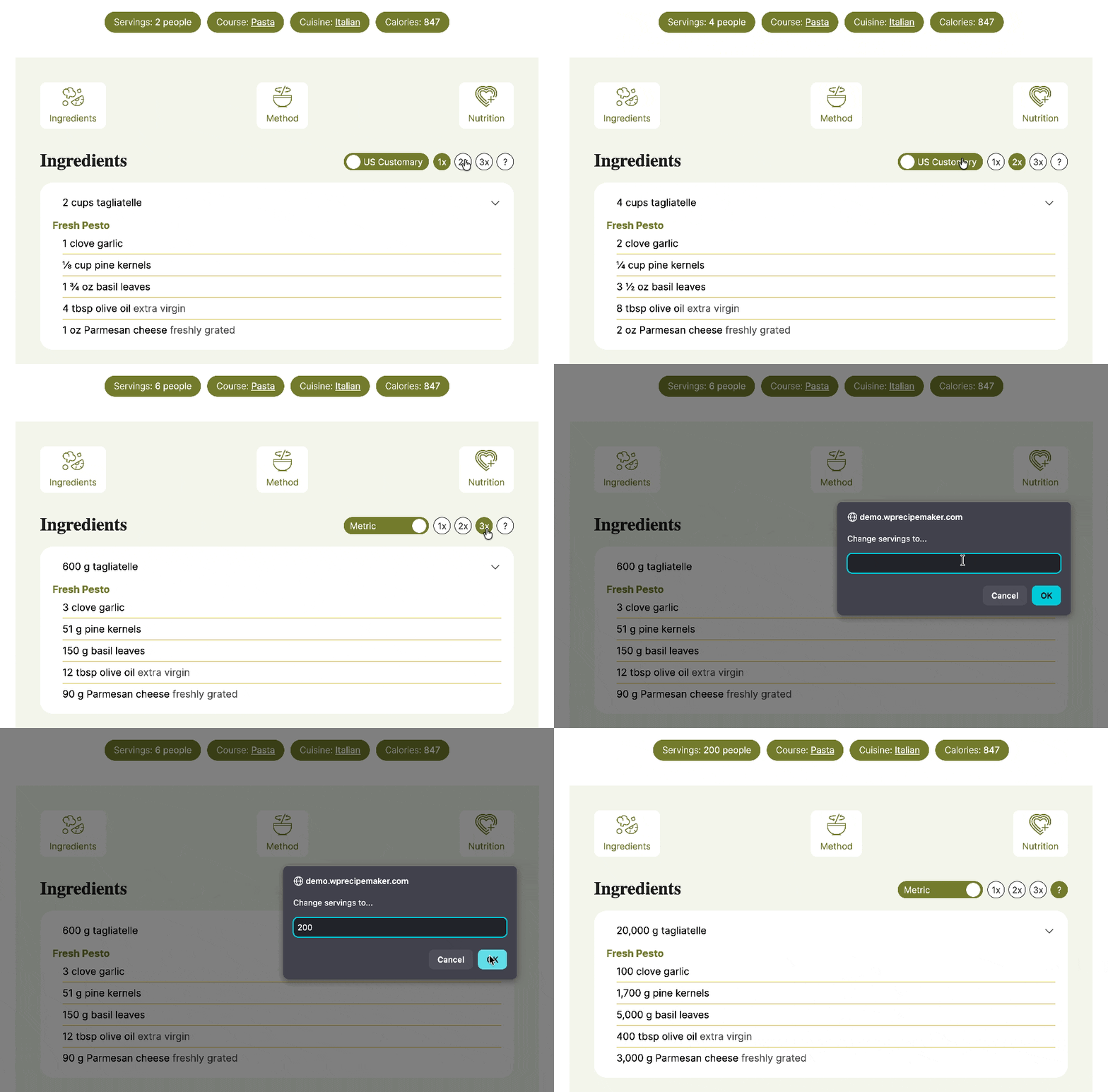
What WP Recipe Maker can’t do is validate your ratios or fix a recipe that hasn’t been properly tested. The plugin structures and presents your recipe clearly. Whether the recipe actually works is still on you.
Prevent your next recipe failure today
Recipe failures usually come from several small issues stacking up. Some extra flour or an oven that’s a bit too hot might each be manageable on their own, but combined, they can completely derail the final outcome.
The four categories in this guide cover the vast majority of what goes wrong in a kitchen. Once you know them, failures start feeling like solvable problems with identifiable causes. That’s true whether you’re troubleshooting your own bakes or writing recipes that need to work in someone else’s kitchen.
For food bloggers, WP Recipe Maker helps recipes hold up wherever they’re shared. It supports reliable conversions, properly structured instructions, well–placed ingredient details, and an overall format that readers can easily follow.
Stop leaving results to chance. WP Recipe Maker structures your recipe card so nothing critical gets missed, from your kitchen to theirs.