
The Modern Nonna, run by Snejana Andreeva aka Sneji, is a food blog known for healthier takes on viral food trends, alongside modern versions of Bulgarian and Greek childhood recipes that reflect Sneji’s background.
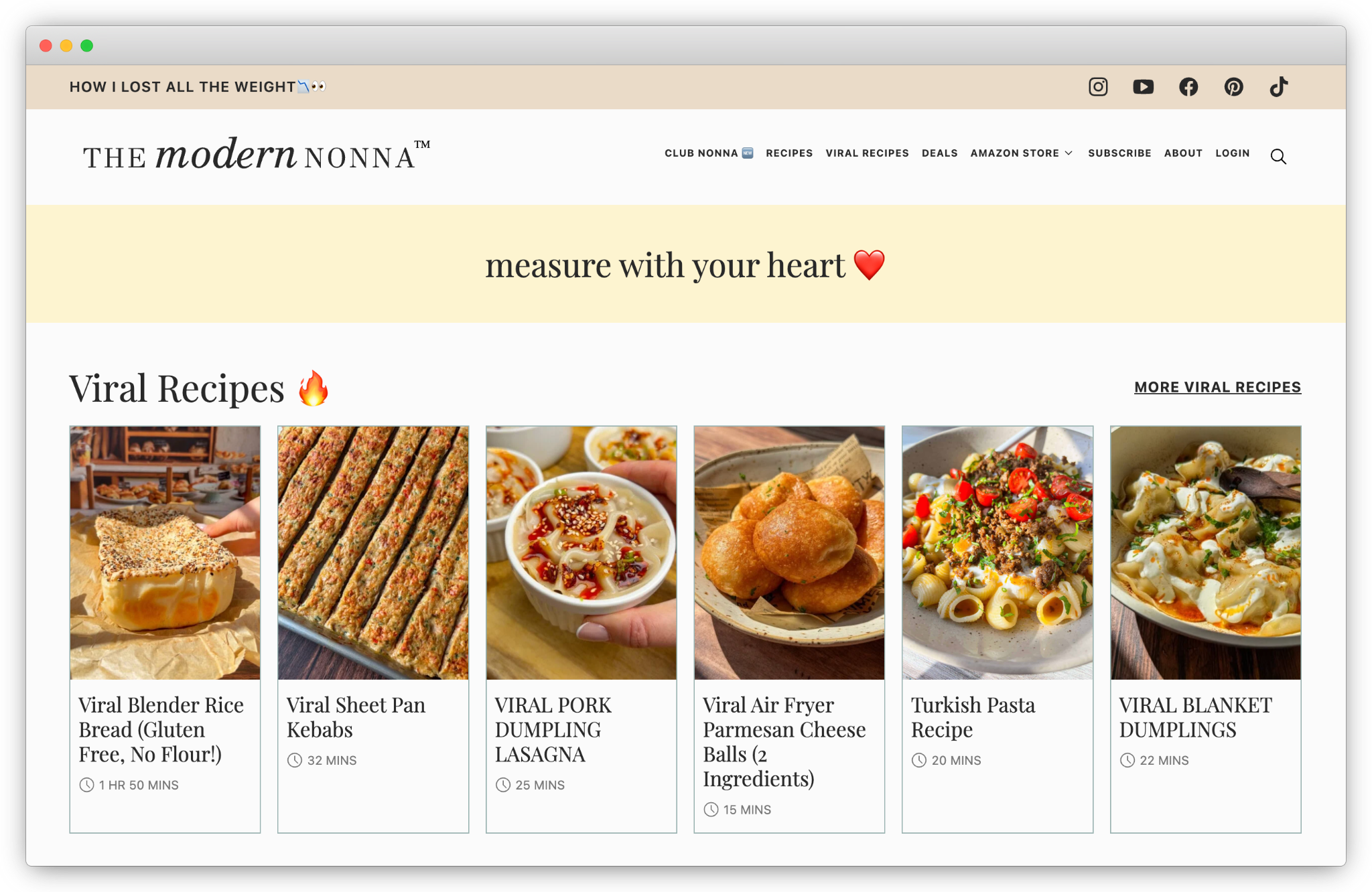
The audience is made up of health and fitness-conscious home cooks who still want food with real flavor. Many readers are looking for meals that support their health goals without feeling restrictive, and the strong sense of community around the brand is a big part of why they keep coming back.
The business is monetized through affiliate equipment links, branded ingredient recommendations, and on-site advertising. Everything runs through a single WordPress site using WP Recipe Maker.
| Site | The Modern Nonna |
| Creator | Snejana Andreeva (Sneji) |
| Niche | Healthy takes on viral recipes and trends, plus modernized Bulgarian and Greek childhood recipes. |
| Audience | Health and fitness-conscious home cooks who want delicious food without sacrificing their goals. |
| Business model | Affiliate and equipment links, branded ingredient recommendations, and site advertising. |
| Content focus | Healthier trending recipes, macro-friendly meals, and modernized Balkan family recipes. |
| WP Recipe Maker setup | Single site running on WP Recipe Maker. |
What is The Modern Nonna and who reads it?
The Modern Nonna is built around the idea that healthy food should still feel exciting, comforting, and full of flavor.
The site publishes healthier takes on viral and trending recipes, alongside modernized dishes inspired by Bulgarian, Greek, and Mediterranean home cooking. That mix gives readers both familiar comfort and fresh ideas they likely haven’t seen before online.
Most readers are working towards better health, fitness, and lifestyle habits, but they are not looking for traditional “diet food.” They want recipes that help them stay on track while still enjoying what they eat.
Community is another big reason people are loyal to the brand and return to the site. The Modern Nonna has built a supportive audience of people working toward similar goals, sharing progress, and finding meals that make healthy eating feel realistic.
Why did The Modern Nonna decide to use WP Recipe Maker?
For The Modern Nonna, the decision started with what she was already seeing across other successful food blogs.
WP Recipe Maker was showing up on peers’ sites, and it consistently looked polished, professional, and easy to use from a reader’s perspective. That first impression mattered. When you run a content-driven business, tools need to look good and work properly at the same time.
“It was an easy decision. I saw WP Recipe Maker on a lot of my peer’s sites and it always looked polished and functioned seamlessly. When we started using the feature, the whole team agreed it made our work easier.”
Once her team began using it behind the scenes, the value became even clearer.
Instead of adding friction to the publishing process, it made day-to-day work easier. That practical impact helped confirm it was the right fit, not just for readers, but for the people managing the site as well.
How does a recipe go from idea to publication?
The workflow at The Modern Nonna is built around testing first and publishing second.
Before anything reaches WordPress, each recipe is developed and tested multiple times. That gives space to fine-tune ingredients, timings, and instructions until everything works the way it should.
Once the recipe is ready, the recipe is sent to the team for the full handoff through WhatsApp. That includes the ingredient list, method, and photos, so everyone has what they need to build the post. From there, the team uses WP Recipe Maker to turn those notes into a finished recipe card inside WordPress.
“My team inputs the recipe elements in WP Recipe Maker – we love the ‘import from text’ option, so they can literally copy and paste from our WhatsApp channel into Wordpress.”
That import-from-text feature removes extra formatting work and speeds up the publishing process. Instead of rebuilding recipes manually, the team can move straight from shared notes to a structured post that is ready for final review and publishing.
Which WP Recipe Maker features does The Modern Nonna rely on most?
The Modern Nonna’s most-used features reflect the needs of both the audience and the brand. They help readers cook with confidence while making recipes easier to follow for an international audience.
One of the biggest features is unit conversion. With readers across both Canada and the United States, measurement preferences vary. Some want metric, while others prefer imperial measurements.
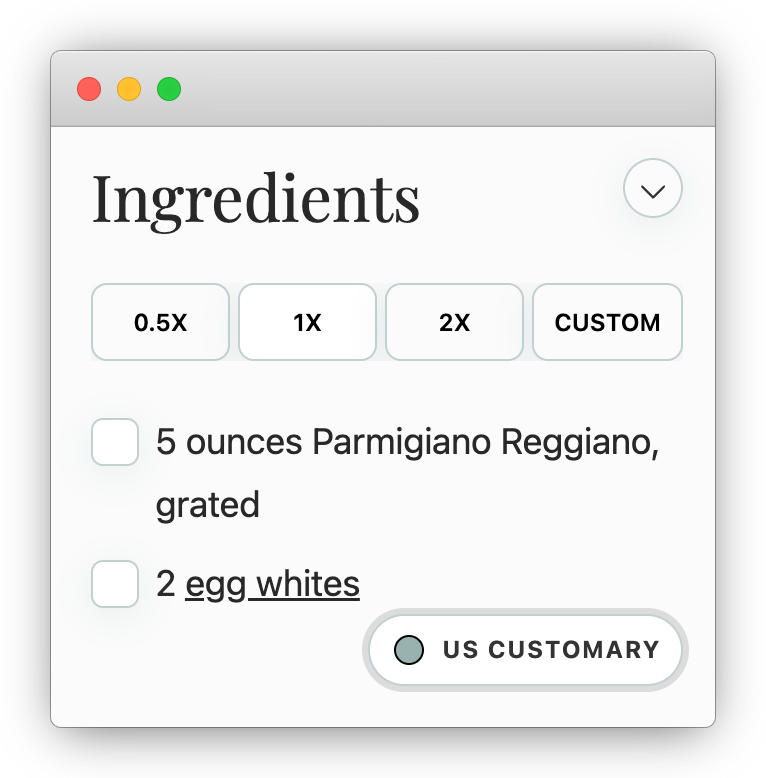
“Because I have a lot of readers in both Canada and the US, some want imperial measures and others want metric. It’s convenient to have a built-in feature for translating ingredient quantities.”
That built-in flexibility removes friction for readers and makes recipes more accessible no matter where in the world someone is cooking.
Adjustable servings is another reader favorite. It allows visitors to scale recipes up or down instantly without doing the math themselves, which is especially useful for meal prep, smaller households, or feeding a crowd.
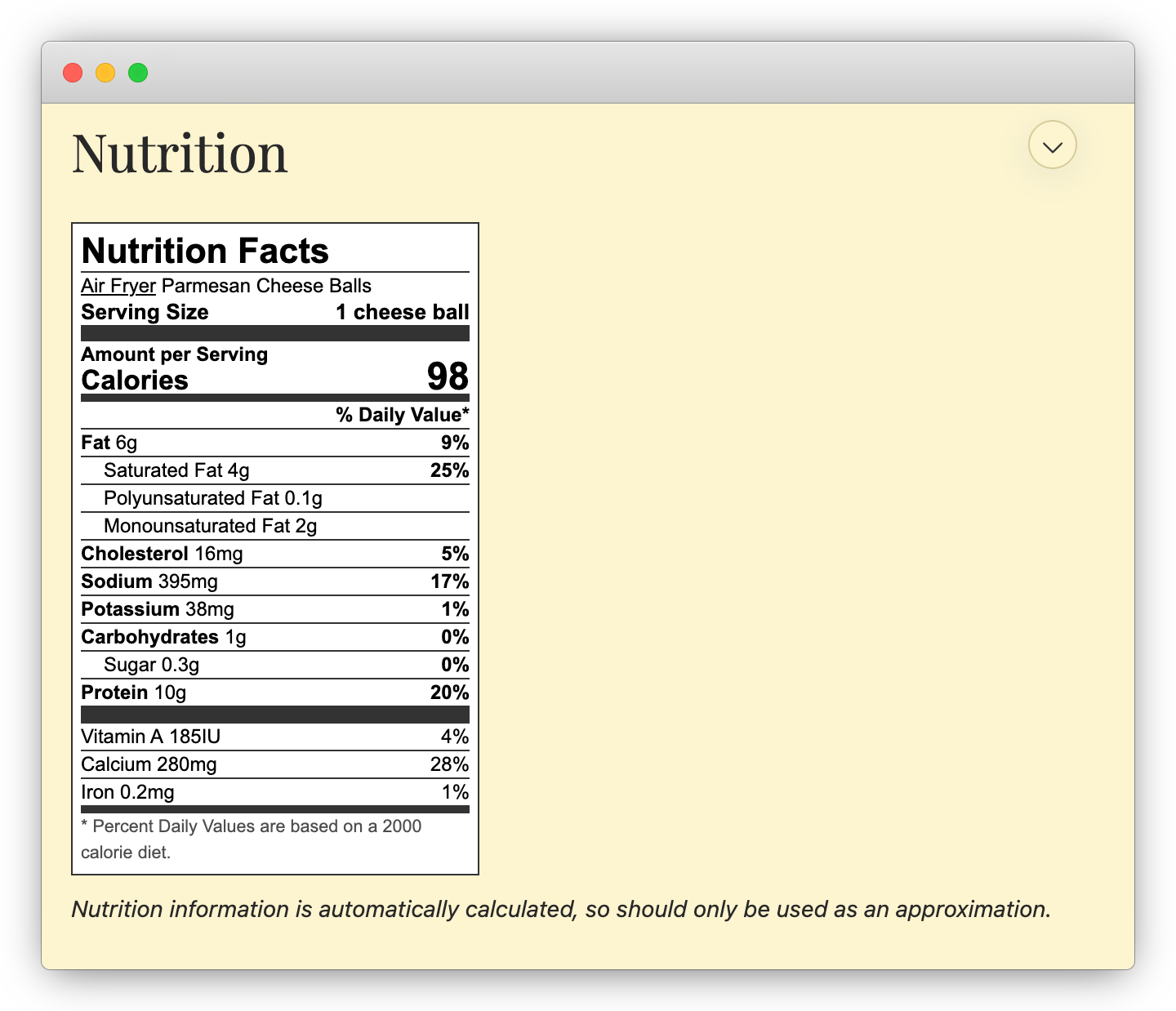
Nutrition facts are also a standout feature for The Modern Nonna. Since her weight-loss journey has become an important part of her brand, macros and nutrition details matter to both her and her audience.
“The nutrition fact feature is a favorite of mine, because it’s a quick, accurate, and reliable way to calculate macros.”
Together, these features support a health-focused audience that wants practical tools, not just recipe inspiration.
How does The Modern Nonna monetize with WP Recipe Maker?
The Modern Nonna earns revenue through a mix of affiliate equipment links, branded ingredient recommendations, and display advertising. For a recipe site, the recipe card is one of the best places to support that strategy because it reaches readers when they are actively cooking and ready to buy.
WP Recipe Maker helps make those recommendations feel natural and organized.
The dedicated equipment section gives The Modern Nonna a clear place to recommend tools she actually uses, making it easy for readers to shop her links without searching through the post. Ingredient lists can also include branded product links, which works well for trusted pantry staples or favorite ingredients.
One feature she especially values is how equipment links can be managed across the entire site.
“I appreciate that linking a piece of equipment in one post will automatically update all the recipes on my site, so readers can easily find my favorites.”
That means a single update can carry across multiple recipes, saving time for the team while keeping recommendations consistent for readers. It is a smart fit for a growing content business that wants monetization built into the workflow instead of added as an afterthought.
Did readers notice the difference?
One of the clearest signs of success was what stopped happening.
After implementing WP Recipe Maker, The Modern Nonna saw a significant drop in comments asking for metric conversions, help doubling or tripling recipes, or links to recommended equipment.
“The volume of comments requesting metric conversions, assistance doubling or tripling a recipe, or asking for an equipment link has significantly reduced, which is a good thing!”
That shift suggests readers are finding what they need directly inside the recipe card instead of needing extra support in the comments section.
Unit conversions, adjustable servings, and built-in equipment links help visitors solve common problems on their own. The result is a smoother experience for readers and fewer repetitive support requests for the team.
When a recipe card answers questions before they need to be asked, it usually means the user experience is working exactly as intended.
What’s the biggest result?
For The Modern Nonna, the biggest results show up in two places: reader engagement and day-to-day site management.
The recipe card has become the highest-engagement area on each post. It is where readers spend the most time, which makes sense. That is where they find the ingredients, steps, nutrition details, conversions, and tools they need while cooking.
“The recipe card is definitely the hotspot for my posts – readers spend the most time on this part of the page.”
That level of engagement is valuable because it shows readers are actively using the content, not just skimming past it.
Behind the scenes, the workflow has also become more reliable. Since integrating WP Recipe Maker, the team has dealt with noticeably fewer backend and formatting issues.
That means less time fixing layout problems, fewer publishing headaches, and a smoother experience when new recipes go live. Over time, that kind of consistency matters just as much as traffic or clicks.
For a growing food brand, strong reader engagement paired with fewer technical problems is a powerful combination.
What advice would The Modern Nonna give other food bloggers?
The Modern Nonna’s first piece of advice is to take your website seriously once monetization becomes a real goal.
That means investing in a professional design that reflects your brand and is built around what your audience actually needs. A strong site design does more than look good. It helps readers trust your content, navigate more easily, and return again.
She also sees the recipe card as more than a place to list ingredients and instructions. It should actively support readers while they cook.
That is why features like step check-off, collapsible sections, and toggleable process photos can make such a difference. They help readers focus on what they need in the moment and reduce frustration in the kitchen.
“I want my readers to feel like I’m in the kitchen with them, supporting them through the recipe.”
That mindset is worth copying. The best recipe sites do not just publish recipes. They help people succeed when it is time to cook.
Want to see it live?
These three recipes show how The Modern Nonna uses WP Recipe Maker to support readers directly inside the recipe card.
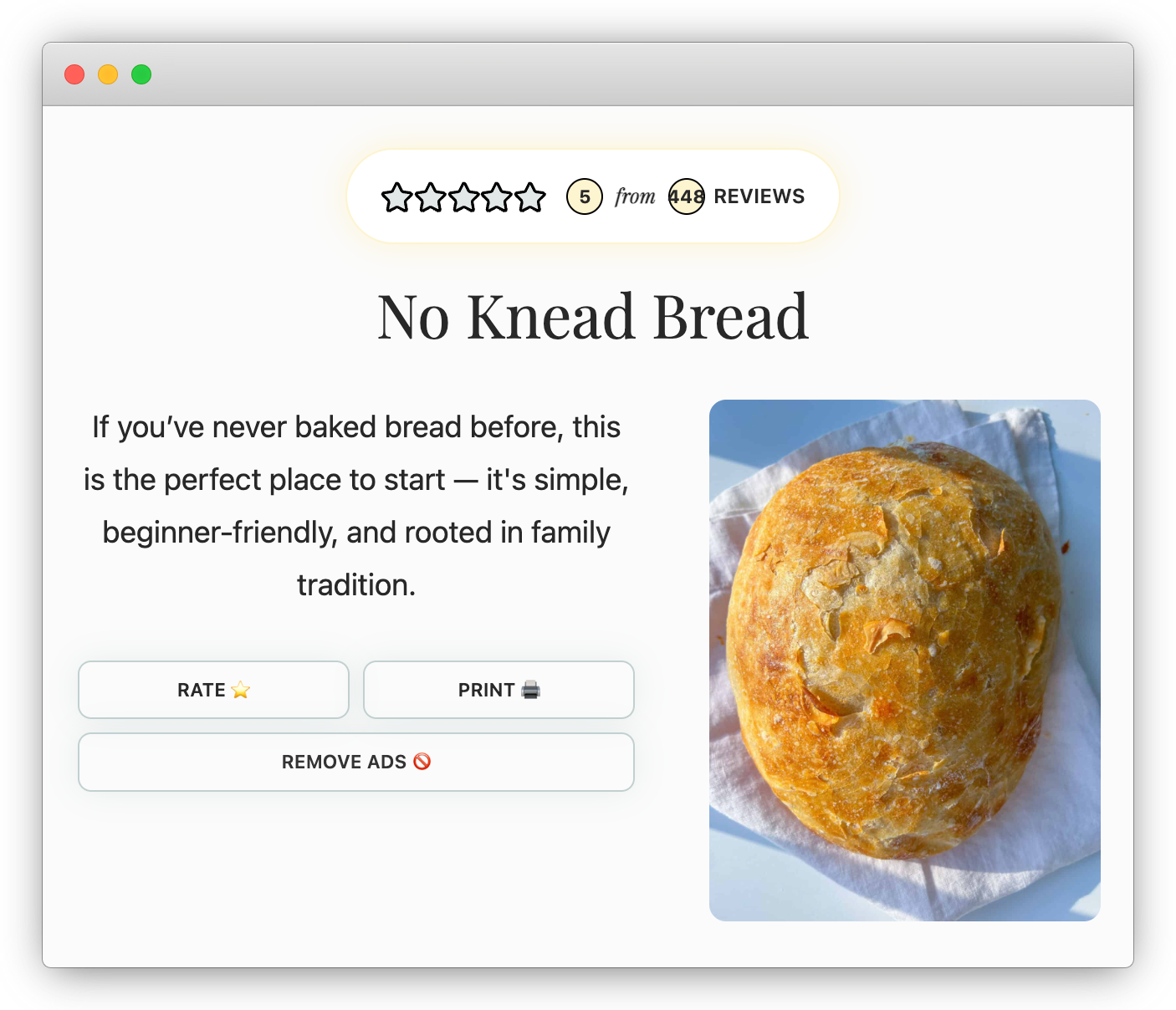
- No Knead Bread: A great example of showing a high-engagement recipe card, with ratings, equipment links, adjustable servings, US Customary/Metric conversion, step-by-step instructions, process photo toggles, personal notes, and full nutrition details. It also shows how Sneji combines family storytelling with practical reader support.
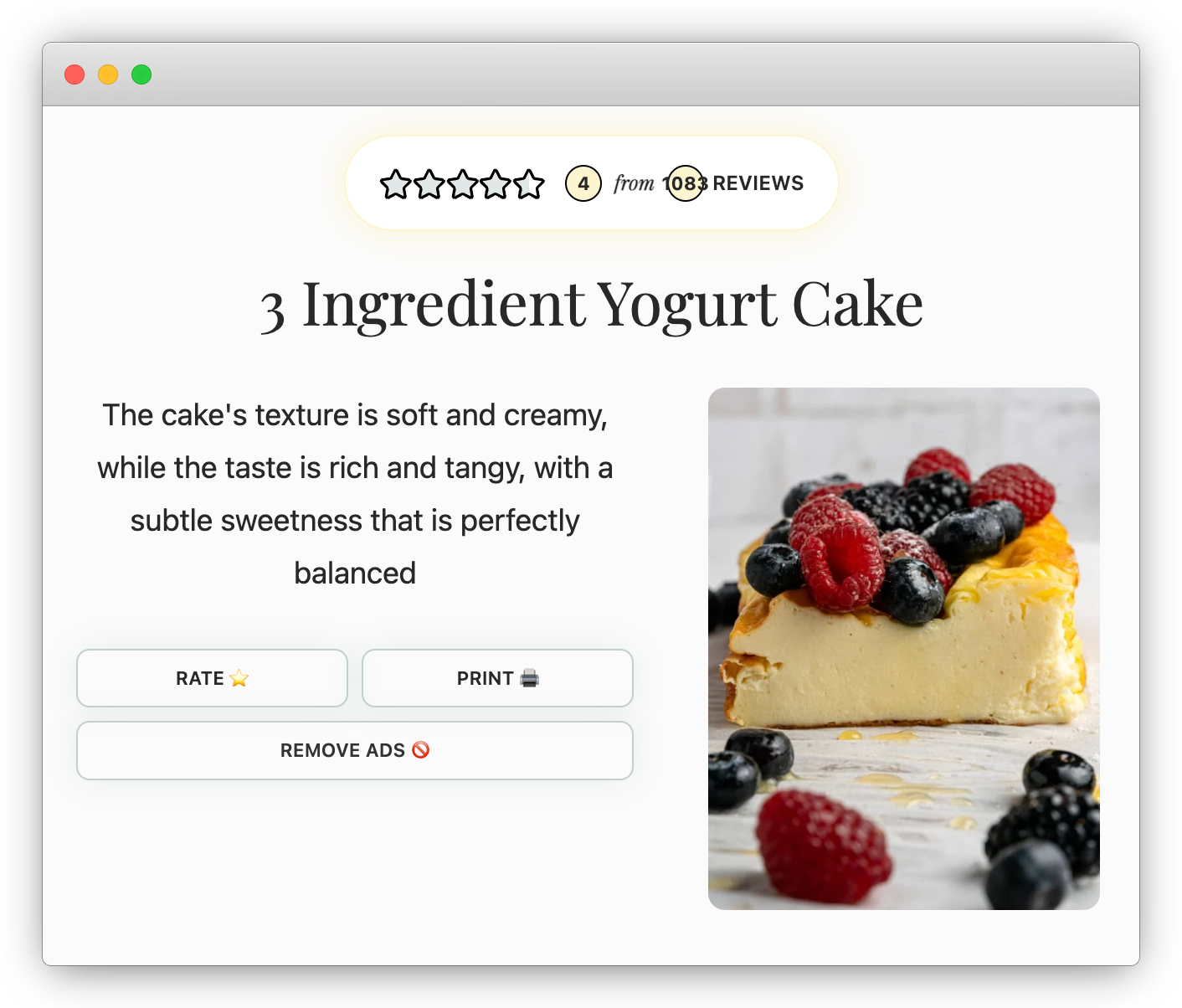
- 3 Ingredient Yogurt Cake: This recipe shows the health-focused side of the brand. The card includes simple ingredients, nutrition facts, serving adjustments, equipment links, and notes that help readers customize the recipe without overcomplicating it.
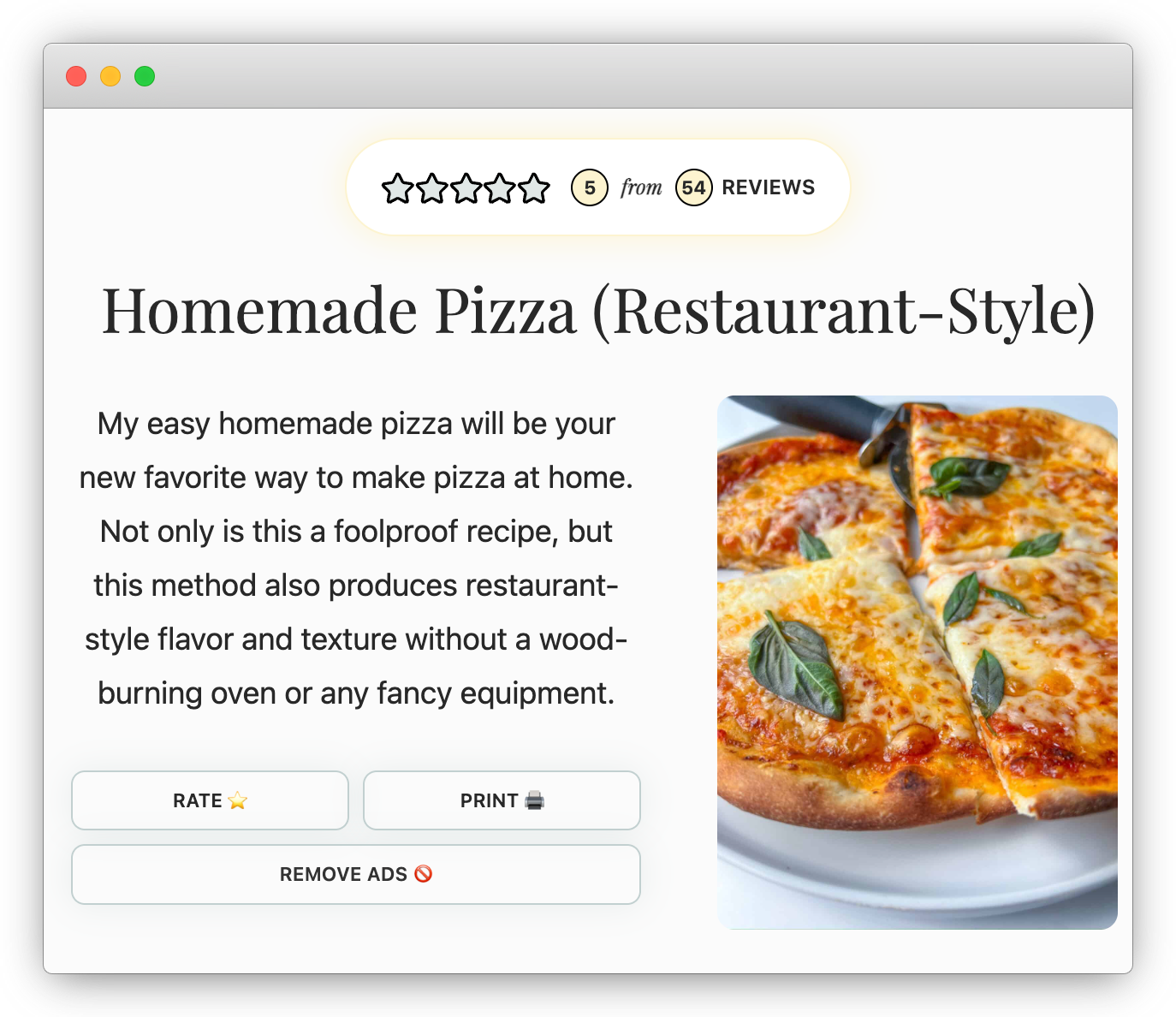
- Homemade Pizza: This shows WP Recipe Maker handling a more detailed recipe with grouped ingredients, longer instructions, equipment recommendations, notes, nutrition, and reader comments. It’s a good example of how the same card structure stays consistent even when the recipe is more involved.
Together, these examples show why the recipe card has become such an important part of The Modern Nonna site. Readers can adjust, convert, save, shop, follow, and cook from one organized place.
WP Recipe Maker empowers The Modern Nonna to deliver a polished, reader-first experience that keeps the site running at its best. By eliminating backend friction and leaning into health-focused features, the platform ensures every reader feels supported from the first ingredient to the final bite.