
Marc Matsumoto has been sharing original recipes on No Recipes since 2007, bringing global flavors (especially Japanese) into home kitchens for nearly two decades.
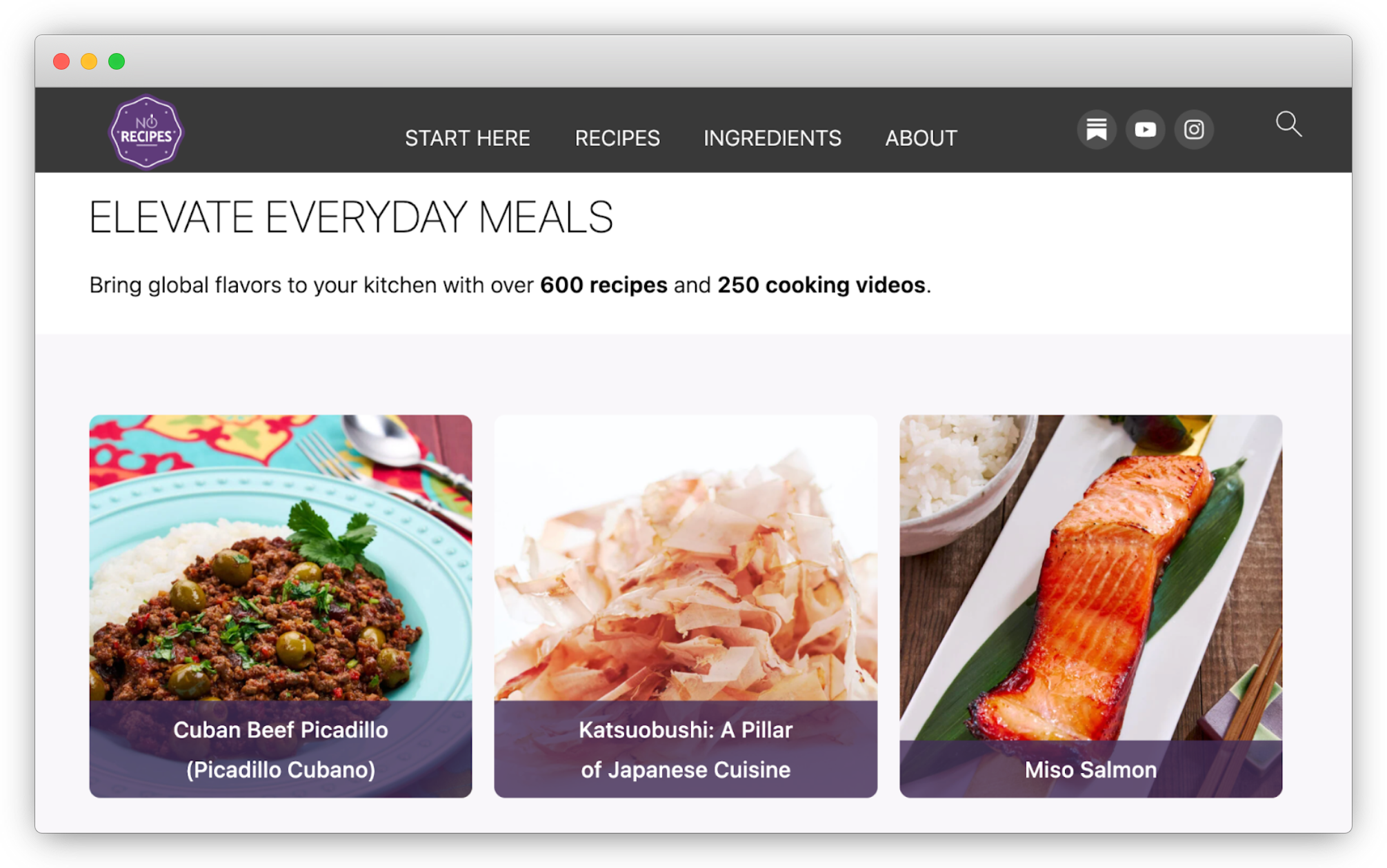
His tribe of readers comes with a simple expectation – instead of just a list of instructions to follow, they want to understand why a technique works, so they actually get better at cooking over time. That teaching-first mindset has powered 1,500+ recipes and an audience that genuinely trusts what Marc puts out.
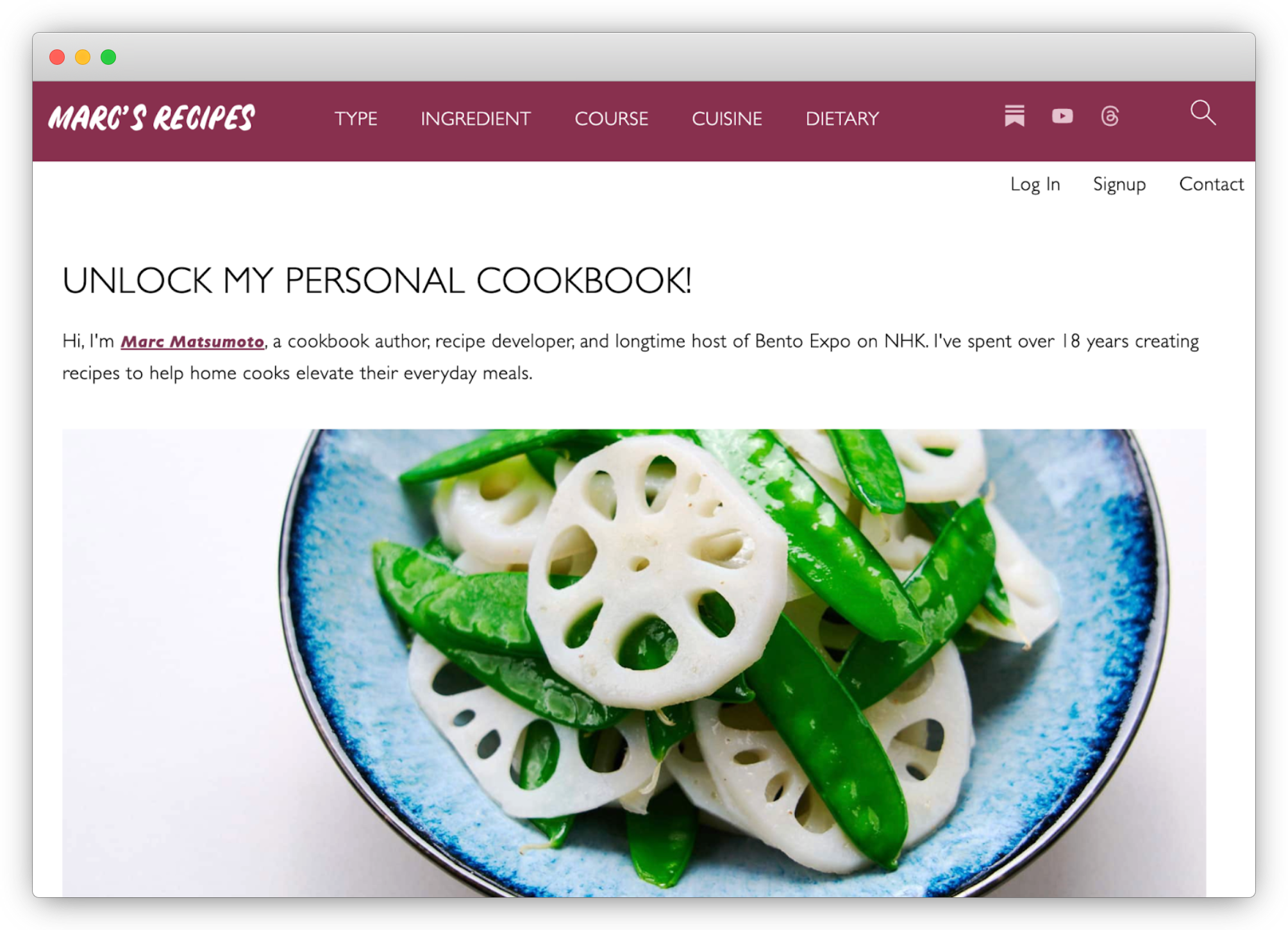
More recently, he launched a second site, Marc’s Recipes, a member-supported space with no ads, built around the idea that food blogging works best when you’re writing for people, not algorithms. Both sites run on WP Recipe Maker.
| Site | No Recipes (primary); Marc’s Recipes (secondary) |
| Niche | Global home cooking with a focus on Japanese cuisine |
| Audience | Home cooks who want to understand the why behind every recipe |
| Business model | No Recipes: ad-supported · Marc’s Recipes: member-supported (no ads) |
| Recipe count | 1,500+ published over 18 years |
| WP Recipe Maker setup | Both sites run on WPRM |
Here, Marc shares how a plugin crisis nearly cost him hundreds of recipes, how WP Recipe Maker helped pull him out of it, and the specific features that now power his workflow across both sites.
What is No Recipes and who reads it?
The name No Recipes started as a running joke. Friends would come over for dinner, love the food, ask for the recipe…and Marc would just shrug and say “no recipes.”
Cooking, for Marc, has always been less about following steps and more about understanding what’s actually happening in the pan.
That idea runs through everything the site publishes. Each recipe goes beyond the dish itself, breaking down why certain flavor combinations work, what happens when you tweak a ratio, and how to build the kind of kitchen intuition you can carry into your own cooking.
As Marc puts it:
“I teach them why things work, so they actually become better cooks.”
It’s a big part of why readers stick around. No Recipes is where home cooks go when they want to actually get it.
Marc’s Recipes takes that philosophy even further. Without ads influencing what gets published, Marc can focus on the recipes he’s most excited about, for readers who show up because they trust his taste. He describes it as a throwback to how food blogging used to feel, writing for people first.
However, running two sites with two very different models (one built for search visibility and ad revenue, the other for a clean, ad-free membership experience) means the recipe plugin needs to be flexible enough to work well in both contexts.
For that to work, the recipe plugin powering both sites needs to be flexible enough to support a search-optimized, ad-supported experience on one site, and a clean, reader-first experience on the other, which is exactly how Marc uses WP Recipe Maker.
What went wrong before WP Recipe Maker?
By 2013, Marc had hundreds of recipes sitting on a plugin that had stopped receiving updates. When a WordPress update broke everything, he was stuck, until he connected with Brecht and migrated to WP Ultimate Recipe (the predecessor of WP Recipe Maker)
If you’ve ever had a plugin go abandoned on you, you know how that feels. The technical headache of migrating to another plugin is the first thing. Plus, you’ve got years of work sitting on top of infrastructure you can no longer trust. And the longer you wait, the harder the migration gets!
That’s the situation Marc was in when he reached out to us, and what happened next is a big part of why he’s still here almost two decades later.
Why did Marc choose WP Recipe Maker?
When Marc reached out for help, we didn’t just point him to a migration guide and wish him luck. We built a custom import feature into the WP Ultimate Recipe specifically so Marc could safely import all his recipes.
“Brecht has since helped me out more times than I can count, and that kind of personal support is rare these days.”
This hands-on approach is something we take seriously. When someone has hundreds of recipes on the line, Marc needed someone who would actually roll up their sleeves, and that’s what happened.
But support alone doesn’t keep someone around for over a decade. The plugin had to hold up on its own, too. And for Marc, it has:
“The plugin is legitimately the best I’ve seen. It keeps pace with current SEO recommendations.”
Marc also notes that features showing up on competing platforms tend to make their way into WPRM pretty quickly. That matters a lot when you’re running a site as a real business, and you don’t want to wonder whether your recipe plugin is keeping up or slowly falling behind.
For Marc, the decision came down to three things:
- A developer who showed up when it counted.
- A product that kept evolving, and
- The confidence that his recipes were sitting on infrastructure he could actually rely on long-term.
How does Marc go from draft to published recipe?
Marc’s publishing process is refreshingly straightforward. He starts every recipe in Notion, where he works out the headnote, ingredient lists, and instructions before he opens WordPress. By the time he’s ready to build the post, the recipe itself is already solid, and it’s just a matter of getting it into the right format.
WP Recipe Maker makes this extremely easy. Marc imports his recipe as a block of text, and WPRM parses it into a structured recipe card automatically. No manual field-by-field entry, no reformatting. The card drops into the Gutenberg editor as a block, and from there, it’s mostly just fine-tuning.
That fine-tuning step is quick but worth doing right. Marc runs through a short checklist before hitting publish:
- Adjusting the serving count.
- Adding equipment.
- Uploading step-by-step photos.
- Reviewing the nutrition info to make sure everything looks accurate.
Nothing complicated, but an essential final pass that makes the difference between a recipe that’s just out there and one that’s genuinely ready for readers.
WPRM’s intuitive interface keeps the transition from Marc’s preferred writing tool to a finished recipe card nearly seamless. He’s not wrestling with the plugin or reworking content to fit a rigid structure. He writes the way he wants to write, pastes it in, and we handle the formatting. For someone managing 1,500+ recipes across two sites, that kind of speed adds up fast.
How does Marc make his recipe cards feel like him?
Marc has a clear vision for what his recipe cards should feel like, and it’s not about flashy design or cramming in every possible feature. It’s about trust.
He says,
“I want people to feel like a friend is walking them through a recipe, but I also want to give them all the information they need to decide whether they want to make it and then actually succeed.”
However, creating a feeling of friendly guidance is harder to pull off than it sounds. You need enough information that a reader can confidently decide yes, I’m making this tonight, but not so much that the card feels like a technical manual.
Marc found his balance by leaning into a handful of features that his audience actually uses:
- Clear cooking times so people can plan ahead.
- Adjustable servings with unit conversion for different household sizes.
- Equipment grids to avoid surprises halfway through.
- Nutrition info for readers who track that.
- Step-by-step photos that show what each stage should look like.
The best part is, every one of those choices was configured through the Template Editor. Marc describes himself as “not a super technical person,” and he didn’t need to be! The Template Editor gave him enough control to dial in exactly the layout he wanted without writing code or hiring a developer.
That’s the sweet spot we aim for: enough flexibility that a site like No Recipes can create something that feels unmistakably theirs, without the setup turning into a project in itself. Marc’s recipe cards look and feel like an extension of his brand because he made real design decisions rather than just picking from a handful of preset themes and hoping one was close enough.
Which features does Marc rely on most?
While deciding which features to use, Marc starts with his readers. He pays close attention to what people ask for in comments, emails, and feedback, and then checks whether the plugin already supports it. Most of the time, it does.
In his words, “More often than not, the feature already exists in WPRM.”
The features Marc relies on most all came from that same loop of listening to his audience and finding the right tool for the job:
- Adjustable servings that let readers scale a recipe up or down without doing mental math.
- Unit conversions that remove friction for international readers, which matters for a site with a Japanese cooking focus and a global audience.
- Printable recipe which gives people a clean version they can bring into the kitchen without scrolling through a full blog post.
- Step-by-step photos to walk readers through trickier techniques visually, with the option to hide them for more experienced cooks who’d rather just read.
- Inline ingredients where the exact amounts appear directly inside the instructions and auto-update when the recipe is scaled.
That last one, especially, has become one of the most popular features on the site.
“Being able to see exactly how much of an ingredient you need in the instructions, and to have that automatically update when the recipe is scaled, has gotten a lot of good feedback.”
It makes sense when you think about it from a cooking perspective. Nobody wants to keep scrolling back up to the ingredient list while they’re in the middle of a step. Having the amounts right there, updating automatically when you change the serving size, means fewer mistakes and a smoother experience at the stove. It’s a small detail that makes a real difference in how people actually cook from a recipe.
When a feature didn’t already exist, like refinements to step photo visibility or inline ingredient display, Brecht made it happen. That responsiveness is one of the reasons Marc has stayed with WPRM for over a decade.
(These are the features Marc uses most for his journey, but WPRM has many premium features worth exploring.)
Want to see it live?
If you want to see how all of this comes together on a live site, Marc’s recipes are a great place to start.
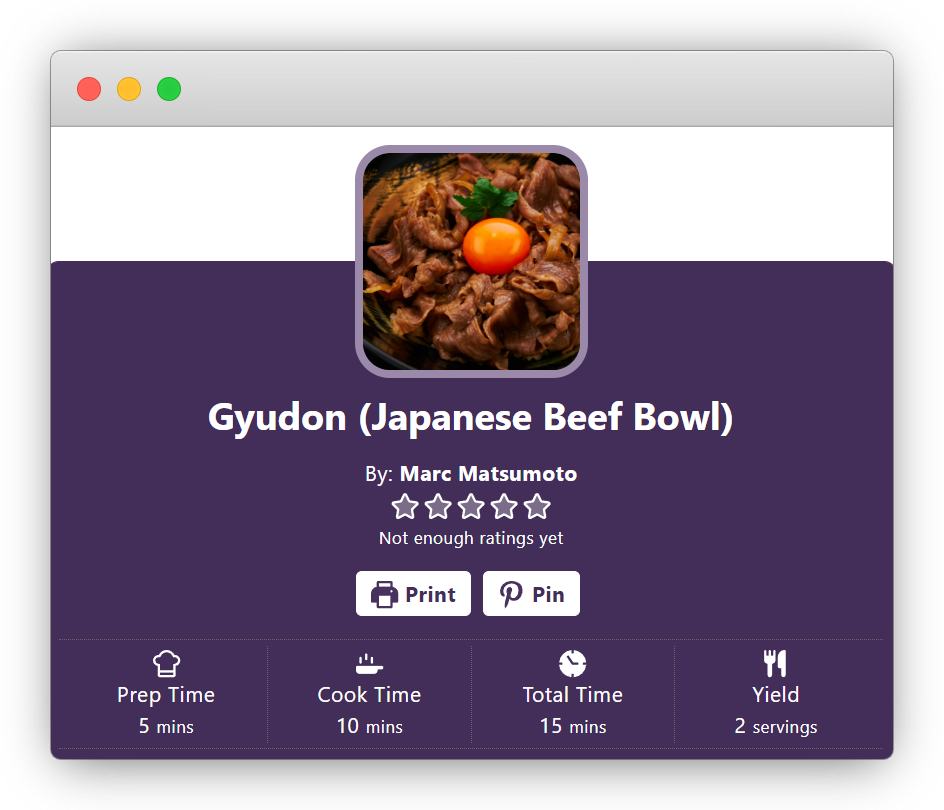
- Best Gyudon Recipe (Japanese Beef Bowl) is a good example of the full setup, including step photos, adjustable servings, equipment grid, and nutrition info all working together on a recipe that needs to feel both approachable and authentic.
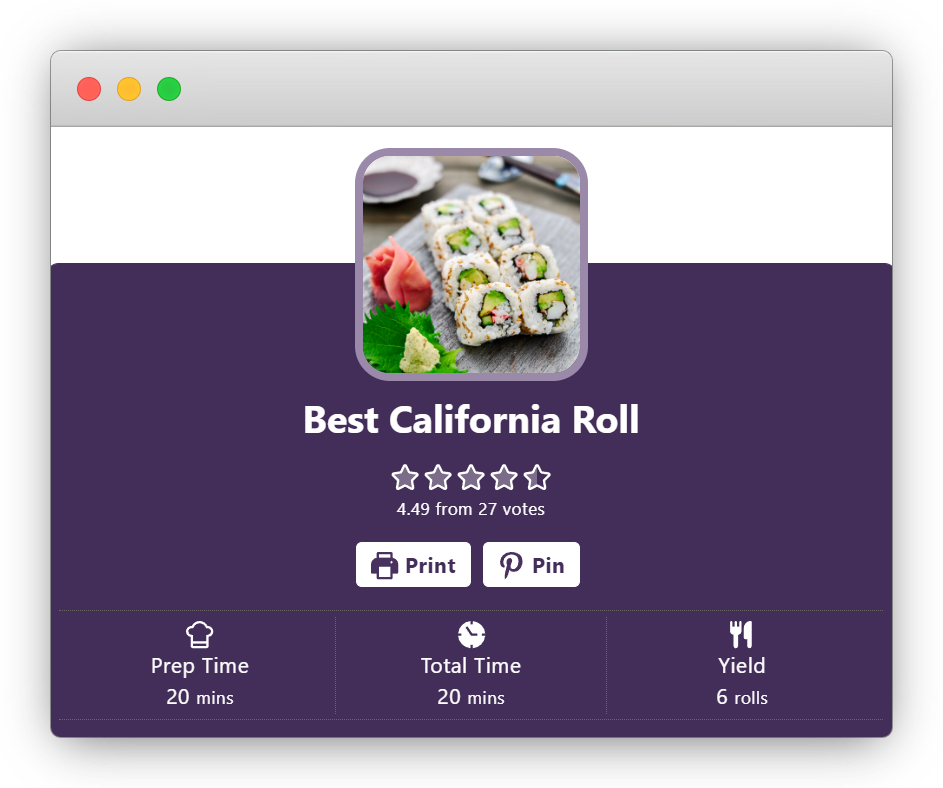
- California Roll shows what’s happening behind the scenes. It’s one of Marc’s strongest performers in search, and you can see WPRM’s structured data doing its job: the recipe shows up in Google’s recipe carousel with star ratings, cook time, and rich snippets.
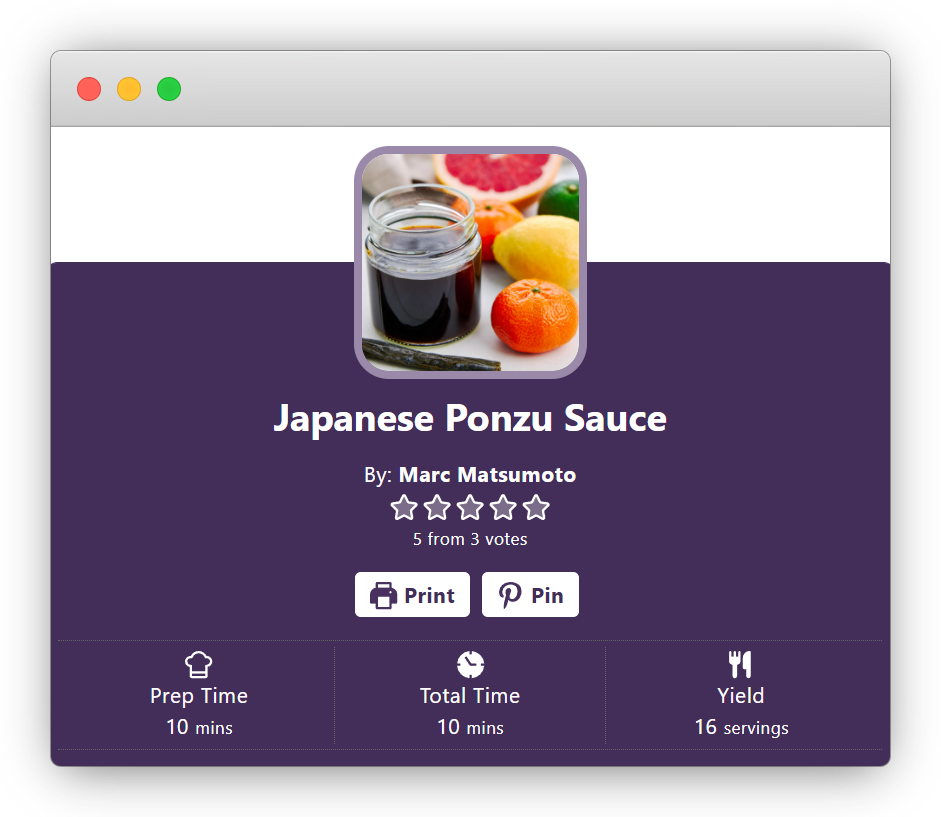
- Ponzu Sauce is a different format entirely, with a simpler condiment recipe that proves the recipe card works just as well when you’re not publishing a full multi-step dinner. Marc also uses it to link out to related ingredient articles, which keeps readers exploring the site.
How does Marc monetize across two different sites?
The two-site setup means the recipe card pulls double duty, optimizing for ad revenue on one site and delivering a premium, distraction-free reading experience on the other.
| No Recipes | Marc’s Recipes | |
| Revenue model | Ad-supported. | Member-supported (no ads). |
| What the recipe card needs to do | Play nicely with ad placements, load fast, and generate structured data that keeps recipes visible in search. | Stand on its own as the core product. Needs to be clean, focused, and worth the subscription. |
| What drives income | Search traffic → ad revenue. | Reader trust → membership fees. |
| Affiliate layer | Equipment links for tools Marc personally uses and trusts. | Not a priority. |
WPRM’s flexibility means Marc doesn’t have to compromise on either site. He’s running them on the same plugin without sacrificing either experience.
The recipe cards on No Recipes are fully optimized for search visibility with rich snippets, star ratings, and structured data pulling their weight in Google.
The cards on Marc’s Recipes are stripped back to the essentials, no structured data pressure, no SEO checklist, just a clean reading experience, letting the cooking itself take center stage.
It’s a good example of what happens when the plugin doesn’t box you into one way of doing things. Marc’s business is evolving, his audience is split across two very different experiences, and he hasn’t had to switch tools or hack around limitations to make it work.
What’s the real-world impact?
Marc adopted WP Recipe Maker before he was treating No Recipes as a serious business, so his results look less like a single turning point and more like a foundation that’s held up over time.
- Search visibility that works on its own. Search Marc’s California Roll recipe on Google, and you’ll find it in the recipe carousel, with star ratings, cook time, rich snippets, all generated automatically by WPRM’s structured data.
- An archive that still holds up. Over 1,500 recipes have been published across 18 years, and every one of them still displays correctly and carries the structured data it needs to perform in search. When your archive is that deep, reliability becomes the primary requirement, not just a nice-to-have.
- Two sites, one plugin. Marc runs an ad-supported blog and a membership-based site on the same recipe plugin, with no workarounds or compromises to either experience.
- Features that evolved with his audience. Reader requests like inline ingredients, hideable step photos, and unit conversions were either already in WPRM or built by Brecht in response to Marc’s feedback.
- A workflow that scales. From drafting in Notion to a structured recipe card in minutes, Marc’s publishing process hasn’t slowed down as his recipe count has grown.
What would Marc tell other food bloggers?
Marc’s biggest piece of advice is one that sounds simple but saves an enormous amount of work down the line: get your recipe card setup right before you start publishing at scale.
“It’s so much easier to start with all the right pieces in place than to retroactively add them across hundreds of posts.”
Spend time exploring what’s available and decide what your audience needs before you’ve got a backlog of posts that need updating. Marc has been doing this for close to two decades. He’s watched peers come and go, weathered algorithm changes, and navigated traffic dips.
“When I look at the peers who started around the same time and are still at it, the common thread isn’t SEO strategy or monetization. It’s that we genuinely enjoy sharing recipes.”
That passion for cooking and sharing is what’s kept No Recipes going for nearly two decades, and it’s something we’re glad to support.