
Writing a recipe might seem straightforward, but many food bloggers lose readers because basic recipe details are missing or unclear. Whether it’s an incomplete ingredient list, vague instructions, or missing cooking times, these oversights can frustrate your audience and drive them away.
If you’re feeling unsure, you’re not the only one. A lot of food bloggers and content creators feel this when they go from casually posting meals to wanting their recipes to feel professional.
We’re going to share with you all the components that make a recipe clear, helpful, and actually usable for your readers. Think of it like a checklist: from writing a strong title to listing ingredients in the right order, we’re covering the bits that help people follow your recipe and want to come back for more.
And if you’re using WordPress, all of this becomes way easier with WP Recipe Maker. It’s the plugin that helps you organize, format, and publish beautiful recipes without fussing with code or layout issues. We’ll show you how it works as we go!
The anatomy of perfect recipes
There is so much that makes up a good recipe. When each part is clear and consistent, your readers can follow along without second-guessing themselves (or DMing you halfway through to ask if it’s meant to be teaspoons or tablespoons).
These are the core components that every reliable recipe needs:
Recipe titles that actually help
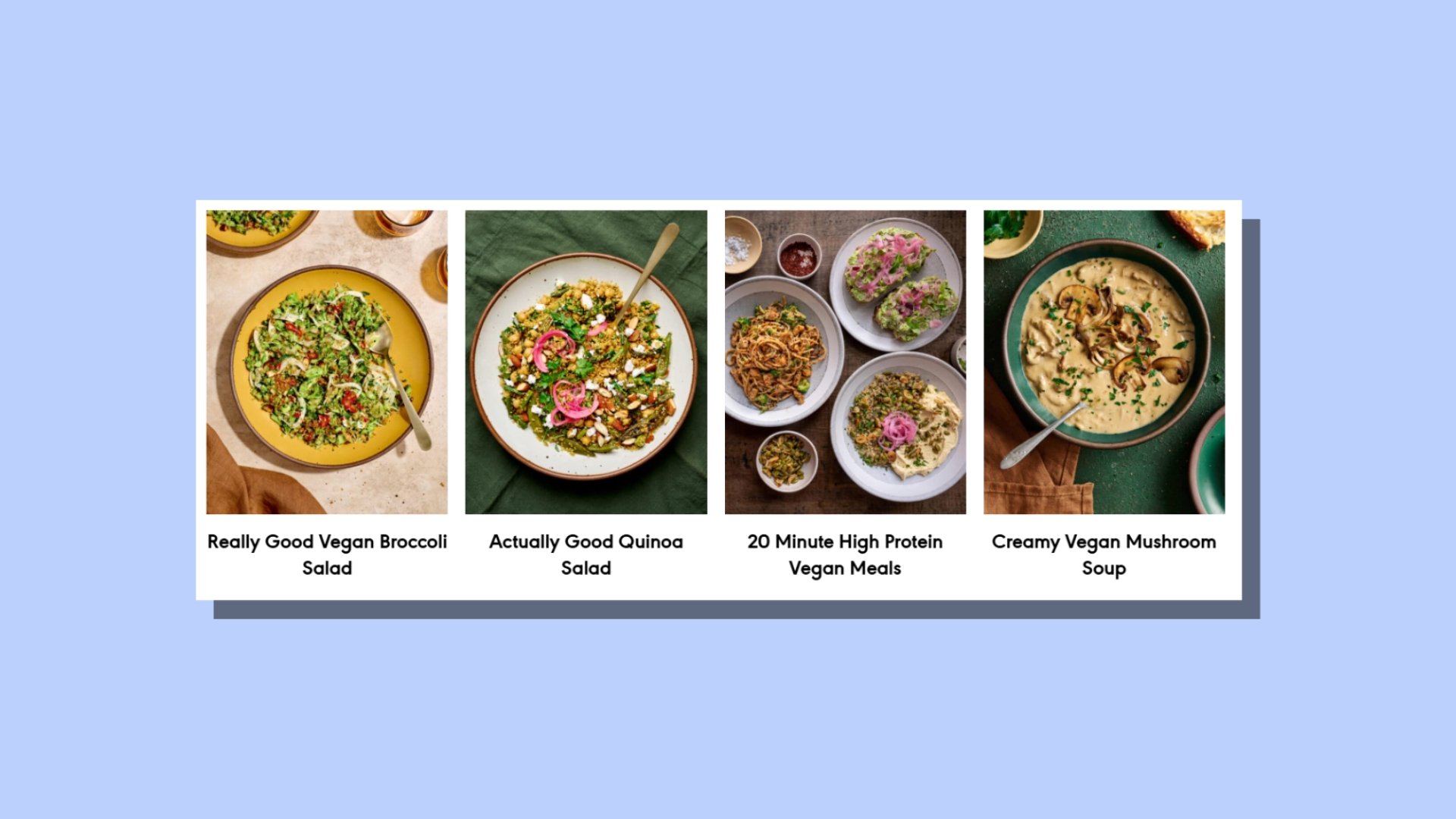
The title is the first thing people see, and it needs to be more than just “Pasta.” Think descriptive but not overstuffed. For example, “Creamy One-Pot Garlic Mushroom Pasta” tells you what it is, how it’s cooked, and what the main flavor is. It’s also great for SEO.
Bonus tip: Stick to natural language that your audience would type into Google. Bonus points if it mentions a cooking method or ingredient.
Serving sizes give your readers context
Whether someone’s cooking for just two or planning a family feast, they need to know how many portions the recipe will yield. Serving sizes can vary depending on household preferences and portion sizes – what might be a “serving” for one person could be too much or too little for another. That’s why it’s important to list the yield clearly. With WP Recipe Maker, readers can adjust the number of servings, and the ingredient quantities will update automatically to match.
This feature is available in the Premium, Pro, and Elite Bundle options, making it easier to cater to different household needs.
Bonus tip: If your recipe serves a generous amount, add a quick note (e.g., “Serves 4 generously”) or mention if it’s easily scalable for larger groups. Want to learn more about scaling your recipes? Check out our handy guide!
Equipment and ingredient lists go hand in hand
Start with the equipment readers might not expect, like “9-inch cake pan” or “immersion blender.” Then move into the ingredients, listing them in the order they’ll be used. Be specific: “1 cup packed brown sugar” is way better than just “brown sugar.”
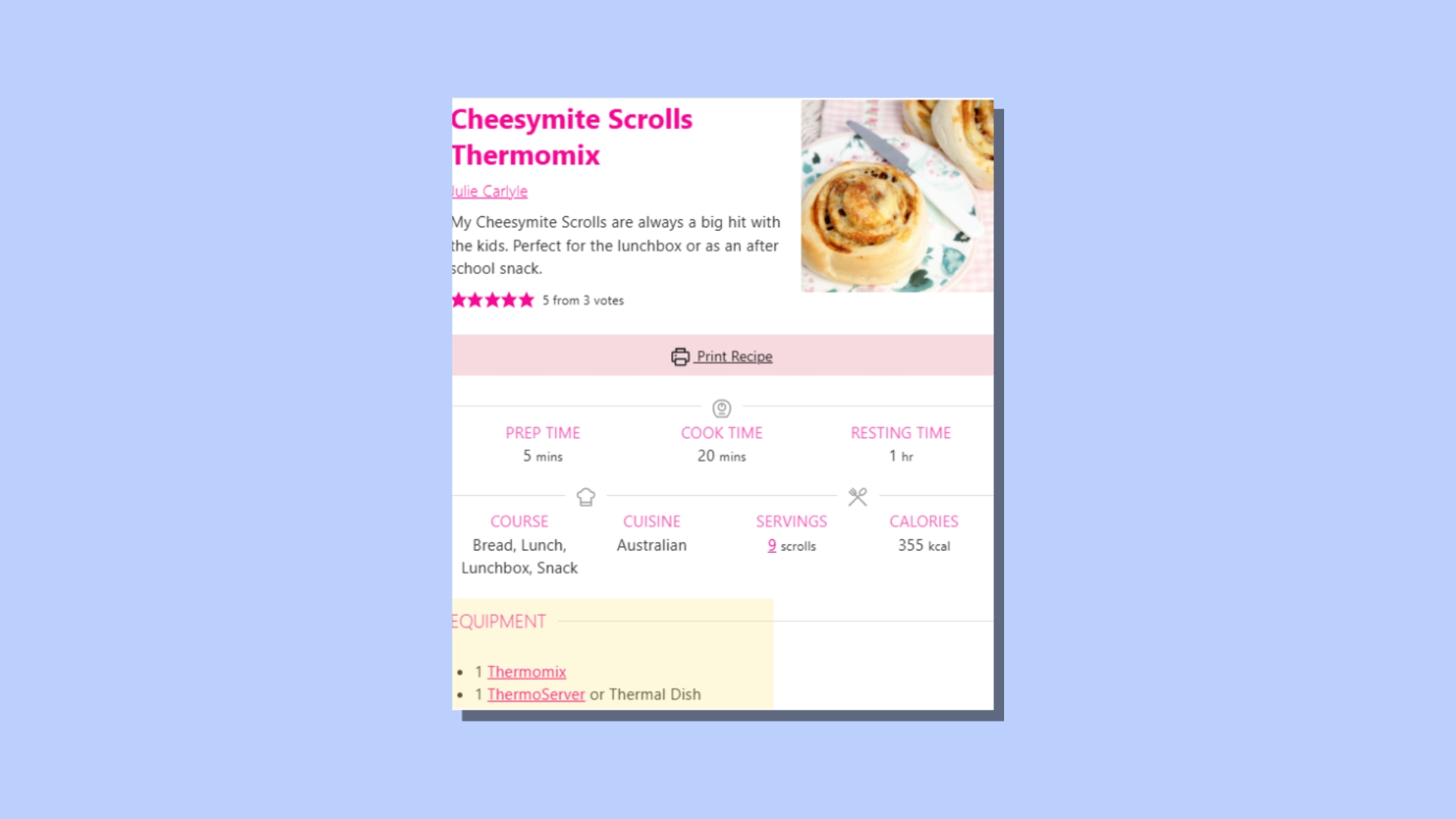
Here is also a great opportunity to monetize your recipes! In WP Recipe Maker, you can link to equipment or even affiliate products, which is great for user experience and monetization.
Clear, step-by-step instructions
Each step should guide the cook through what they’re doing and what they should see, smell, or feel. Keep it simple by avoiding cramming multiple actions into one step and using short paragraphs. Try using bold or italic text for emphasis on things like “don’t overmix.”
Time and temperature information (don’t skip this!)
Missing oven temps or vague timing like “cook until done” is where even good recipes fall apart. Always include prep time, cook time, and total time. For temperature, write both the number and the unit (e.g., Fahrenheit or Celsius).
WP Recipe Maker helps here with built-in temperature icons that add oven symbols for quick visual guidance. Even better, readers can automatically convert between Fahrenheit and Celsius – no mental math required. See temperature conversion in action.
Additional features that add value to your readers
Once you’ve got the basics of your recipe sorted, a few thoughtful extras can really make a difference. These are the kinds of features that build trust with your audience, improve the cooking experience, and make your blog a place they want to return to.
- Recipe notes: Perfect for sharing tips that don’t quite fit in the method. For example, you might mention a good substitution, storage advice, or even a quick warning like “don’t skip toasting the nuts – it makes a huge difference.” Notes keep things useful without overloading the instructions.
- Nutritional information: While not everyone needs it, nutritional info is essential for some readers. Whether they’re tracking calories, looking for high-protein meals, or simply curious, including this data shows that you’ve thought about their needs.
- Share buttons: The easier it is for someone to share your recipe, the more likely it is to spread. Pinterest, WhatsApp, and even SMS sharing (especially on mobile) are all great ways to get your content in front of new readers with minimal effort.
Comments and Ratings: Seeing that other people have made and enjoyed a recipe gives new visitors confidence. Plus, ratings show up in search results, which can boost visibility and credibility. - Recipe collection & quick access shopping list: Let your readers save their favorite recipes in one place, making it easier to come back to them later. With the Quick Access Shopping List, they can create their own shopping list directly from the saved recipes. This adds more value to your readers, encouraging them to return and plan their meals.
How WP Recipe Maker makes it easy to add essential components to your recipes
One of the best things about WP Recipe Maker is that it takes care of the structure for you, so you don’t need to start from a blank canvas every time you write a recipe – we have a number of recipe card templates for you to customize! Whether you’re using one of the free templates or a premium one, the essentials are already built in: title, servings, cook time, ingredients, instructions, notes, nutrition info, and more.

If you’re happy with the layout out of the box, you’re good to go. However, if you want to tweak things, like displaying the nutrition label higher up, adding share buttons in a specific location, or swapping out headings, the Template Editor makes that easy. You can drag and drop components, hide the ones you don’t need, or go more advanced and customize things down to the icons and styling.
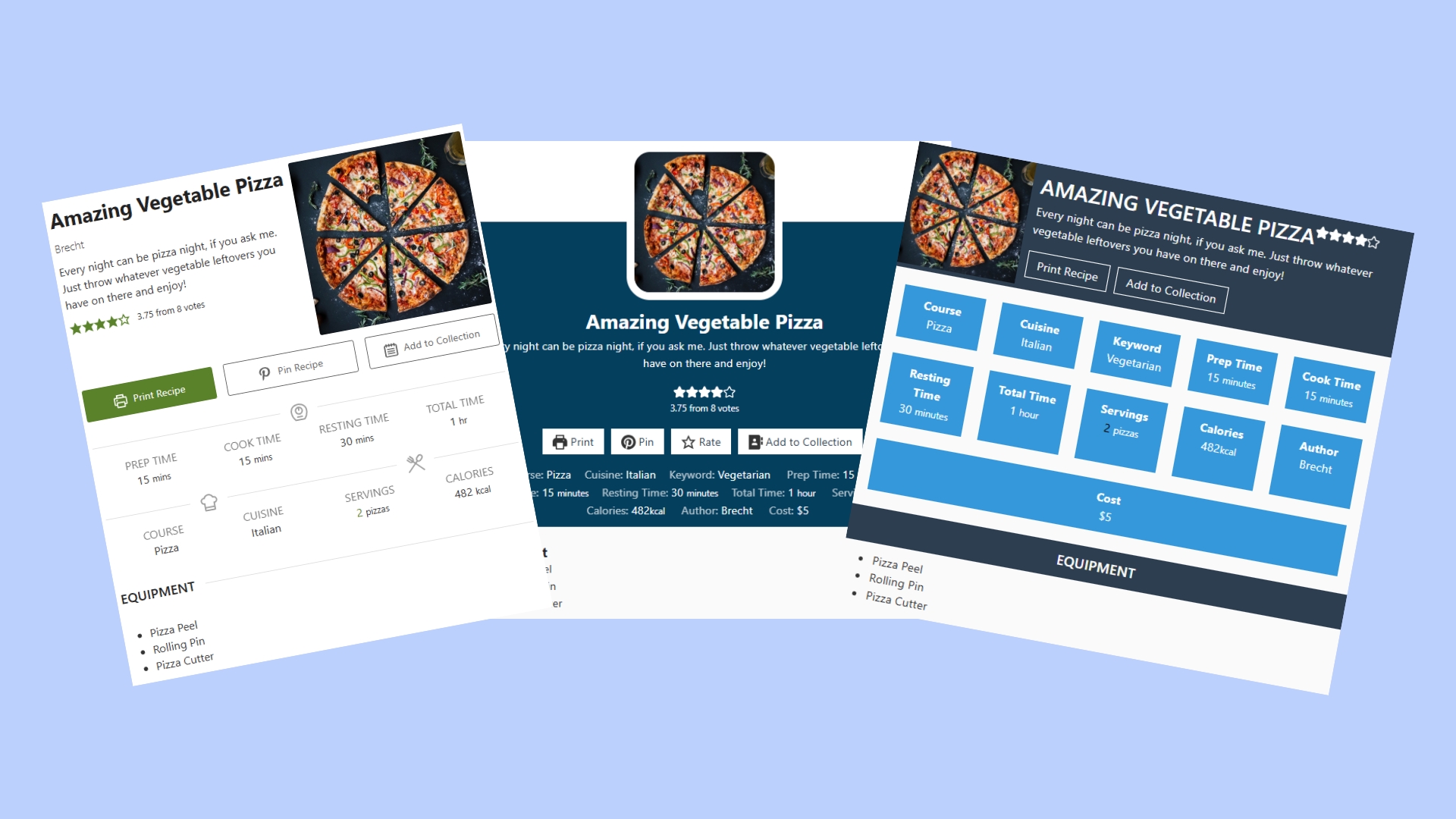
Every recipe card you create using a WP Recipe Maker template is automatically set up with structured metadata, which means better SEO and a smoother user experience. And because templates are separate from the recipe content itself, you can update the look and layout of every recipe on your site without having to edit them one by one.
It’s a big time-saver, and it means your recipes stay consistent, even as your blog evolves.
💭 Curious and want to have a go yourself? You can try the demo today!
Transform your recipe writing with WP Recipe Maker’s complete toolkit
Writing great recipes requires structure, clarity, a bit of strategy, and, of course, great food! When you’ve already got a hundred things to juggle as a food blogger, the last thing you need is to fight with formatting or worry about what Google needs to see.
We created WP Recipe Maker for this very reason! It provides a solid foundation to build on: clean, professional templates with all the key components built in, such as prep time, servings, ingredient lists, and step-by-step instructions. No more formatting fiddles!
The Template Editor gives you full control to customize your recipe cards to match your blog’s style and your readers’ needs. Add share buttons, rearrange sections, showcase those 5-star ratings, or automatically pull in nutrition information – it’s all possible, and it’s all designed to scale with you.
WP Recipe Maker helps you write better recipes, faster. Recipes your readers can trust, follow, and share. Recipes that show up in search and actually bring people back for more. So, if you’re serious about turning your food blog into something bigger, this is the toolkit that helps you do it right.
If you’re serious about turning your food blog into something bigger, this is the toolkit that helps you do it right. Join over 50,000 food bloggers who have already leveled up their recipe writing. Get started today! Get WP Recipe Maker today!