

There are thousands of baking blogs out there, and most “best of” lists rank them the same way: by how many people show up. Popularity is easy to count. Whether a recipe actually works is a lot harder.
If you’ve ever followed a five-star recipe to the letter and still pulled a flat, sad cake out of the oven, you know that gap firsthand. That wasn’t your fault. It was a recipe nobody bothered to test properly.
This list works differently. Every blog here earned its place because of how it builds its recipes, not how big its following is. We’ve paid attention to the small trust signals, the habits that separate a recipe you can count on from one that just looks good on screen.
What to look for in a tested-recipe baking blog
Before you trust a single recipe, you can size up the whole blog in about two minutes. These five tells separate the blogs that do the work from the ones that just look good.
They test their recipes more than once
A recipe that only got baked once is a guess. Trusted bakers run the same recipe two or three times before it ever goes live, and they usually show their work. Look for a “why this recipe works” note above the recipe card, walking you through the choices behind it.
Serious Eats is the clearest example: J. Kenji López-Alt’s best chocolate chip cookie recipe came out of countless batches baked in pursuit of the perfect version, with a full write-up on what he changed and why. The comment thread is another tell. Years of “I made this” replies from the author means the recipe has been pressure-tested by real readers.
They weigh in grams, not just cups
Cups lie. Depending on how you scoop, one cup of flour can swing from about 120 grams to 160, and that gap alone can flatten a cake. Blogs that care lead their ingredient lists with gram weights instead of tucking them behind a metric toggle. Handle the Heat is a good one to check. Tessa Arias puts gram weights first and explains why the precision matters.
They tell you who the recipe is for
The same recipe can be a win for one baker and a headache for another, so good blogs signpost the skill level. Look for a line near the intro like “great first laminated dough” or “you’ll need a stand mixer.” Bigger Bolder Baking builds this in with its Bold Baking Basics series, a set of building blocks, from caramel to homemade extracts, aimed squarely at bakers finding their footing.
They specialize instead of covering everything
A blog that bakes and nothing else tends to test harder, because that’s the whole job. Specialization also shows up in the small stuff: notes telling you to grab an oven thermometer, a specific loaf pan, or a scale. The Bread She Bakes is a good example of a tight remit. Sanna Vee sticks to sourdough, artisan loaves, and pastry, so every recipe on the site feeds into the same narrow set of skills instead of being spread thin across dinners, drinks, and desserts.
They keep readers coming back
An active comment section is the best free quality check there is. Readers report what went wrong, and good authors go back and fix the recipe, sometimes years after publishing. So watch for update notes on older posts. A five-year-old recipe with no recent comments and no sign it’s been revisited is worth a second look before you commit your ingredients to it.
The best baking blogs for every level of baker
The best baking blogs for tested recipes are Belle of the Kitchen and Live Well Bake Often for new bakers, Bigger Bolder Baking and Pastries Like a Pro for building technique, Handle the Heat and Stress Baking for the science behind a bake, and The Vanilla Bean Blog and Home Cooking Adventure for joy baking. Every blog here shows at least a few of the trust signals from the last section.
If you’re just starting out
New bakers need three things: clear steps, weights they can trust, and a comment section to check when something goes sideways. These two deliver.
- Belle of the Kitchen is run by Ashlyn Edwards, who started the blog back in 2013. Her baking and dessert recipes come with step-by-step photos and gram weights, so you can see what each stage should look like and measure without guessing. Belle of the Kitchen runs its recipe cards on WP Recipe Maker, a WordPress recipe plugin from Bootstrapped Ventures, and it’s a good first stop if you get nervous following a recipe.
- Live Well Bake Often, from Danielle Rye, is built for first-time bakers. The ingredient lists lead with grams, the method is photo-led, and the tutorial archive is deep without feeling like too much at once. If a wall of a thousand recipes stresses you out, this smaller, focused library is easier to work through.
If you’re ready to push past the basics
You’ve baked a cake or two. Now you want the technique that takes you up a level. Both of these assume you already know your way around an oven.
- Bigger Bolder Baking comes from Gemma Stafford, a professional chef who has worked in a Michelin-starred kitchen and now teaches millions of home bakers online. Her Bold Baking Basics series covers the building blocks, from caramel to homemade extracts, and bridges the gap between beginner and intermediate. There’s a cookbook and a YouTube channel with a huge following behind it.
- Pastries Like a Pro, written by Helen S. Fletcher, draws on more than 25 years as a professional pastry chef. This is where you go for laminated dough and classical French patisserie, the kind of recipes that reward patience and precision.
If you want to know why a recipe works
Some bakers aren’t happy just following steps. They want the reasoning, because understanding the why is what lets you fix a recipe when you need to.
- Handle the Heat, run by Tessa Arias, is built around side-by-side testing. Her Ultimate Chocolate Chip Cookies post compares sugar ratios, leavening agents, and butter methods so you can see exactly how each change shifts the result. Gram weights lead every ingredient list.
- Stress Baking, from Becki Hawkins, tests recipes until they’re foolproof and then shows the receipts. The development logs spell out what failed along the way and why, which is rare and genuinely useful.
If you bake for the joy of it

Sometimes you’re not chasing a new skill. You just want a beautiful bake on a slow Sunday. These two are for the pure pleasure of it.
- The Vanilla Bean Blog is Sarah Kieffer’s home for voice-first, recipe-led baking, and the birthplace of the famous pan-banging cookie. She’s written two cookbooks, 100 Cookies and The Vanilla Bean Baking Book, and the photography alone is worth the visit.
- Home Cooking Adventure, by Ella Markovska, pairs tested recipes with a focus on joyful, good-looking bakes. The dessert and cake archive is strong, and it’s a confirmed WP Recipe Maker user, so the recipe cards are as reliable as the results.
Quick reference:
| Blog | Ideal for | Trust signal to look for |
| Belle of the Kitchen | New bakers | Step-by-step photos and gram weights |
| Live Well Bake Often | First-timers | A focused, less overwhelming tutorial archive |
| Bigger Bolder Baking | Leveling up | Bold Baking Basics building-block recipes |
| Pastries Like a Pro | Advanced technique | 25+ years of pro pastry experience |
| Handle the Heat | The “why” | Side-by-side ingredient tests |
| Stress Baking | The “why” | Published development logs |
| The Vanilla Bean Blog | Joy baking | Cookbook-author recipes, richly photographed |
| Home Cooking Adventure | Joy baking | Tested cards and a strong cake archive |
Where to go for sourdough, vegan, and gluten-free
The Bread She Bakes for sourdough, Minimalist Baker for vegan baking, and Gluten-Free on a Shoestring for gluten-free are the specialist blogs to trust when a bake comes with rules attached: a starter to feed, a dairy swap to nail, or a flour blend that behaves nothing like wheat. For bakes like these, a specialist beats a generalist every time.
For sourdough
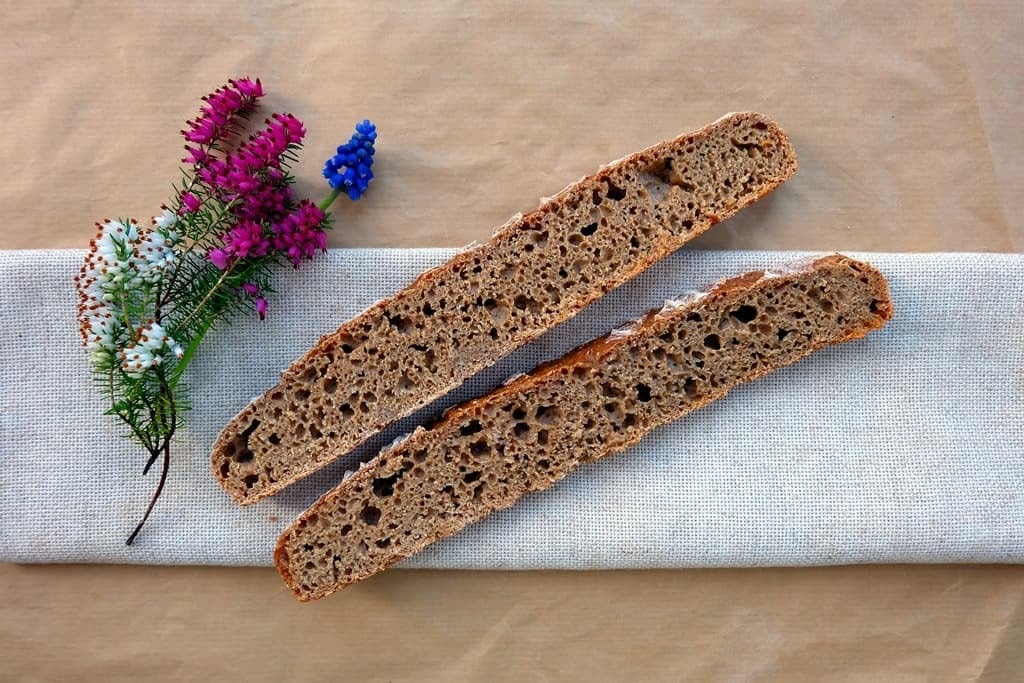
Sourdough is the bake most likely to humble you, so you want someone who does nothing else. Sanna Vee trained in Europe and keeps The Bread She Bakes in one lane: sourdough, artisan loaves, enriched doughs, and a solid run of rye. Her recipes open with grams and baker’s percentages, the weight-based system pro bakers use, so once you learn to read them, you can size a loaf up or down without second-guessing the math. Nothing on the site competes for her attention, no weeknight dinners, no dessert roundups, and that focus shows in how carefully each loaf is worked out before it goes live. She runs her recipes on WP Recipe Maker too.
For vegan baking
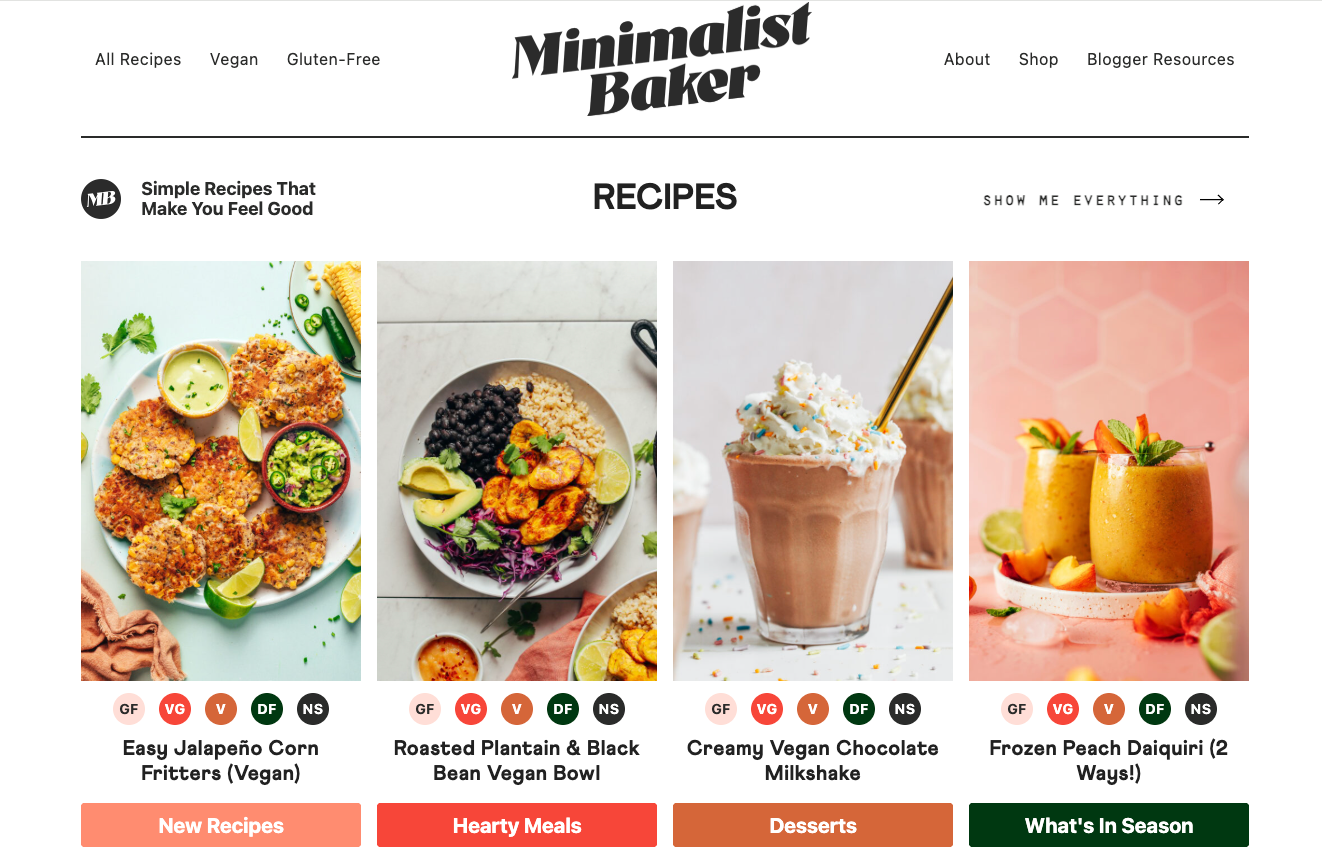
Take away the eggs and butter and you lose most of what holds a bake together, which is why the shortest vegan recipes tend to be the most reliable ones. Dana Shultz built Minimalist Baker around a rule she actually keeps to: ten ingredients or fewer, one bowl, or thirty minutes, your pick. The baking recipes that clear that bar are the well-worn favorites, each with a star rating from the hundreds of readers who’ve made it, and Dana herself turns up in the comments when someone hits a snag. She also lists WP Recipe Maker on her public resources page, which says something about how she wants her recipes handled.
For gluten-free
![Alt text: [Gluten free recipes blos] Source | Gluten Free on a Showstring](https://bootstrapped.ventures/wp-content/uploads/2026/08/image-1.png)
If you remove the gluten from a wheat recipe, you usually end up with something dense and crumbly, because gluten-free flour plays by different rules. Nicole Hunn helps you navigate that trap. Across fifteen-plus years and seven cookbooks, she has developed Gluten-Free on a Shoestring from the ground up rather than converting recipes built for wheat, and that’s the difference between a slice that holds and one that falls apart in your hand. She also tests each recipe across more than one gluten-free flour blend and tells you plainly which to use, so you’re not gambling on whatever bag happens to be in the cupboard. Start with her gluten-free sandwich bread.
How WP Recipe Maker helps baking bloggers build trust
WP Recipe Maker is a WordPress recipe plugin from Bootstrapped Ventures that helps baking bloggers build trust with structured recipe cards, automatic Recipe schema, and a Template Editor for styling every card to match the blog. Its paid bundles add reader star ratings, adjustable servings, and US-to-metric unit conversion, so readers can rate a bake, resize it, and weigh it out in grams.
We build that plugin, WP Recipe Maker, and the reason we can point to it here is because several of the blogs on this list already trust us to run on it. We didn’t pick them for that though. They earned their spots on testing and trust, and it happens that the tools behind their recipe cards are ours.
WP Recipe Maker runs the recipe cards on four blogs in this list: Belle of the Kitchen, Home Cooking Adventure, The Bread She Bakes, and Minimalist Baker. On The Bread She Bakes, Sanna Vee’s sourdough cards lead with grams and carry structured data. Beyond this list, Holy Cow Vegan uses WP Recipe Maker for searchable vegan recipe cards with reader ratings, and The Pretty Bee uses it for allergy-friendly baking with full schema markup. WP Recipe Maker is active on more than 50,000 WordPress sites.
WP Recipe Maker’s adjustable servings, part of the Premium bundle, let readers resize a baking recipe for the pan they own, in a different size or a different shape, and recalculate every ingredient amount to match. A cake written for a 10-inch round pan, for example, can be rescaled for an 8-inch square tin. It takes the guesswork out of the one swap most likely to sink a bake. Check out how it works on our adjustable servings demo.
Pick a blog, then bake something this week
Pick the cluster that matches what you’re baking this week, then try one recipe before the weekend. The real measure of a baking blog isn’t its follower count or its photography. It’s whether the recipe works the first time you make it.
Want your own recipes to earn that kind of trust? See how WP Recipe Maker builds gram weights, structured cards, and reader ratings into every recipe.