


The whole SEO for food bloggers thing is about getting your recipes right up in the top search results. Because unless they’re there, people won’t be able to find your recipes to try the dishes they want to.
Think about it: The first organic search result for a keyword on Google gets about 31.7% of all clicks — the highest search CTR — whereas the tenth result gets about 3.09% of the clicks.
So if the keyword “vegetarian pizza recipe” gets 1000 monthly searches and you post its recipe on your blog, you’ll get 300+ visitors from it if your recipe ranks #1. And if you rank #10, you’ll get about 30 or so visitors.
SEO for food bloggers is about optimizing recipes so they land in the top search result spots. In this article, we’re demystifying SEO for food bloggers and showing you the exact steps you need to take to do SEO-friendly food blogging that helps your recipes rank higher.
SEO for food bloggers — just like SEO for everyone else — has two parts.
SEO for food bloggers: On-page and off-page optimization
On-page SEO (or on-site SEO), as the term suggests, is everything you can do on your food blog website to make it more search engine friendly.
Off-page SEO (or off-site SEO), in contrast, is all about the stuff you can do off your website to make it more discoverable in search engines.
In this SEO for food bloggers guide, we’ll see the key strategies for both. We’ll first cover on-page SEO as it’s 100% under your control.
Doing keyword research
Finding the right keywords for food blogs is the first step to optimizing them for search engines.
Mostly, keywords for food blogs are closely related to the dishes they share with their target audience. These are their “seed keywords”.
For instance, seed keywords for food blogs that exclusively tackle recipes to make pizza, pasta, and noodles might be “pizza recipe”, “pasta recipe”, and “noodle recipe” respectively.
These are very highly competitive keywords, and chances are that you can’t rank for them.
That’s why you need to expand these to find recipe ideas that you can safely target.
To use your seed keywords to discover such doable recipe ideas, use AnswerThePublic. It’s a free keyword research tool. Just visit AnswerThePublic.com, enter your seed keyword (just the dish’s name would do), and hit Search.
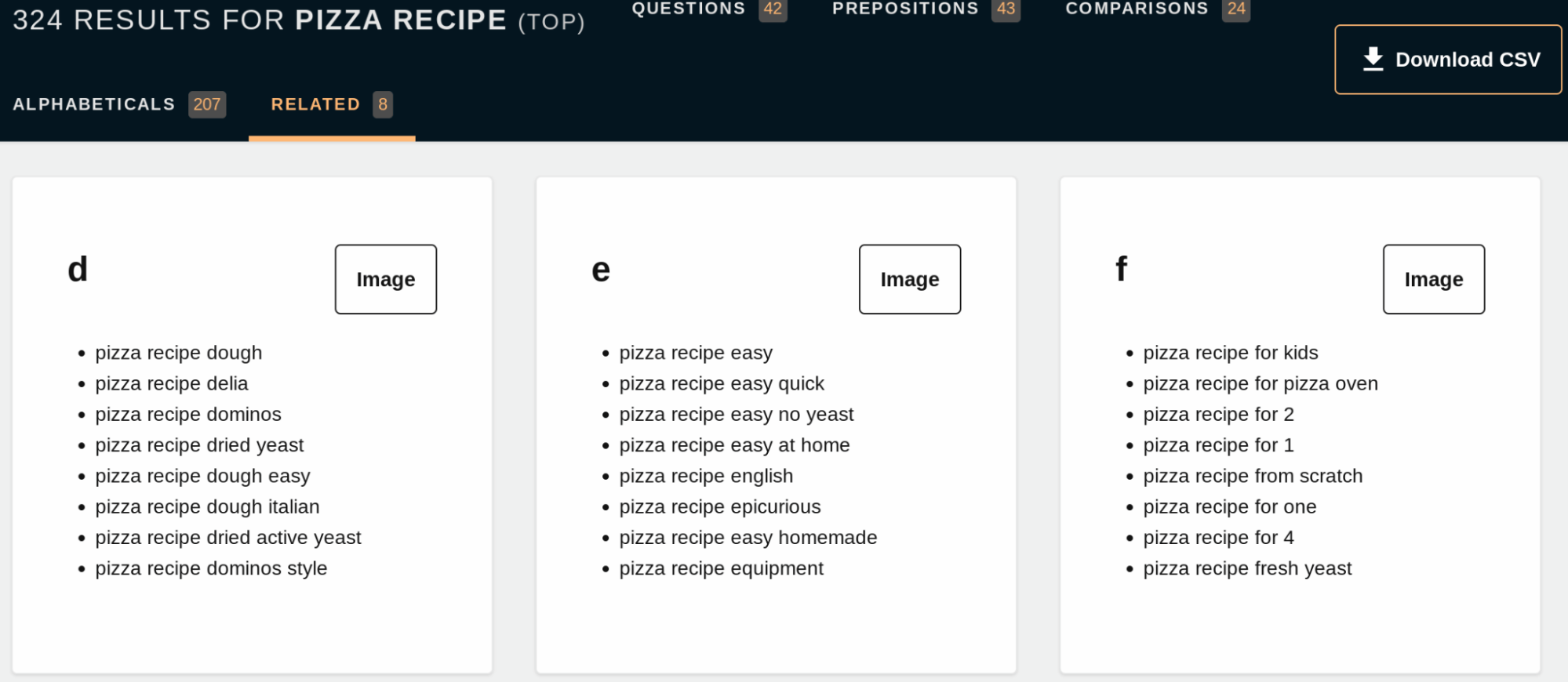
For the seed keyword “pizza recipe,” AnswerThePublic gives about 207 terms. As you can see, many of these are great ideas for keywords for food blogs on pizzas. Plus, they aren’t as competitive as the seed keywords
Now, take “fruit pizza recipe” for instance. It’s not as competitive as “pizza recipe”, but it’s still quite competitive.
Go for it but explore more ideas.
How? Use Google’s autocomplete and related searches feature.
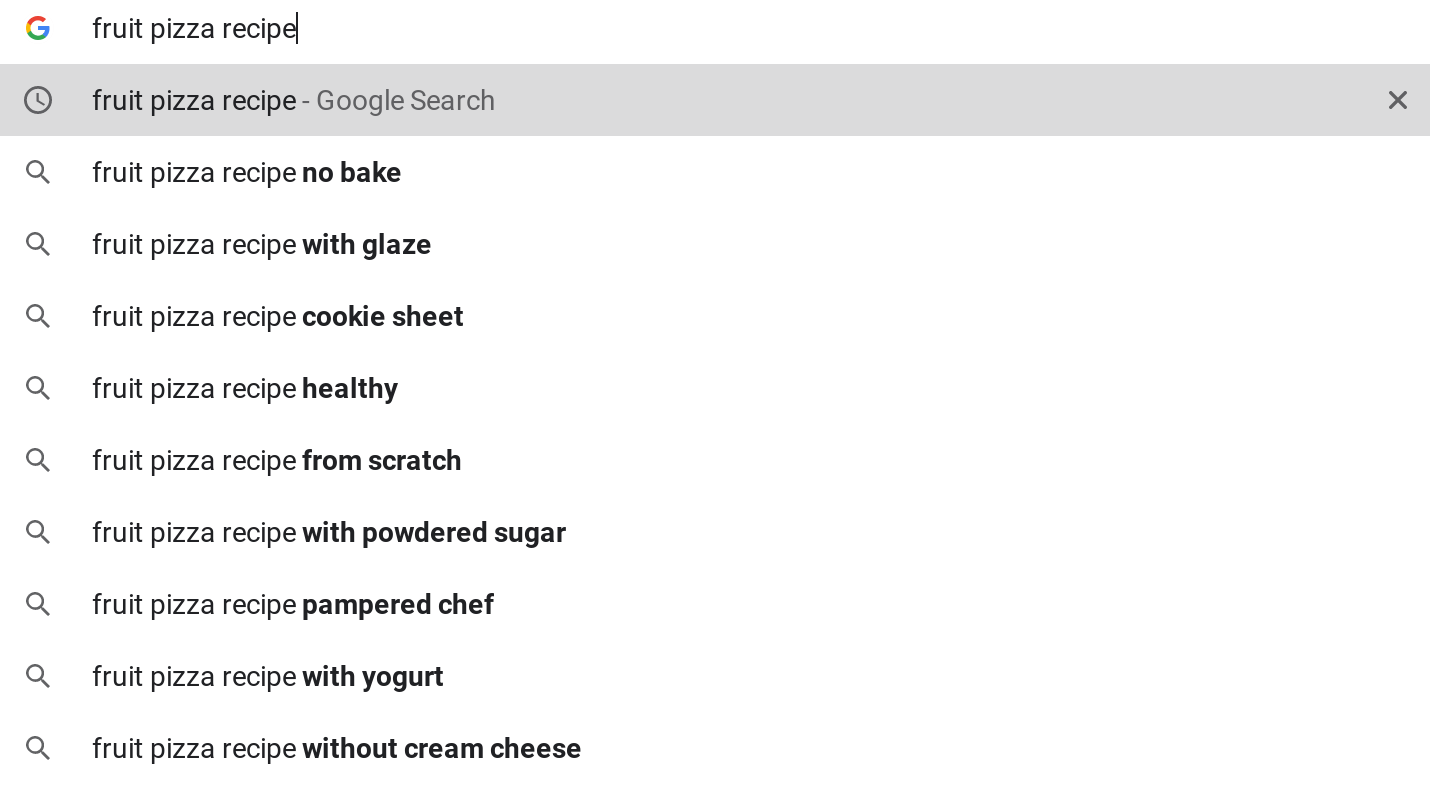
Just enter the keyword in Google and note the autocomplete suggestions that come up:
Next, hit search and scroll right to the bottom of the page. And you’ll find more keyword ideas:
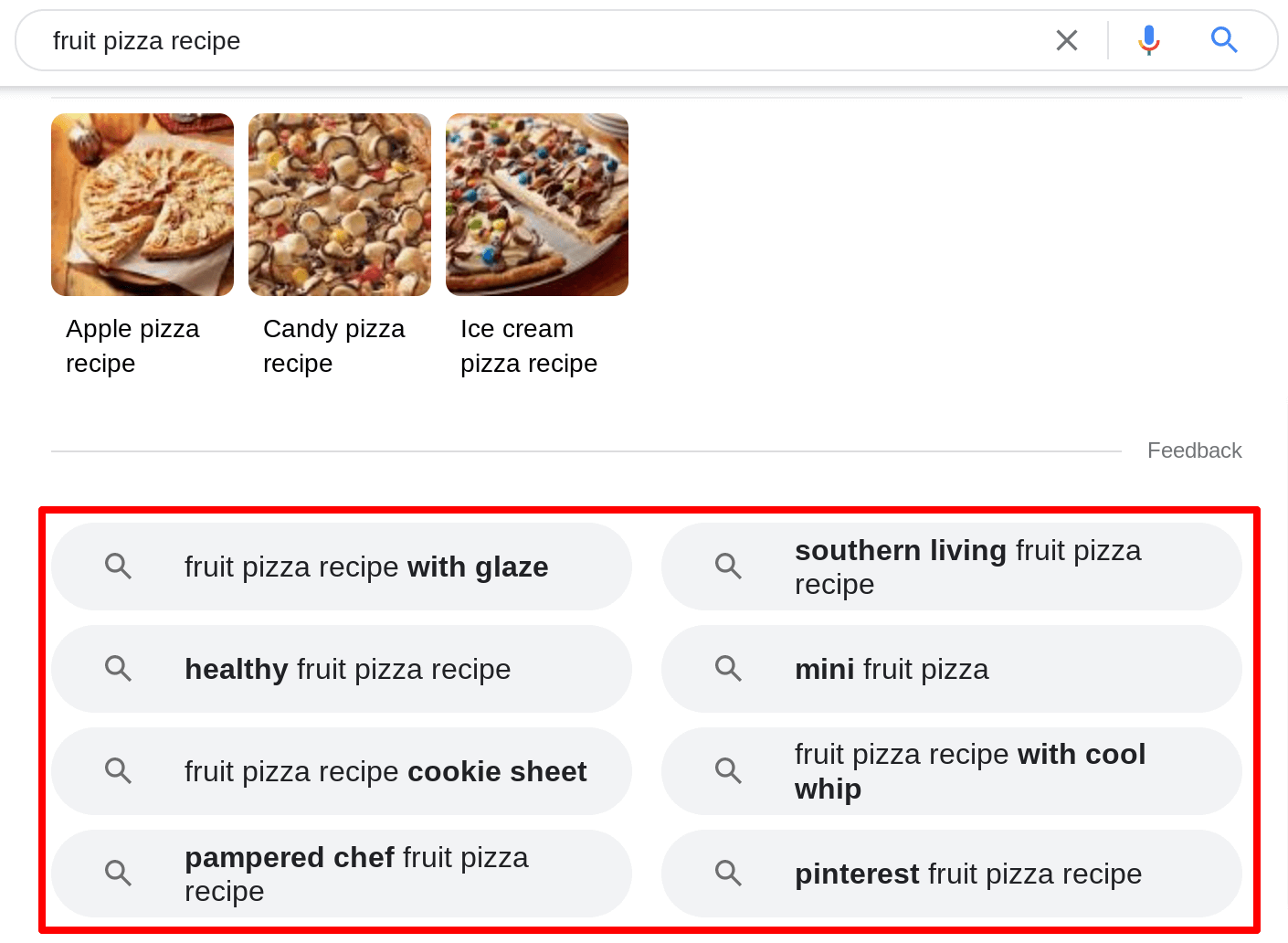
As you can see, these are long keywords. These long keywords are actually called long-tail keywords and have a decent search volume and low difficulty.
Free keyword research tools and tactics don’t give you the search volume or difficulty levels of a keyword, but they set you off to a great start.
When doing keyword research, pay attention to search intent, too.
A person looking for “healthy sandwich recipes” is not looking for “how to make sandwich step by step“.
Search engines factor in search intent when processing queries and pull different results for each. Try Googling both, and you’ll see.
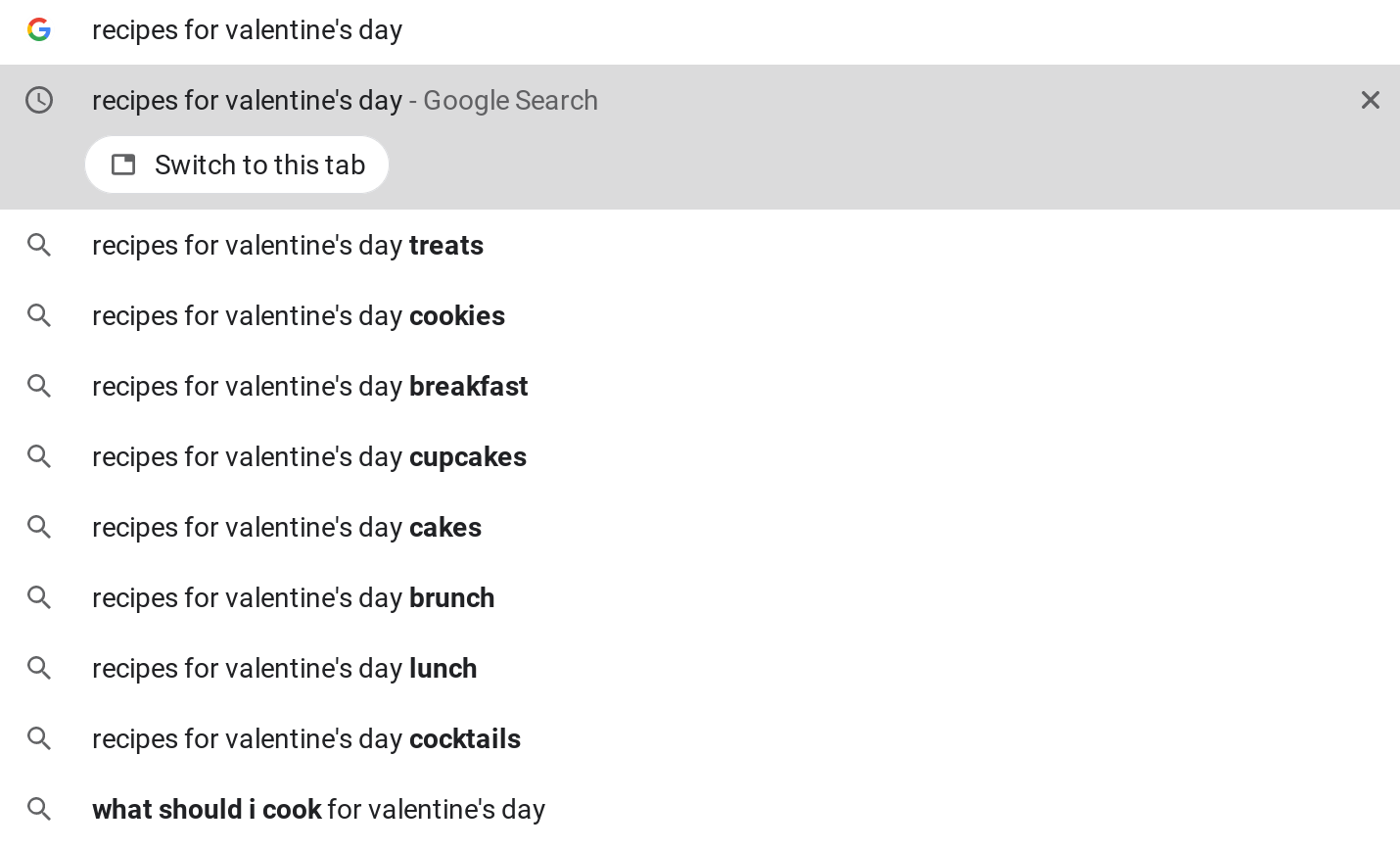
SEO keywords for food blogs don’t just mean recipes; recipe roundups have good search volumes too. So grab the year’s calendar and mark each occasion that gets people searching for recipes. Valentine’s Day, for instance, is a popular one.
Next, handpick your best recipes to make these days memorable for your readers and post roundups. Such posts help bring those seasonal organic traffic spikes to your food blog and also help you connect better with your community.
Writing optimized recipe copy
After discovering the dish ideas to cover, the second most crucial thing for SEO for food bloggers is writing optimized recipe copy.
A few best practices:
- An optimized recipe blog post is as long as it needs to be. Generally, long recipe posts tend to do better. They offer more tips and tricks and detailed instructions. These allow for more use of keywords for food blogs.
- Keywords for food blogs aren’t just the names of the dishes they cover but also their related terms. An optimized recipe copy uses its target keywords and its synonyms and related terms in just the right frequency.
- Recipe SEO also means using a scannable structure, breaking the recipe into manageable steps with images for the different instructions, and more. Ideally, you should get a great recipe card too.
In addition to these, a recipe post must follow Google’s recipe schema markup, which is the holy grail of SEO for food bloggers. Marking up a recipe simply means presenting its data in formats that search engines understand.
For example, using the structured data format “recipeCategory” to tell the search engine if your recipe is a “Dessert” or “Starter” and so on. Doing so helps search engines understand what the recipe content is.
WordPress recipe plugins like WP Recipe Maker automagically apply schema markup to your recipes. Our blog post on recipe schema markups covers this subject in detail.
Optimizing the URL, title tag, meta-description, headline, and subheadings
Another important part of SEO for food bloggers is optimizing all the on-page elements of the recipe blog post. Most keywords for food blogs can be naturally placed in these elements.
Let’s go over how the popular food blog Pinch of Yum goes about it. We’re looking at its recipe for “Raw Vegan Carrot Cake Bites”.
Here’s the blog’s URL that uses the full long-tail keyword:

The tile, too, uses the full keyword:

The meta-description, again, uses the full keyword:

In addition to that, you have a keyword-rich headline for the recipe blog post:
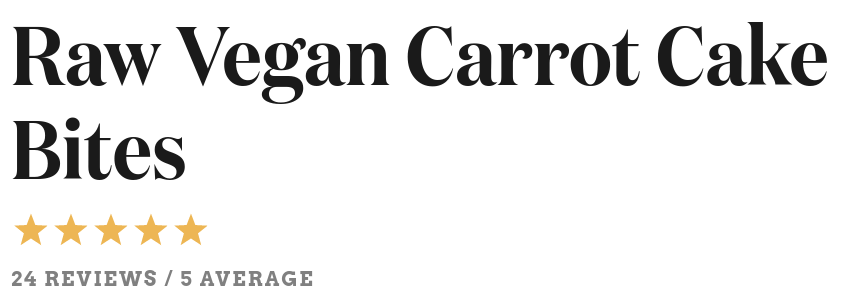
And also a subhead (H2) with the exact match of keyword:

These pretty much take care of all the on-page SEO elements for recipe blog posts — an essential in SEO for food bloggers.
Setting a search engine friendly site architecture
Site architecture is one of Google’s 200+ ranking factors.
So what does a good site architecture look like for a food or recipe blog?
Look at Allrecipes.com. At the very top level, you have recipe categories like:
- Breakfast and Brunch recipes
- Lunch Recipes
- Appetizer & Snack Recipes
- Dessert Recipes
- Salad Recipes
- Side Dish Recipes
- Drink Recipes
As you expand on a category, you see their sub-categories:
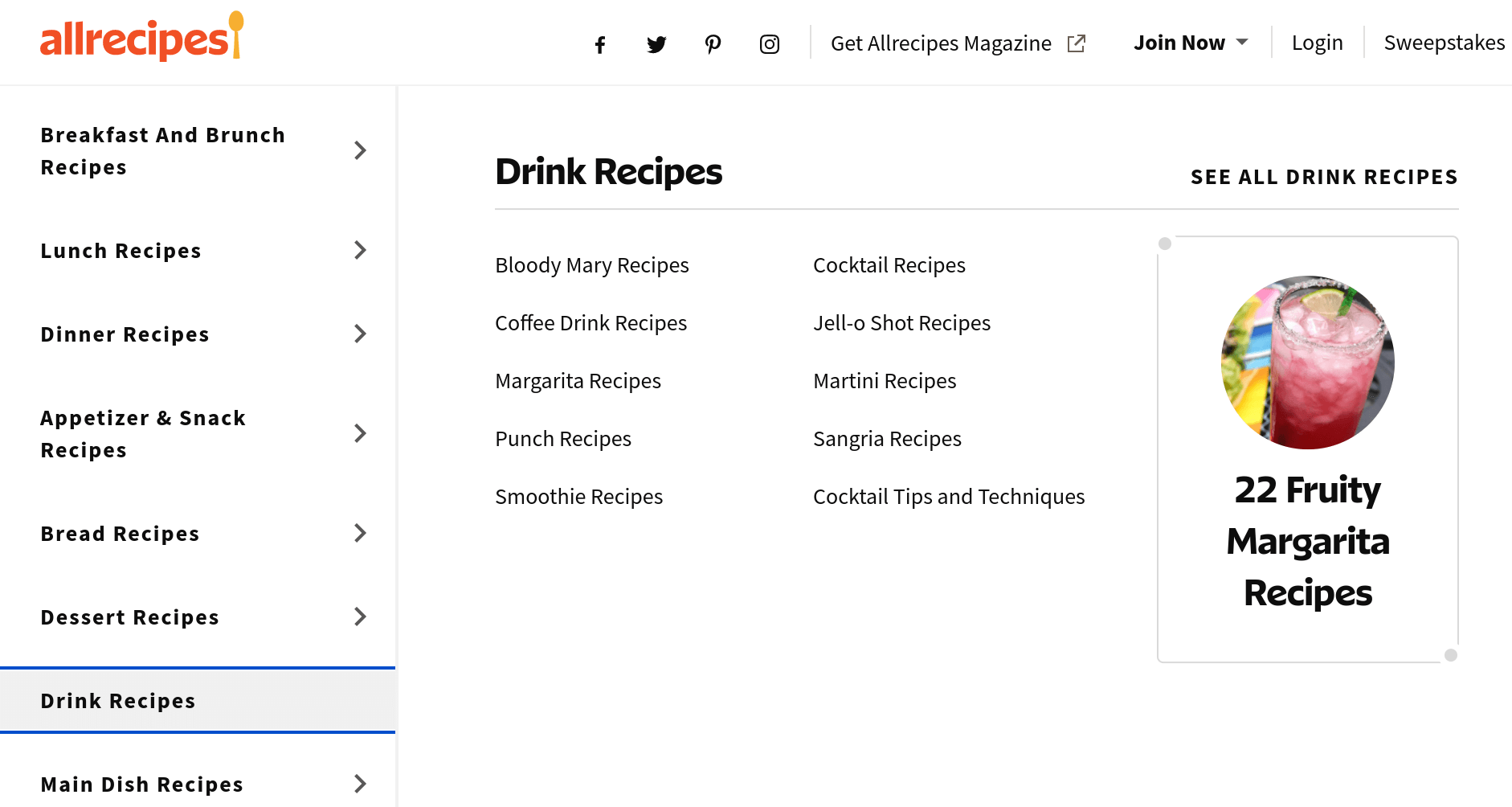
And within the sub-categories, you have the actual recipes listed.
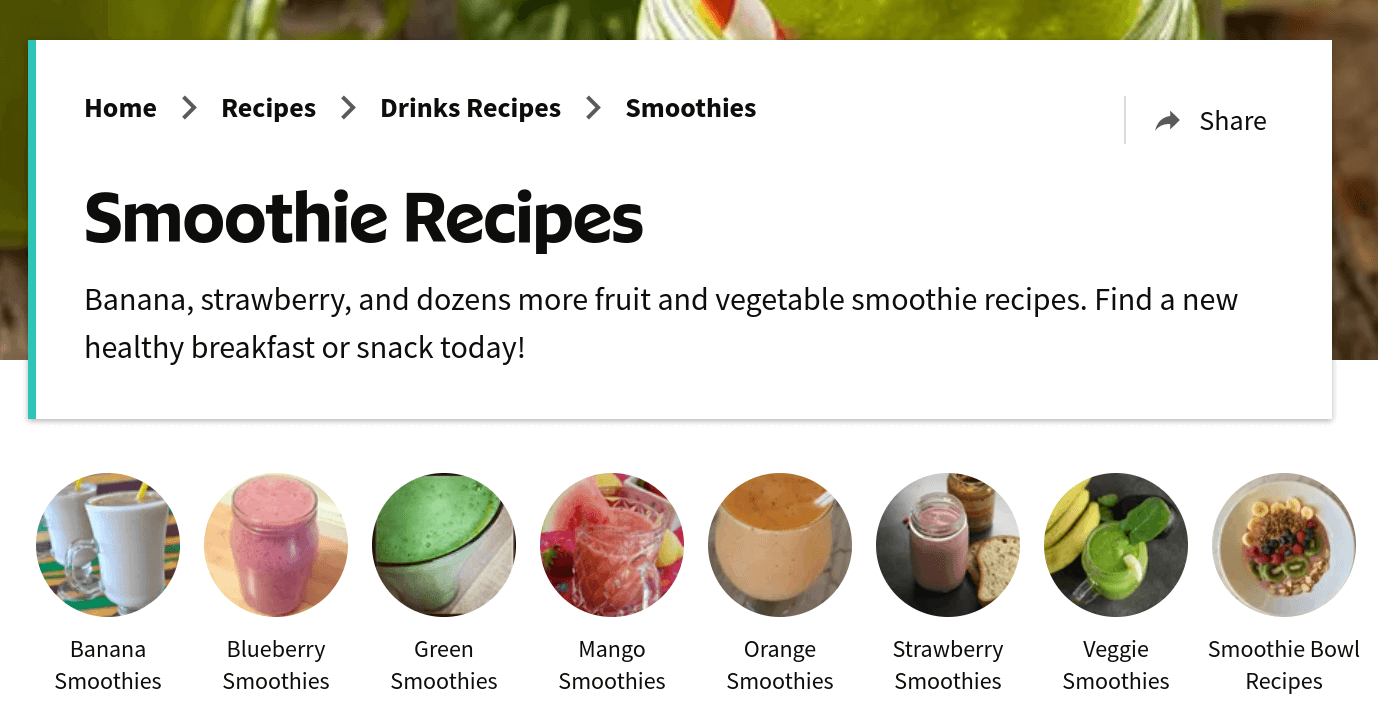
Your food blog, too, should use an easy-to-navigate site structure like this.
Also, don’t stuff all your recipe categories into your main navigation menu.
Most food bogs only add a menu tab “Recipes,” and clicking that takes users either to a page with all the recipe categories and sub-categories or opens a drop-down menu listing the main recipe categories.
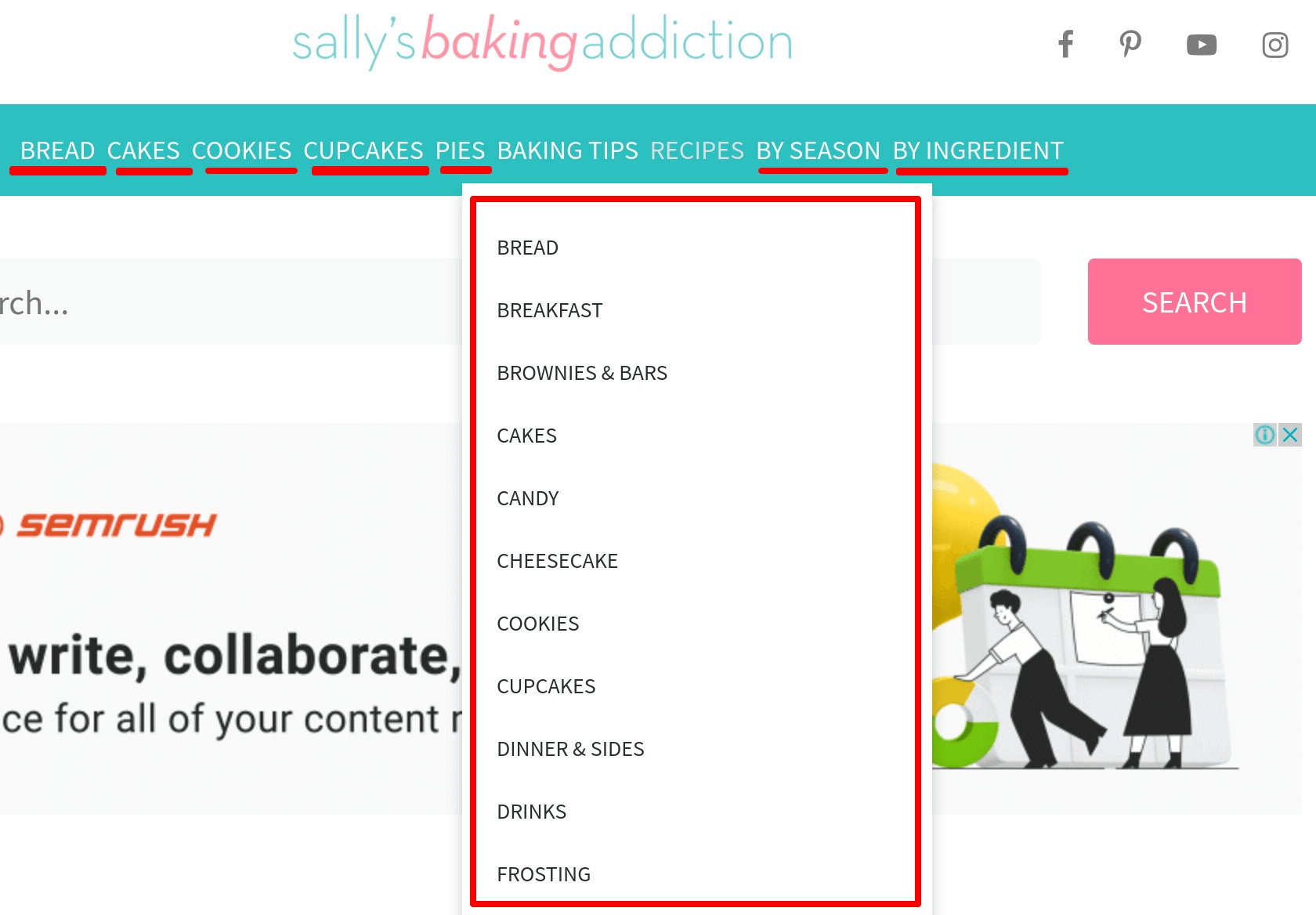
Sally’s Baking Addiction, being a very targeted niche recipe blog, easily manages to list all its key recipe categories right into its main navigation menu:
Pinch of Yum, on the other hand, takes users to its recipes page from a “Recipes” tab in the menu:
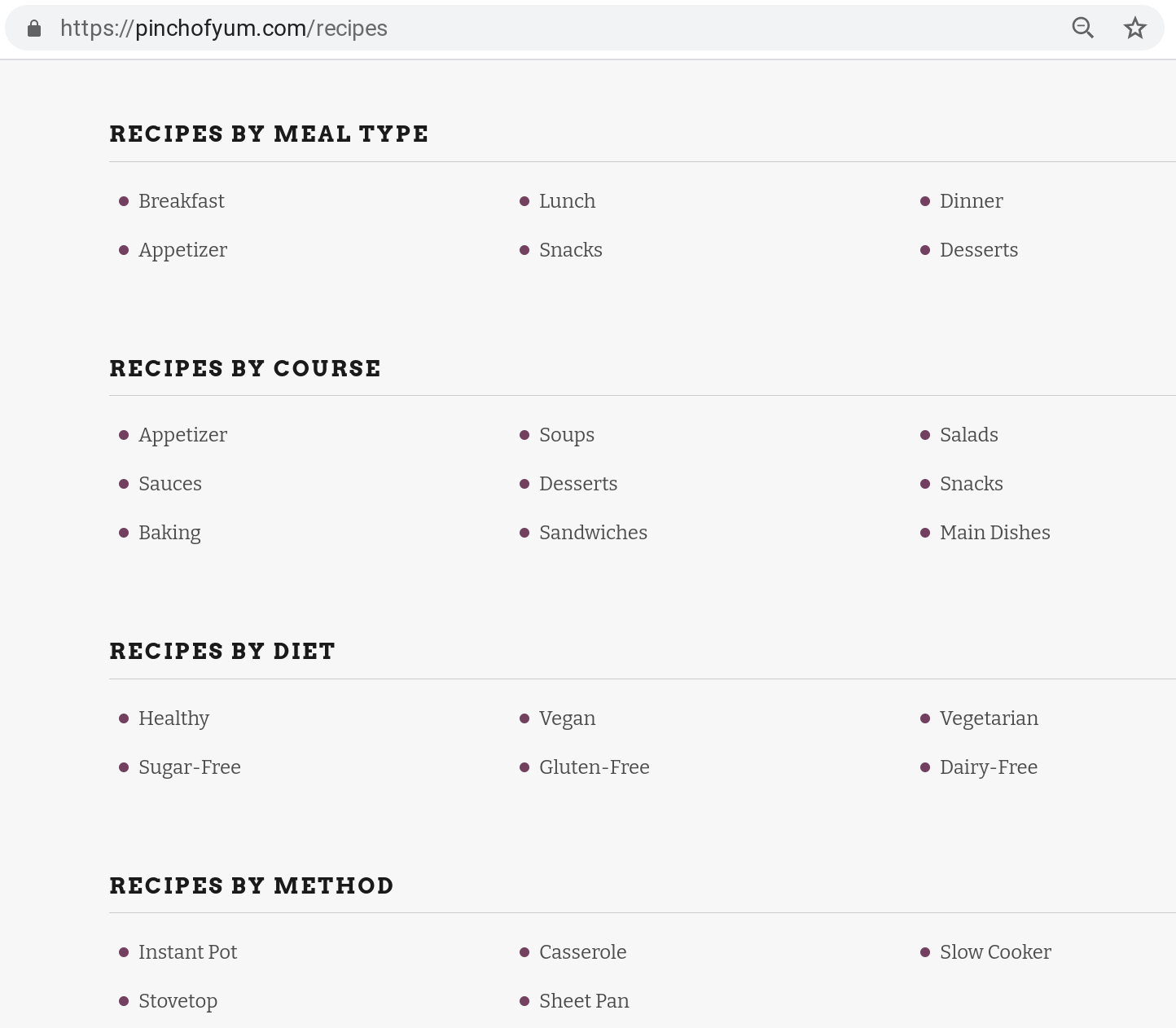
Ensure that your recipe page links to your different recipe category pages, which in turn link to your sub-category pages that link to your actual recipes. Internal linking is super-important for SEO for food bloggers.
Ensuring a real mobile-friendly cooking experience
If you pass Google’s Mobile-Friendly Test, you’re running a responsive food blog.
But if you ask us, the real mobile-friendly test for a recipe post is to refer to your recipe on your mobile and make the dish! Try sending a link to one of your recipes to a friend and ask them to cook it while referring to it on their mobile. And then ask them how they’d evaluate their mobile experience.
A recipe plugin like WP Recipe Maker lets you post beautiful mobile-friendly recipes that your readers can seamlessly access on their smartphones. Its “Cook Mode” is especially great, as it can prevent phones from going to sleep while cooking.
Optimizing for speed
Site speed is another vital ranking factor. Use a tool like Pingdom Website Speed Test to check the page speed of your recipe pages/posts.
Going with a good web host that offers a CDN takes care of 75% of your site speed issues. In addition to that, keep these speed tips in mind for SEO for food blogs:
- Don’t upload your recipe videos on your website; use YouTube for hosting.
- Crunch your images before uploading them to your recipes. Heavy images kill your food blog’s speed like nothing else. Use an image compression tool like TinyJPG.
- Work with only lightweight plugins like WP Recipe Maker that are optimized for speed to power your recipes.
- Remove any unused themes or plugins from your website.
Optimizing files for quick loading
If each of your recipes uses five images for the steps and a picture or two of the finished dish, you’ll be looking at a hundred images or so for just a dozen recipes.
Also, because you’d probably snap these pictures over a smartphone or camera, these would be high-resolution images, running into several hundred KBs or even MBs each.
This means your media library will run into GBs and kill your site’s speed. Recipes will be too slow to load, too.
The solution?
Compress your images before uploading them to your WordPress food blog.
Do two more things for good SEO:
- Add descriptive Alt Texts to your images
- Use good, descriptive filenames
(Keywords for food blogs go well here; avoid over-optimizing.)
If you want to add videos, host them on YouTube and embed them into your recipe blog post. To make your videos discoverable on YouTube, follow YouTube’s SEO video content guidelines.
SEO for food bloggers: A power move
Do a thorough competitor analysis.
Pick your ten best recipes and see how they rank.
Now, look at the top three search results for each and analyze what the recipes that rank for them are doing differently. Look at all the on-page SEO elements like their URLs, page/post titles, meta-descriptions, the lengths of the recipe copy, the frequency of the keyword, use of images, match with the intent, and more.
This exercise will give you actionable takeaways to improve your recipes for better ranking.
Doing off-page food blog SEO
Off-page SEO for food blogs is mainly about establishing its authority in the niche by generating backlinks.
If a top food magazine or influencer reviews your recipe or features it and gives you a backlink, Google will think that your recipe is better than most of the other recipes of the dish.
Backlinks are seen as upvotes. The more high-quality backlinks you have, the higher your recipes will rank for their target keywords.
But getting a high-quality blog to link to you is no small task. It needs you to actively reach out to people and request reviews and mentions.
Many food blogs have dozens of links pointing to their top recipes, so understand that you can’t outdo them as a new food blog.
Another aspect of off-page SEO for food blogs is boosting visibility on social media platforms. While social media platforms like YouTube and Pinterest — that searchers use for meal planning and cooking tutorials — don’t directly tie to SEO, they boost your general online visibility that can translate to improved SEO.
A search-engine-friendly recipe plugin: An essential in the SEO for food bloggers mix
For WordPress food bloggers, a key part of the SEO puzzle is their recipe plugin.
A good WordPress recipe plugin supports Google’s Recipe Schema Markup. So, you just add your recipe’s details, and the plugin marks it up for Google and the other search engines so that they can understand it better. This DIRECTLY ties to a food blog’s SEO. This markup helps search engines deliver rich snippets (like star ratings, serving sizes, images, etc.) that you see on the results page. For a complete overview of how Recipe Schema Markups work, check out this blog post.
It offers a good user experience. Google’s upcoming algorithm update is all about ensuring a good user experience for the searchers. A host of factors (from speed to mobile-friendliness) are part of this. A good WordPress plugin supports all of this.
It handles the tech side of posting recipes, including the SEO tech stuff. When posting new recipes, you shouldn’t have to worry about keeping these SEO tips in mind. Your recipe plugin should be designed to be aligned with these SEO expert tips and more for food blogs. Also, combining a good recipe plugin with an SEO plugin like Yoast SEO should cover you fully.
Check out WP Recipe Maker, a WordPress recipe plugin that ticks all these boxes and is built with SEO for food blogs in mind. It isn’t just lightweight, it also makes your recipes look like they’re straight out of a glossy food mag, even on mobiles.
Wrapping it up…
When performing SEO for food blogs, it’s best to get the on-page part right first. So using the right SEO keywords for food blogs; posting marked-up, image-rich recipes; and setting search-engine-friendly URLs and meta-descriptions take precedence.
Once you’ve built a solid foundation, work on building backlinks, collecting reviews and brand mentions on third-party websites, and more.
Also, note that SEO doesn’t produce overnight results. It can take months. But if you keep posting quality recipes that search engines can understand, you’ll see your traffic improve over time. Because SEO standards keep updating, set aside time to stay on top of the trends and developments.
Get a head start with your food blog’s SEO with WP Recipe Maker — a lightweight WordPress recipe plugin that turbocharges your recipes with the best SEO practices so they rank well.






Hi, thank you! This is so informative.
This is helping so much! I’ve been blogging for 6 years and I feel like it’s going nowhere… literally! This helps! Thank you!
Excellent Post topic and content. Was very helpful. Started 3 months ago and getting ready to make more structure changes.